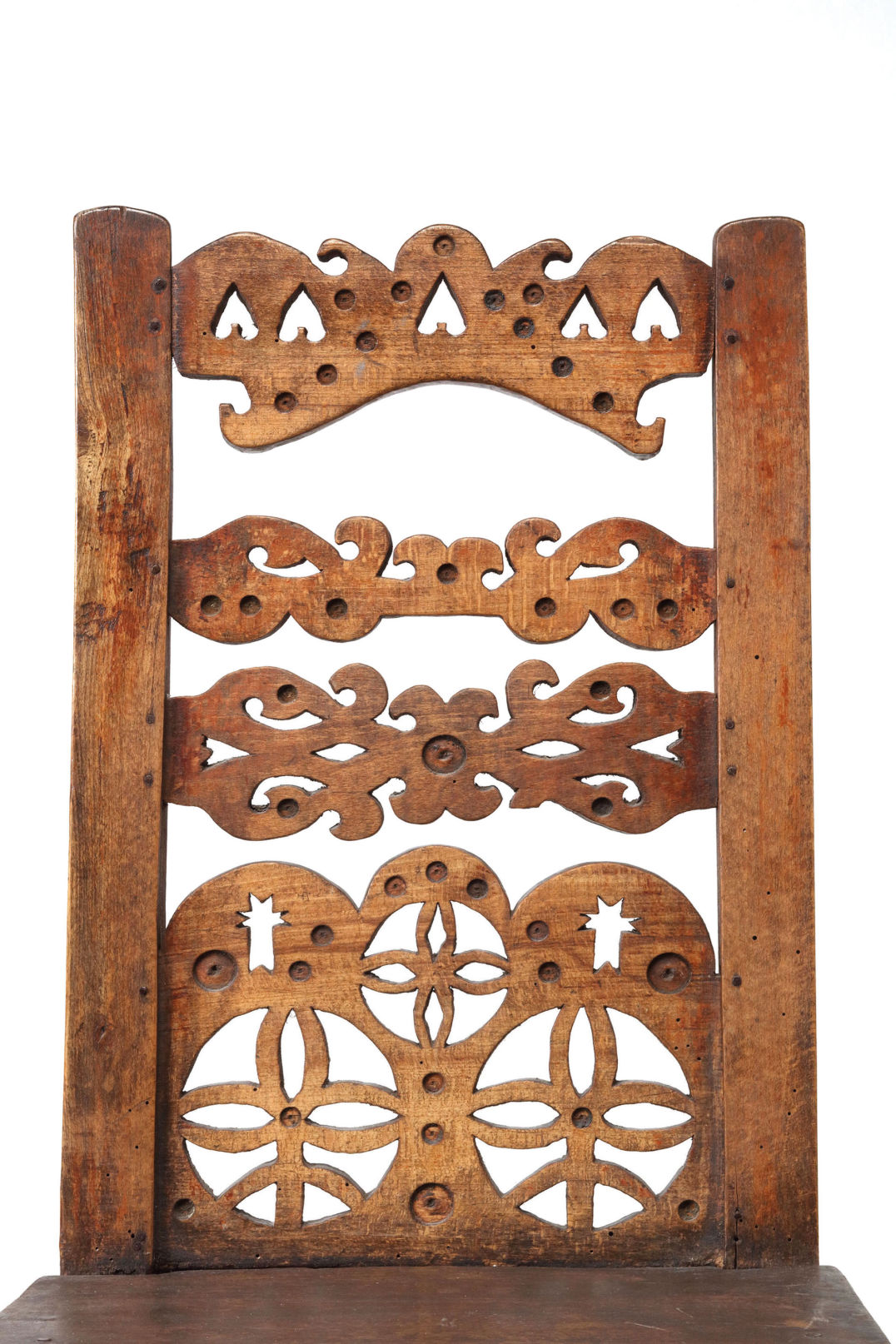
Chair,stolec 19th ct., Markuševec, Prigorje, EMZ 52804
The Furniture Collection began to take shape and develop as soon as the museum was founded in 1919. Assembled in the collection are items that embody high aesthetic and artistic qualities, today signifying Croatian folk art in its more narrowly understood sense. The collection is being continually supplemented by purchases and donations, and today consists of six hundred and six objects (September 2021). From the foundation of the museum, the collection policy was so determined as to be particularly concerned with ornaments and workmanship of objects, items that were particularly finely formed and decorated from the whole of Croatia (chests, chairs, benches, three-legged stools, tables, beds and cradles). The collection was expanded to take in artefacts from some parts of Bosnia and Herzegovina and Montenegro (chairs and chests). On the whole, the collection contains objects made by qualified and anonymous individuals, rural craftsmen, but also has items by skilled carpenters, mainly of the 19th century. An important place in the collection is occupied by suites of furniture (for bedrooms) and individual parts of bedroom furnishings (wardrobes, beds, cabinets) made in tradesmen’s and carpenter’s workshops at the beginning of the 20th century, mostly in the 1930s. Also in the collection there are examples of furniture that were typical of the interior decoration of houses in the mid-20th century, most of them being the products of local furniture industries.
And so, put together for the collection were variants of bedroom suites and on the
whole individual examples of kitchen furniture (dressers, tables, chairs), representing the traditional arrangement of houses of the 1950s, still to be found today in some households. Apart from objects that have artistic value, the collection also holds objects that have no aesthetic worth but are important for the easier understanding of living in the past.
And so, put together for the collection were variants of bedroom suites and on the
whole individual examples of kitchen furniture (dressers, tables, chairs), representing the traditional arrangement of houses of the 1950s, still to be found today in some households. Apart from objects that have artistic value, the collection also holds objects that have no aesthetic worth but are important for the easier understanding of living in the past.
Individual objects from the furniture collection were looked at from the
technological aspect, the manner in which they were produced from various
kinds of wood suitable for working, like walnut, oak, beech, fir
and cherry. The diversity of the use of the objects in the collection can
be seen with respect to its functionality, and to the practical
production,
and examples of furniture for seating were collected (chairs, benches,
stools), sleeping (beds and cradles), storage (chests, cabinets, wardrobes)
and those upon which things could be placed (tables and side
tables). The importance of individual objects analysed in this book is
not so much in their economic value but in the meaning of the objects
as part of everyday life and their role in the home and family. Furniture
had a big role as indicator of social status and was considered just as
important as clothing and personal objects (Lucie-Smith 2000: 8). The
importance of objects in the furnishing of a house is thus depicted, as
well as the way in which these objects affect the private and the social life
of the family. Furniture in the life of the individual means much more
than amenity or the meeting of everyday needs, it also represents the
emotions of the people who possessed it, that had not only symbolic but
also intimate roles in their lives. It was also proper to consider what each
object in the museum collection meant for the person who bought and
possessed it, how it was used within a given interior. Here great importance
attached to museum documentation, photographic documentation,
prints and drawings that enabled the consideration of the museum
objects in a wider cultural and social context. It can be seen that the
furniture can be very simply accommodated to the space and that it has
multiple purposes. Since important events in the everyday life of people
take place around some of these objects, they also have a social role.
The importance of the visual and material culture as established process
of identification has a central role in discourses of the heritage and the
fostering of the memory of objects. This kind of approach to the topic
underpinned the research into and interpretation of the collection of
furniture in the contemporary museological context.
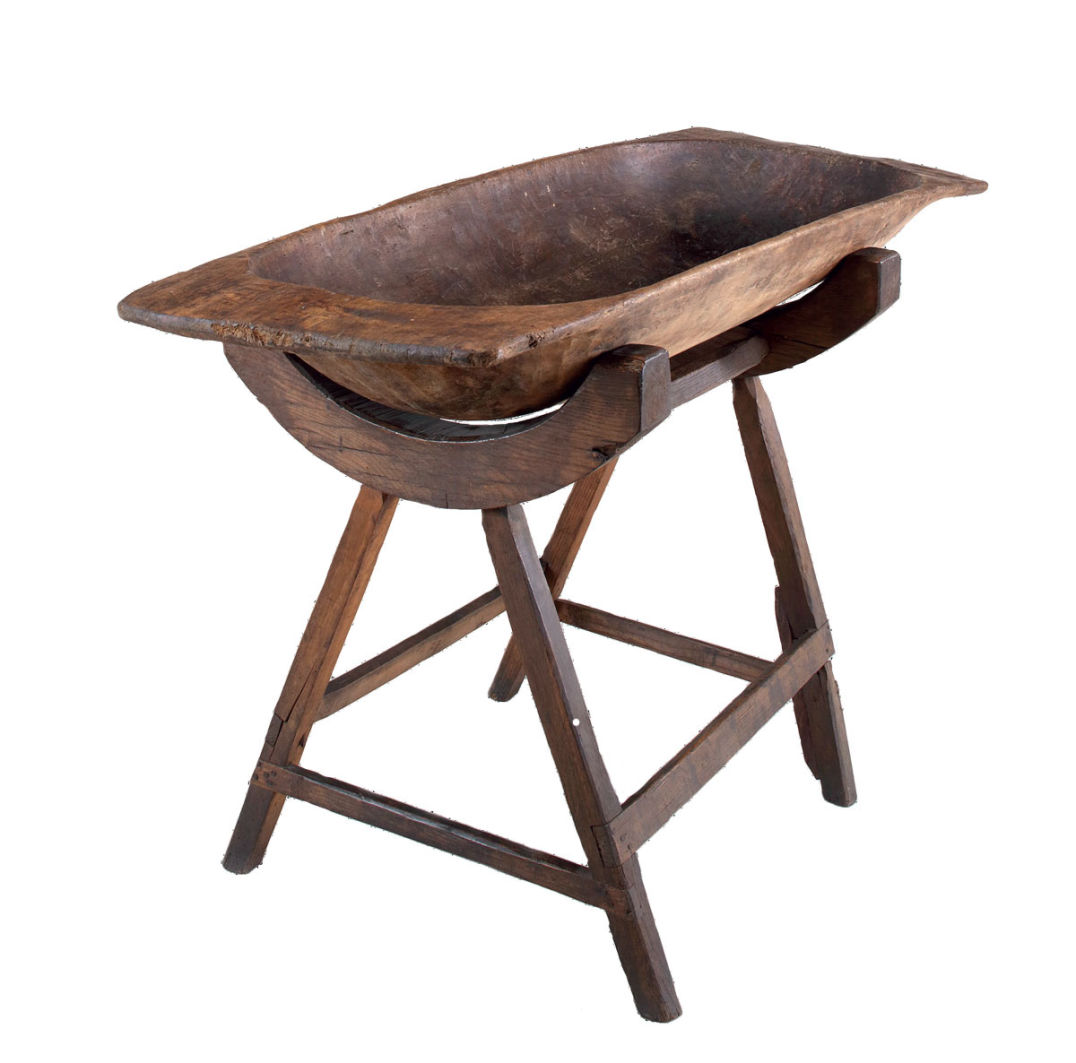
Trough with legs, 19th ct., Posavina, EMZ 18305
Night stand, 20th ct., Zadar, EMZ 30079
Because today’s trends and the reappearance of original or retro and reworked versions of shabby chic, the furniture has been used in some contemporary apartments or, and most often, in weekend cottages. In the last ten years, traditional furniture has been used in the interiors of rural hospitality businesses (agritourism concerns), in the promotion of legacy tourism in Croatia. Many designers have found inspiration in the museum collection and developed contemporary creative products, equipping holiday facilities with traditional furniture. Tertiary level instruction and the long-term collaboration of the Ethnographic Museum and the Zagreb Forestry Faculty (furniture design) and with the Architecture Faculty (product design) are also important, for dissertation pieces have been produced that were inspired by objects from the furniture collection of the museum. These are positive examples that bear out the possibility of and the need for preserving and interpreting the furniture collection in the future as well.
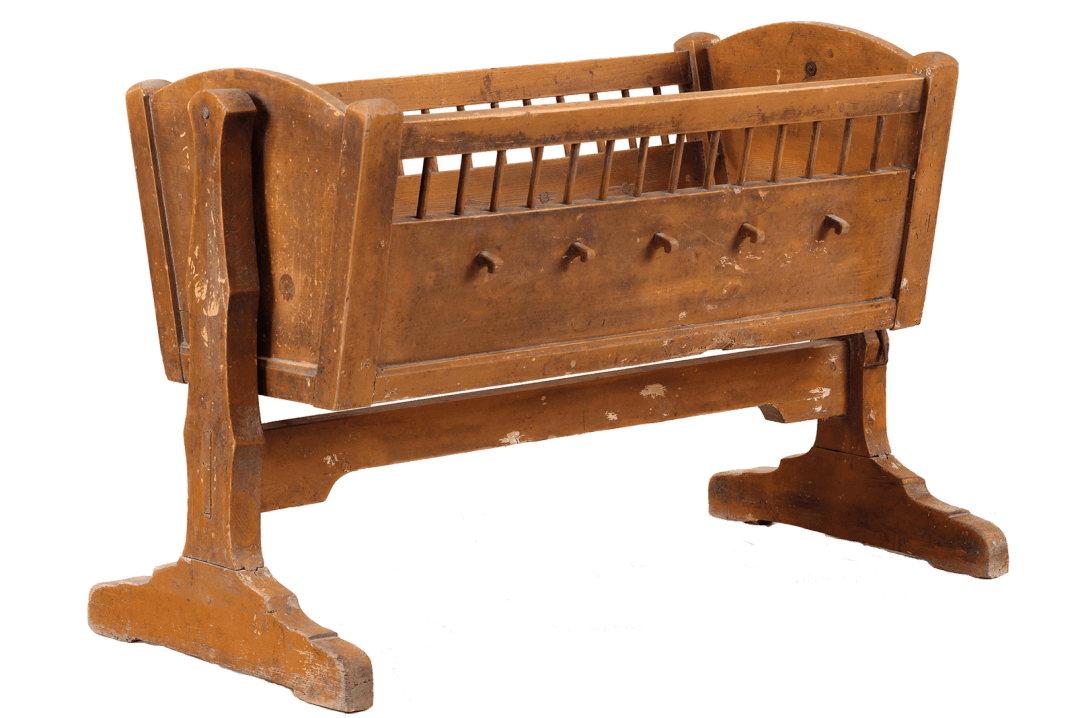
Cradle, 19th ct., Turopolje, EMZ 22533
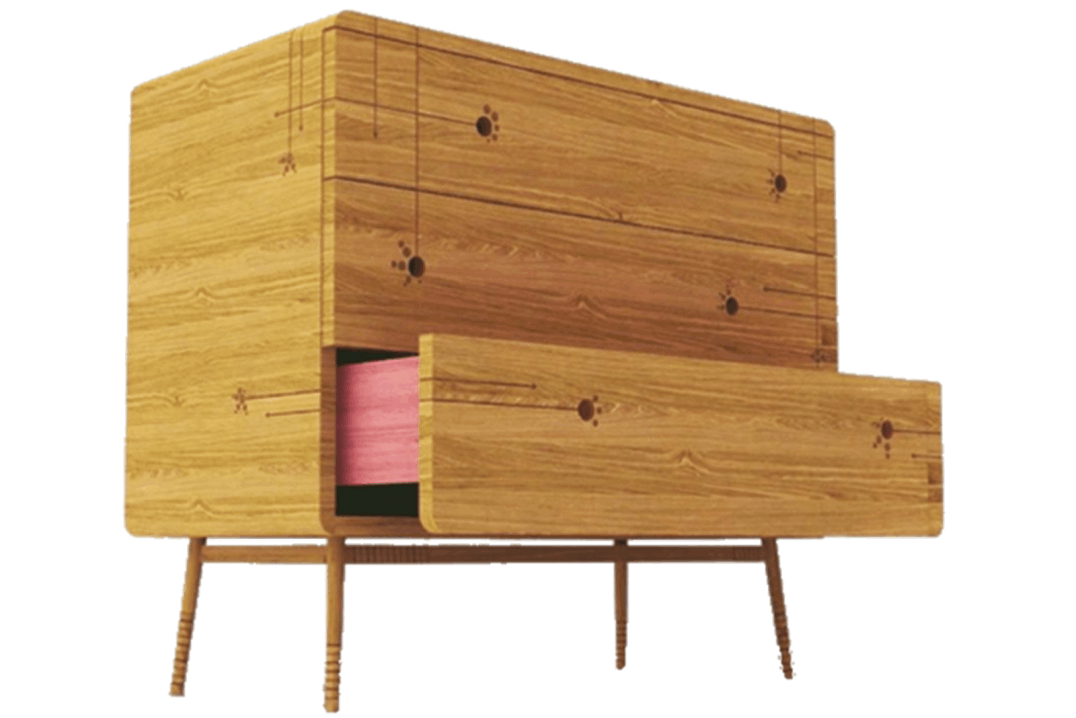
Dresser, Kovačević Margareta, Mentor doc. dr. sc. Danijela Domljan, Zagreb Forestry Faculty, 2016.
As the furniture collection manager for many years, I was able to study the collection over time and to use museum documentation, which prompted me to wider research into the literature and the archives about the objects in the collection. The treatment of objects in the catalogue part of the book is based in part on the results of the work of the first museum curator Vladimir Tkalčić (1919-1933) and the longterm manager of the collection, museum adviser Nada Gjetvaj, MSc. I took over the collection in 1996, since when the collection has been professionally processed and documented in the museum database,
as well as supplemented with gifts and purchases of some objects.
Documentation about the objects in the collection is not final, since this is a permanently open and ongoing process, successively updated with new scientific and scholarly information.
I hope that I have provided at least partial answers from the viewpoint of my profession, as ethnologist, cultural anthropologist and museologist. In view of the inherent interest of the material in the holdings of the furniture collection, I believe that it will furnish a new scholarly contribution and a new interpretation in a contemporary museum context of the furniture study exhibition, as well as in the depiction of the culture of living in the future new permanent display of the Ethnographic Museum in Zagreb.