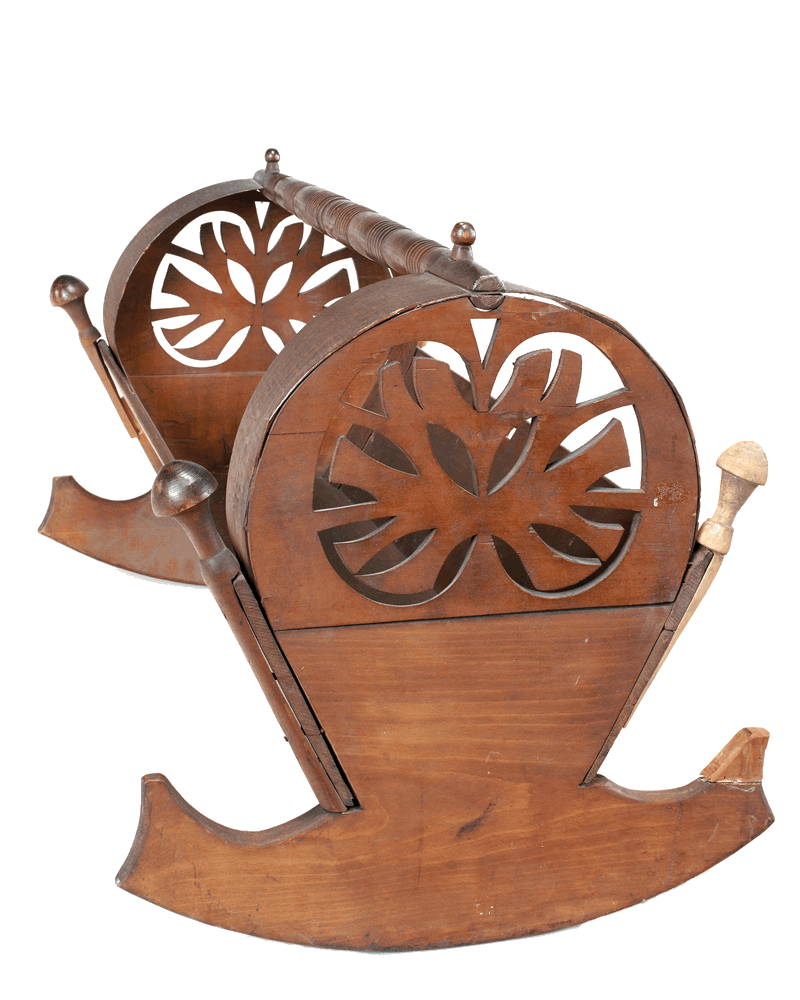
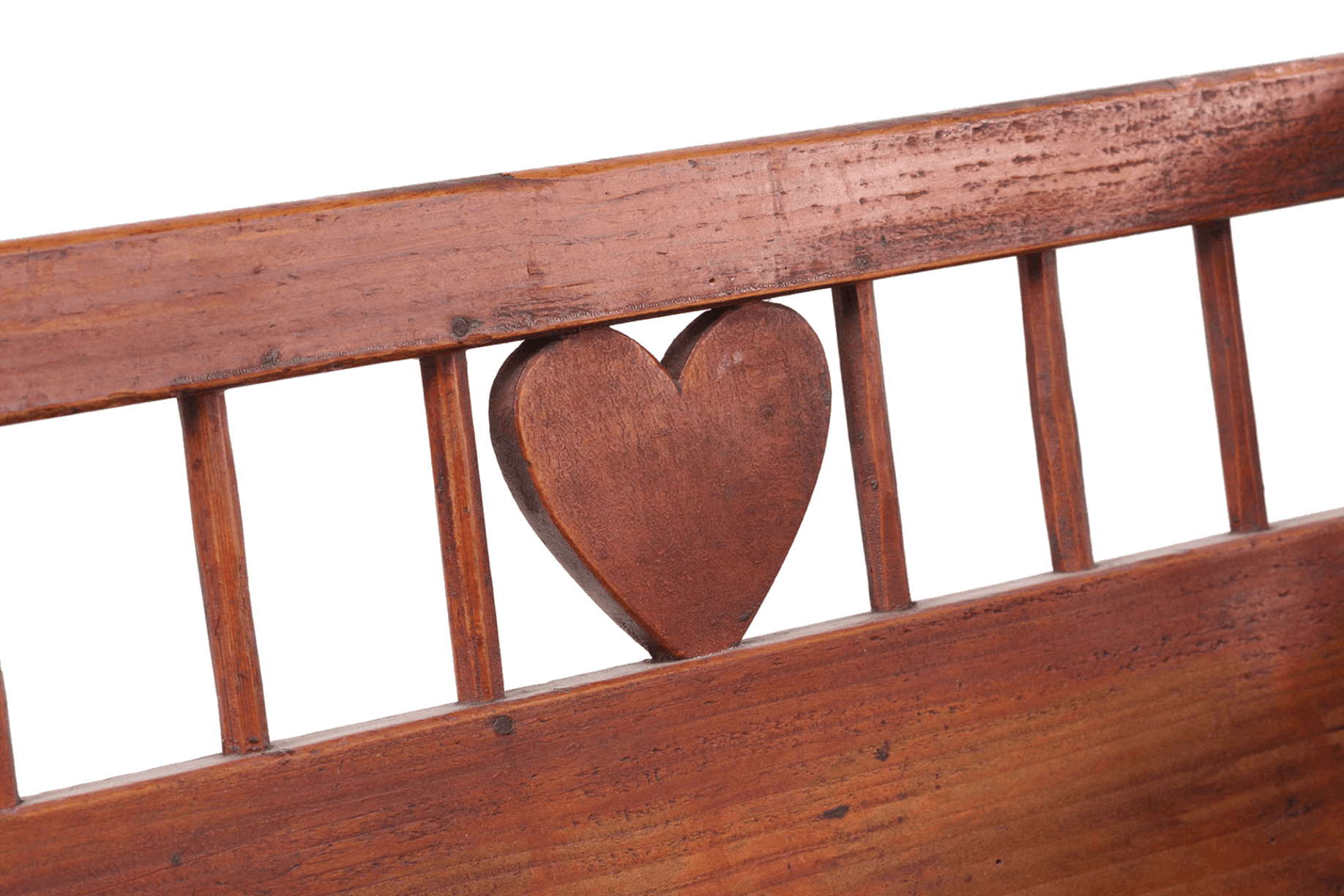
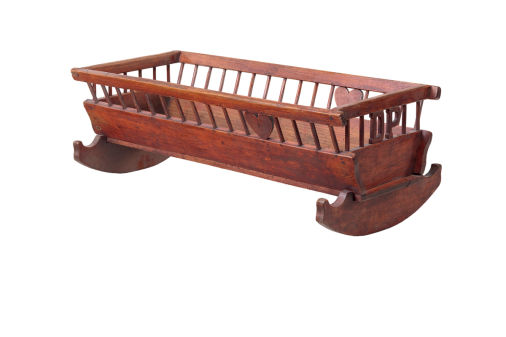
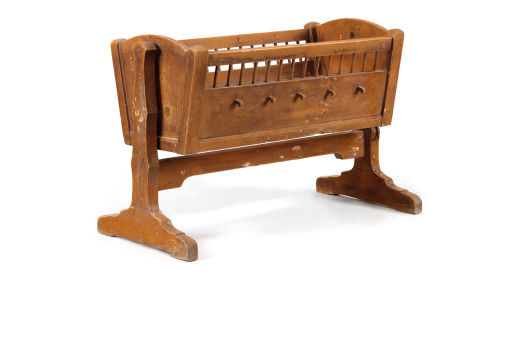
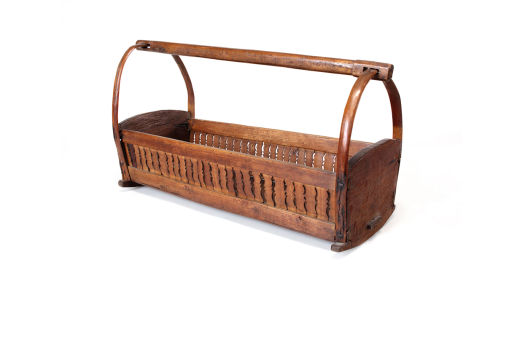
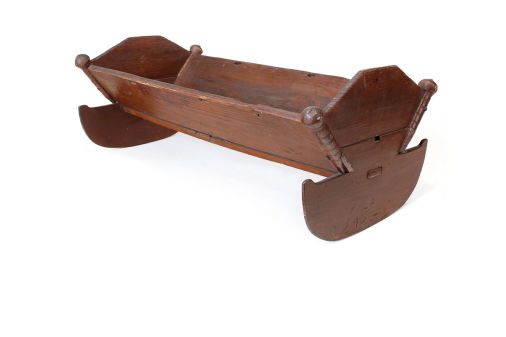
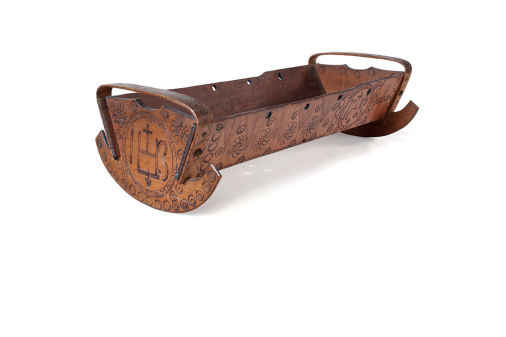
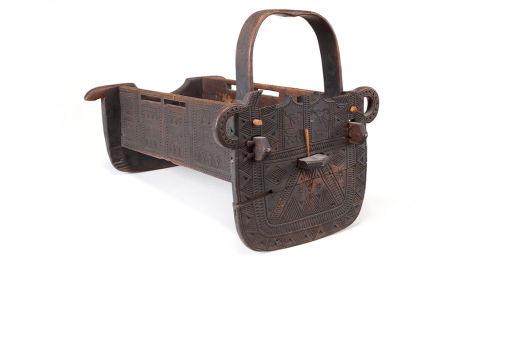
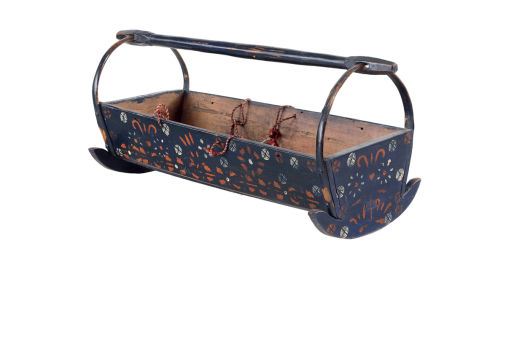
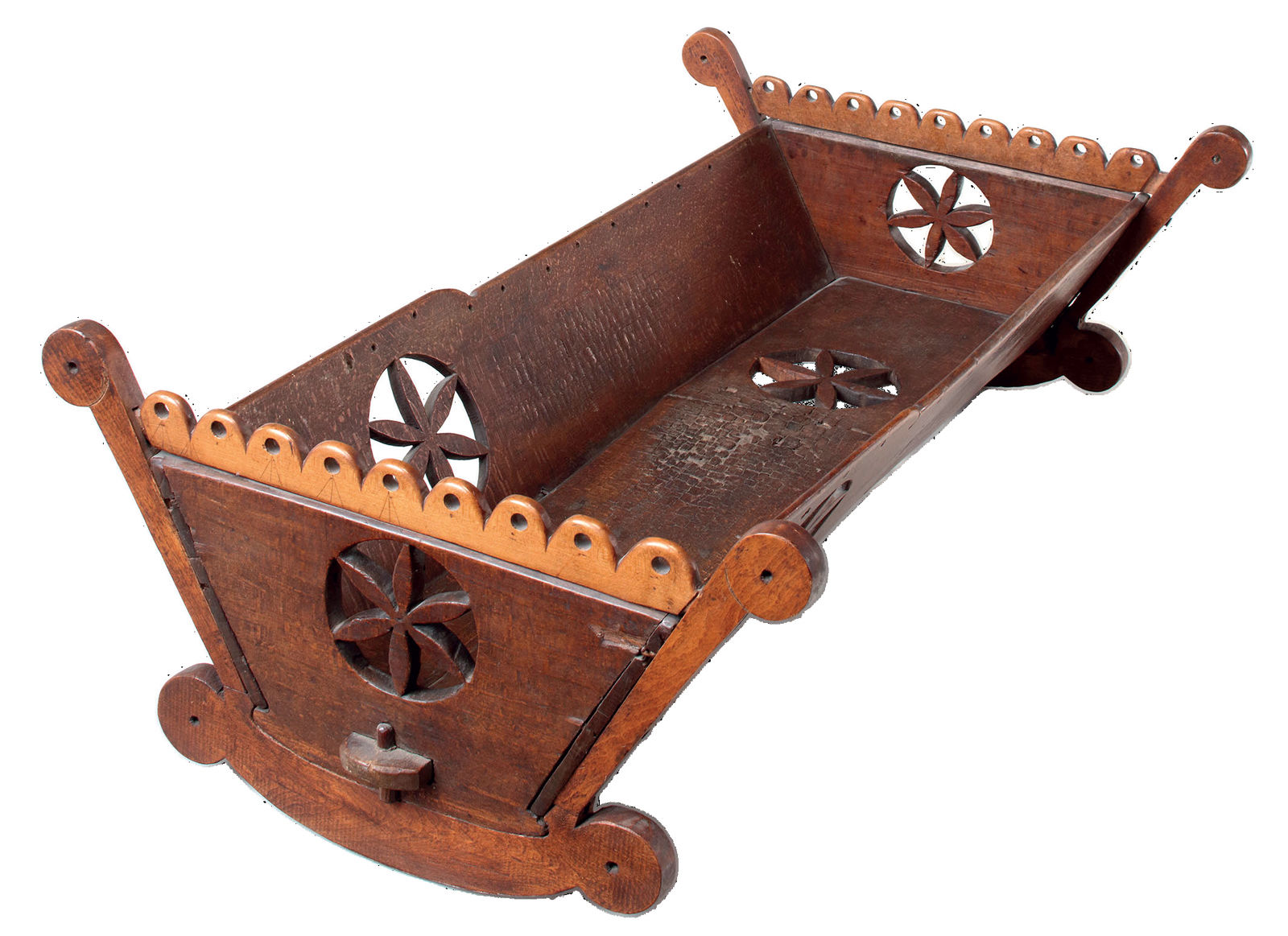
Particular attention was paid to the decoration of the lateral and cross sides of the cradle, which were carved, painted, poker-worked, painted and incised. The most common motifs were plant or geometrical, and the ornamentation was usually considered to have an apotropaic function, warding off evil. A little child was believed to be particularly exposed to the influence of evil forces (mares, fairies, witches) and a mass of means for defence against them were used. By the side of the cradle would
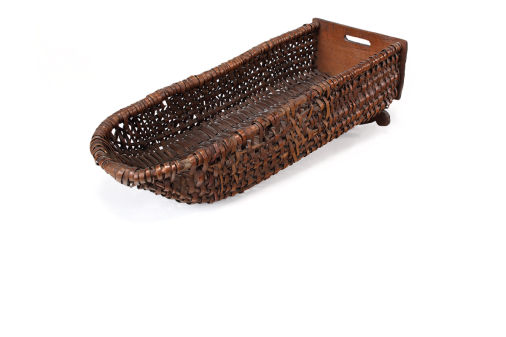
be placed a knife, garlic, a mirror, a rosary, a flask of holy water. In some regions, children would be taken to be baptised in their cradles. If there was no cradle, a child might sleep in a trough. The child’s first toys would hang from the stick used to carry the cradle, a sheep bell, a colourful woollen pompom that the child could reach for and play with. There were also long, high cradles in which somewhat older children slept (after six months of age) while older children still did not sleep in separate beds, but most often on benches or in a bed with older members of the family.
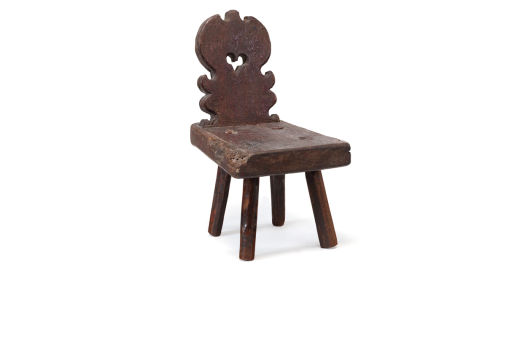
Another group of objects consists of aids that were used to help the child learn to sit, stand and walk, and miniature forms of furniture meant for children. A child would learn to sit in a sjediljka, an open box without a front and a sloping back on which the child would lean. There were also specially made stands in which a child would learn to stand up. The most widespread form was a stand with four legs fitted onto a square board in the lower part and a wooden circle in the upper part. When he got tired of standing in the stand he would be seated on a special little stool inside the stand. A simpler form of stand was planted into the earth. This was a pointed stake with a circle at the top to encompass the child. This kind of stand could be taken to the fields. The child learned to walk in odače. The simplest kind would be fixed into a ceiling rafter from the top and the lower part into the floor moving lightly when the child walked. Then there was a second type which moved along two long rods on static legs. The child would be in a frame and move it walking inside the walker. Also used were walkers on wheels in which the child was in a circle and would as it walked move the whole of the device.