BEDS

Kreveti-1

BEDS

According to lists of dowries on Hvar island from the 16th to the middle of the 19th century, various kinds of beds are mentioned, as is the fact that chests and benches were also used as beds. In sources of the 17th century it was said that on Hvar the people also had iron beds. Mattresses of horsehair are also mentioned as well as beds, with headboards, large and small, and then pallets. The most rudimentary beds in the houses of the poor of the Adriatic area were kavaletas, wooden X-trestles across which planks were laid. From sources from Vis Island we learn that in the Adriatic zone a groom had to buy a bed mostly known by the name of “a person and a half ”, i.e. a bed a bit smaller than two twin beds, known as marriage beds (Bezić - Božanić 1998: 287). “He was bound to provide his wife premises for her to live in and a bed that was completely equipped with the necessary sheets and blankets” (Bezić - Božanić 1992: 87). The poor folk in the Dalmatian hinterland slept on straw beds or woollen blankets. From the accounts of Ivanišević we learn that such a bed was known as odar, and that it had only straw, without the ticking, which was covered with a sheet. “The simplest beds were made of several boards resting on low trestles on top of which came a pallet, and they called it a bed or a sadno, where the older members of the household slept in winter, or on which women gave birth” (Ivanišević 1902: 262).

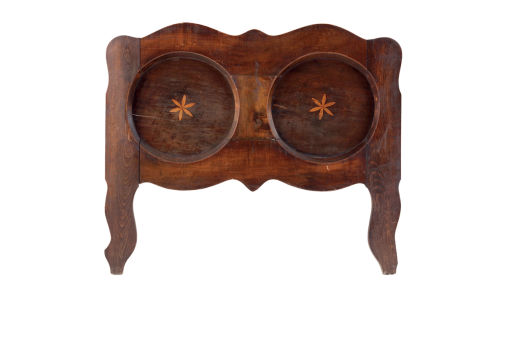
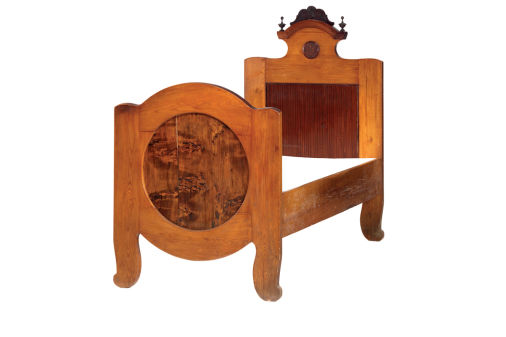
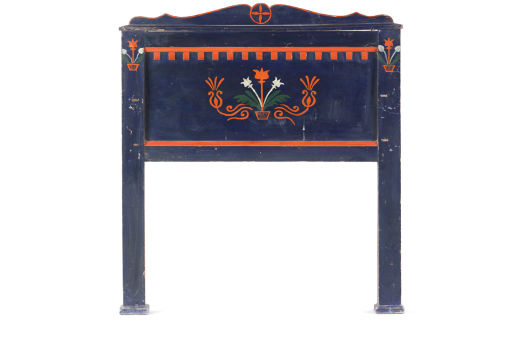
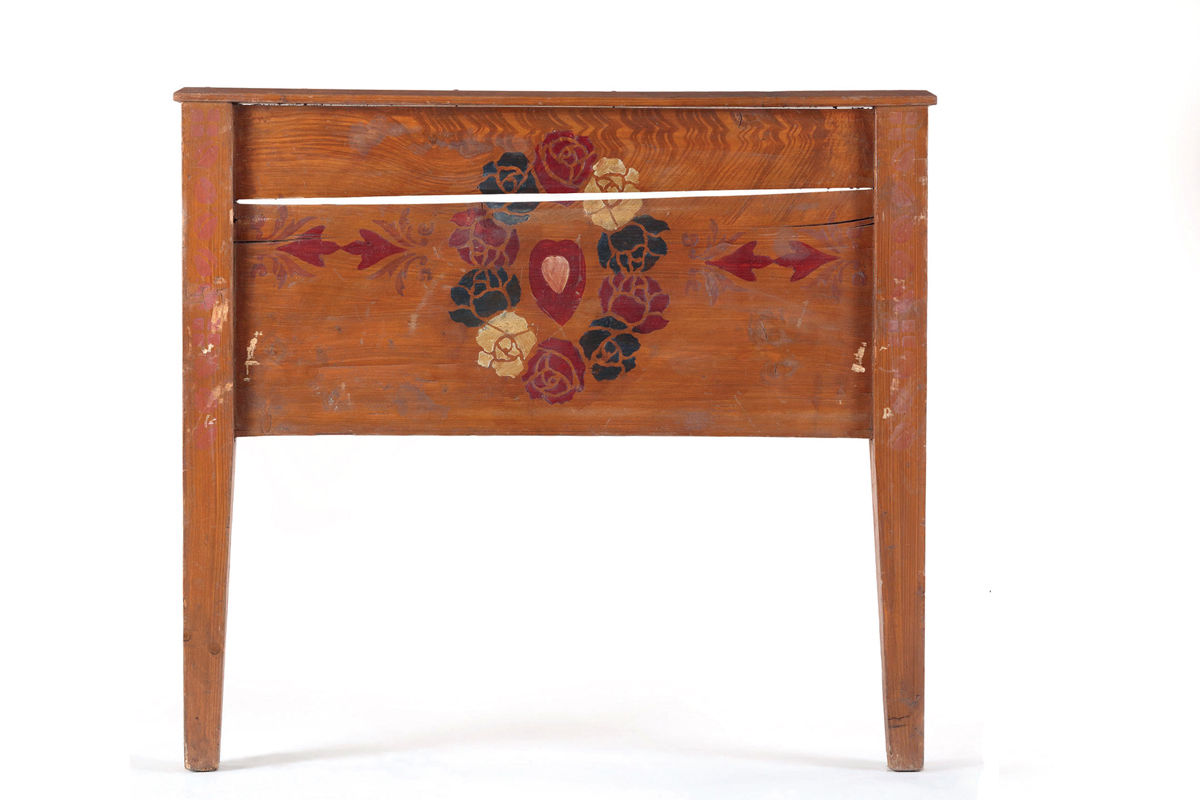
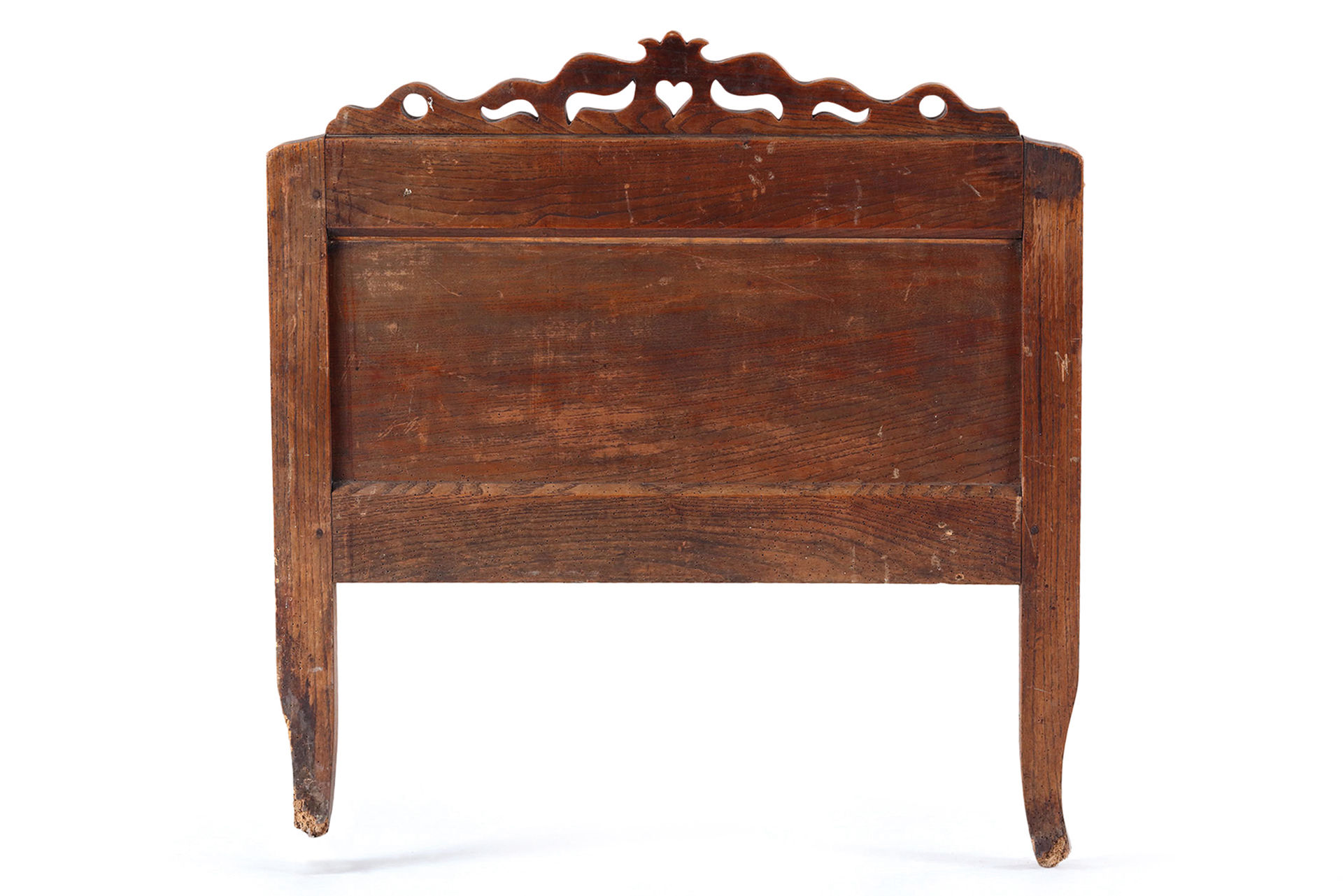
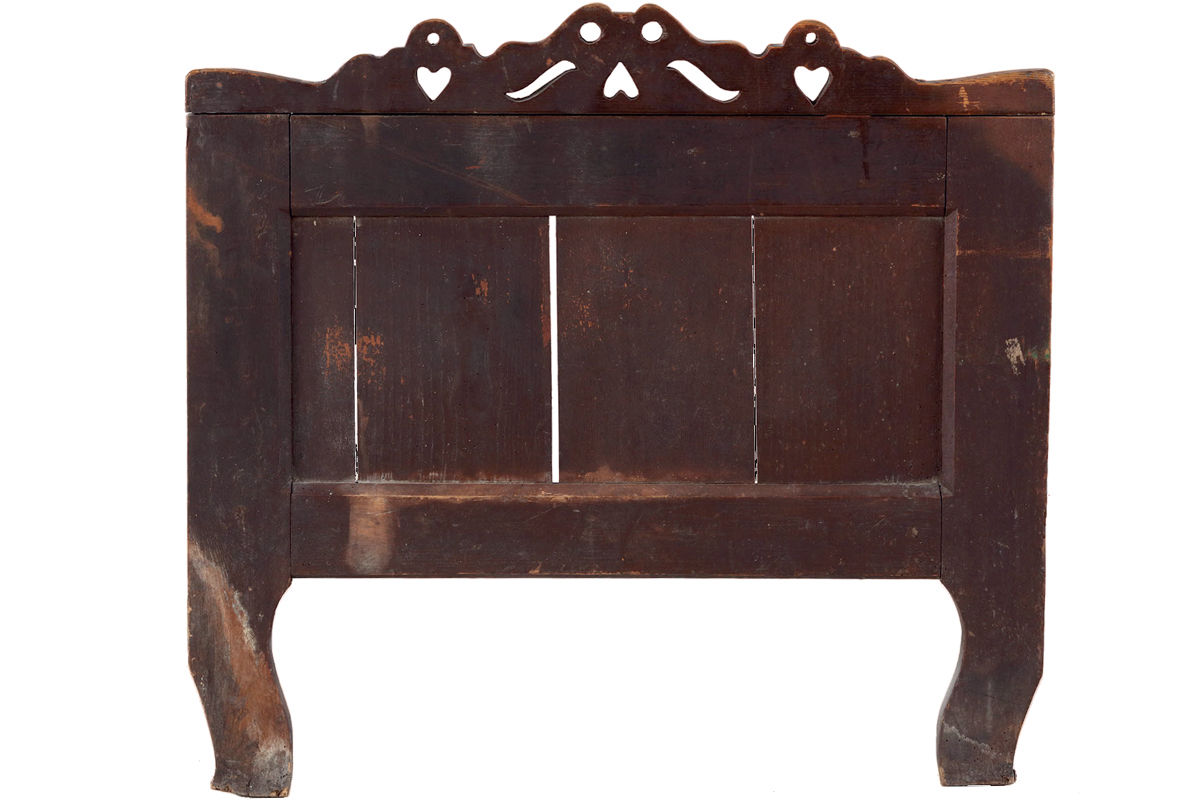
During the 19th century most peasants had beds in their rural houses. In the construction of a bed it was particularly important that it was easy to take apart. In rural houses, beds for a single person were often used, with headboard and footboard. Beds that were known as postelje or postelj were beds made with simple workmanship, of just a few boards, like a crate, with four legs and a raised head and footboard. In the houses of richer peasants the bed tended to be ornamented with carving on the sides, during the 19th century. In Baranja beds had headboards, footboards and sides ornamented with paintings of stylised geometrical or floral patterns at the beginning of the 20th century (Antoš 1998: 26).

Since a bed was considered an item of ornamentation in every home, particular attention was paid to placing it in the room, for the ornamented side to be turned to the door, the decorations immediately being seen on entry into the space. It was believed that these ornaments had a magical, apotropaic role for the young couple and their family.
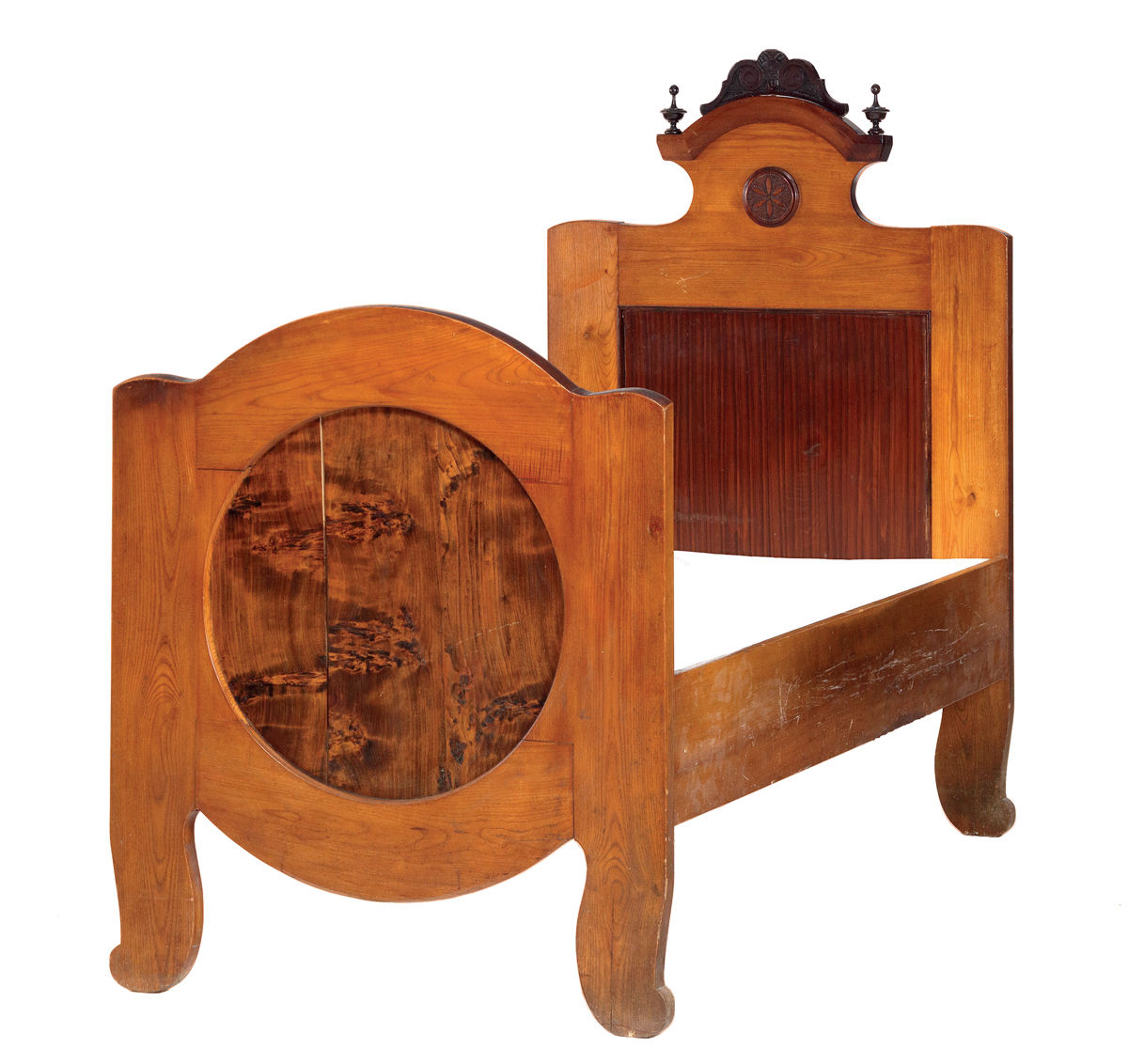
Both riches and poverty were demonstrated in the furnishing of the bed. The feeling of the protection, comfort and warmth of a bed did not derive only from its being able to be, if necessary, closed, but from its being equipped with straw mattress, pillows, quilts and woollen blankets. This furnishing varied from simple to exceptionally rich in the different parts of Croatia. An example of a richly accoutred object comes from Slavonia, which had several rows of pillows that would sometimes touch the ceiling of the room and had to be supported by richly decorated railings. At the side was a bench on which was a cradle or on which a child slept. “If needed a bed would be screened with a curtain for the new mother to be isolated from the other members of the family” (Maglica 2003:193). When it was time for delivery, the other members of the household would leave the room, and if the birth occurred at night, would sleep in the byre. “After the delivery, the mother would for some time continue to sleep in the curtained part of the room, lest the child be attacked by evil forces or darkness” (Muraj 1989: 140). In the 1930s things changed, because there was a separate bedroom, which provided mother and infant privacy and the possibility of being isolated from the other members of the household. A bed was also the last resting place of a deceased member of the family, and it was in the bedroom that the villagers would bid their adieus. The household would take the beds out of the room, and prepare in the centre of the room a bier consisting of two tables and two benches on which they would place the deceased “People would be arriving during the day. At night the dead would be watched over” (Muraj 1989: 160).

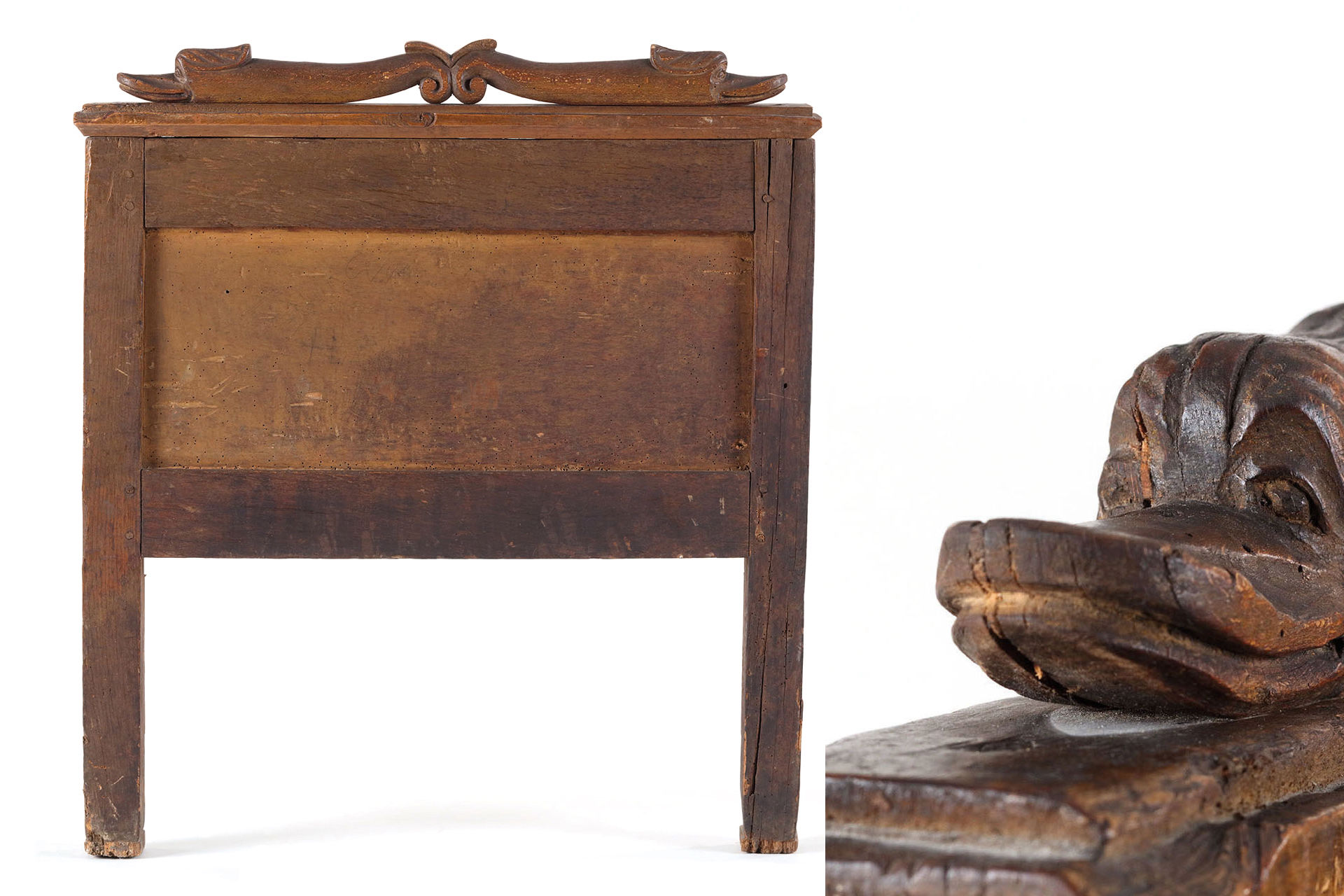
Krevet - detalj

Detail - EMZ 2860 Bed, postelja, Place: Rinkovec, Hrvatsko zagorje

Looked at as a whole, the number of persons in beds was greater than today, and they tended to shift around, since most of the population did not have beds for themselves. It was fairly rare to sleep alone in a bed. Man and wife would sleep in a single.

In the thirties of the twentieth century twin beds, called marriage beds, came into use. They were joined with a single headboard and footboard, and were regularly placed in the centre of the bedroom. Because of the size of the bed, children often slept with a young married couple. In the middle of the 20th century when there was intensive migration to the cities for work, in rural households the number of family members decreased and the bedroom became a more private space, the bed a personal and intimate object. Seldom was bedroom furniture now ordered from a craftsman, rather industrially produced furniture was bought from the showroom. A bedroom suite complete with bed furnishings has kept its place in the portion of the bride to this day in many villages, depending on the wealth of the young woman. In parallel with the increase in the overall standard of living and housing, changes in everyday behaviour can be observed. Some of them arose in consequences of the improvement of conditions of health and hygiene, and the acceptance of a contemporary manner of living and dwelling.

Krevet_EMZ_29724

EMZ 29724
Name: Bed
Place: Draž, Baranja
Dimensions: 98 x 90 x 187 cm
Time: beginning of 20th ct.

Krevet_EMZ_2860

EMZ 2860
Name: Bed, postelja
Place: Rinkovec, Hrvatsko zagorje
Dimensions: 87 x 90 x 187 cm
Time: second half of 19th ct.

Krevet_EMZ_26493

EMZ 26493
Name: Bed, postelja
Place: Donja Kupčina
Dimensions: 97 x 90 x 183 cm
Time: second half of 19th ct.


Krevet_EMZ_62287

EMZ 62287
Name: Bed, postelj
Place: Slavonija
Dimensions: 86 x 90 x 187 cm
Time: second half of 19th ct.

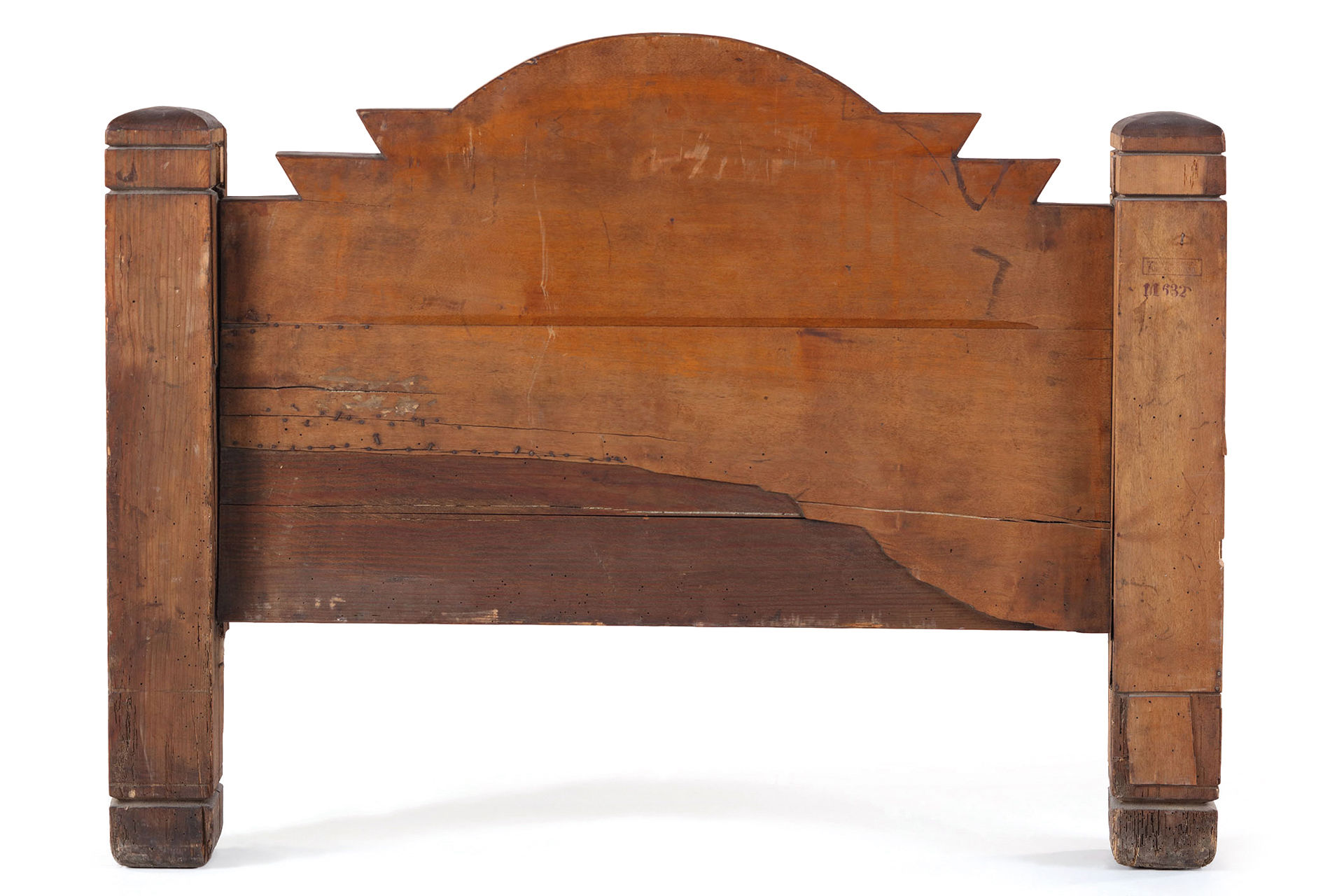
Krevet_EMZ_11632

EMZ 11632
Name: Bed, postelj
Place: Đakovo, Slavonija
Dimensions: 86 x 90 x 187 cm
Time: second half of 19th ct.

Krevet_EMZ_27360

EMZ 27360
Name: Bed, postelja
Place: Posavina
Dimensions: 98 x 90 x 187 cm
Time: second half of 19th ct.

Krevet_EMZ_27358

EMZ 27358
Name: Bed, postelja
Place: Posavina
Dimensions: 85 x 90 x 187 cm
Time: second half of 19th ct.


Krevet_EMZ_28880

EMZ 28880
Name: Bed for "a person and a half"
Place: Žman, Sali
Dimensions: 123 x 105 x 187 cm
Time: second half of 19th ct.

Krevet_EMZ_46232

EMZ 46232
Name: Bed
Place: Draž, Baranja
Dimensions: 96 x 186 cm
Time: 1930.

Krevet_EMZ_20178

EMZ 20178
Name: Bed
Place: Draž, Baranja
Dimensions: 81 x 90 x 187 cm
Time: second half of 19th ct.

Krevet_EMZ_19855a

EMZ 19855a
Name: Bed
Place: Branjin Vrh, Baranja
Dimensions: 86 x 90 x 187 cm
Time: second half of 19th ct.


Krevet_EMZ_19855b

EMZ 19855b
Name: Bed
Place: Branjin Vrh, Baranja
Dimensions: 86 x 90 x 187 cm
Time: second half of 19th ct.

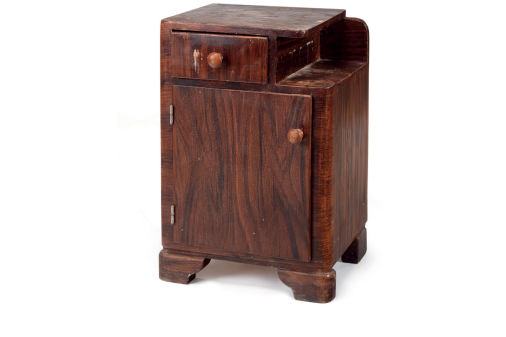
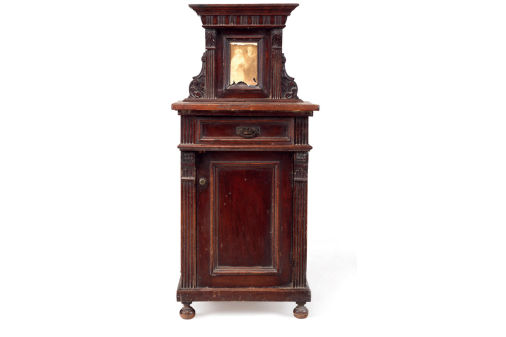
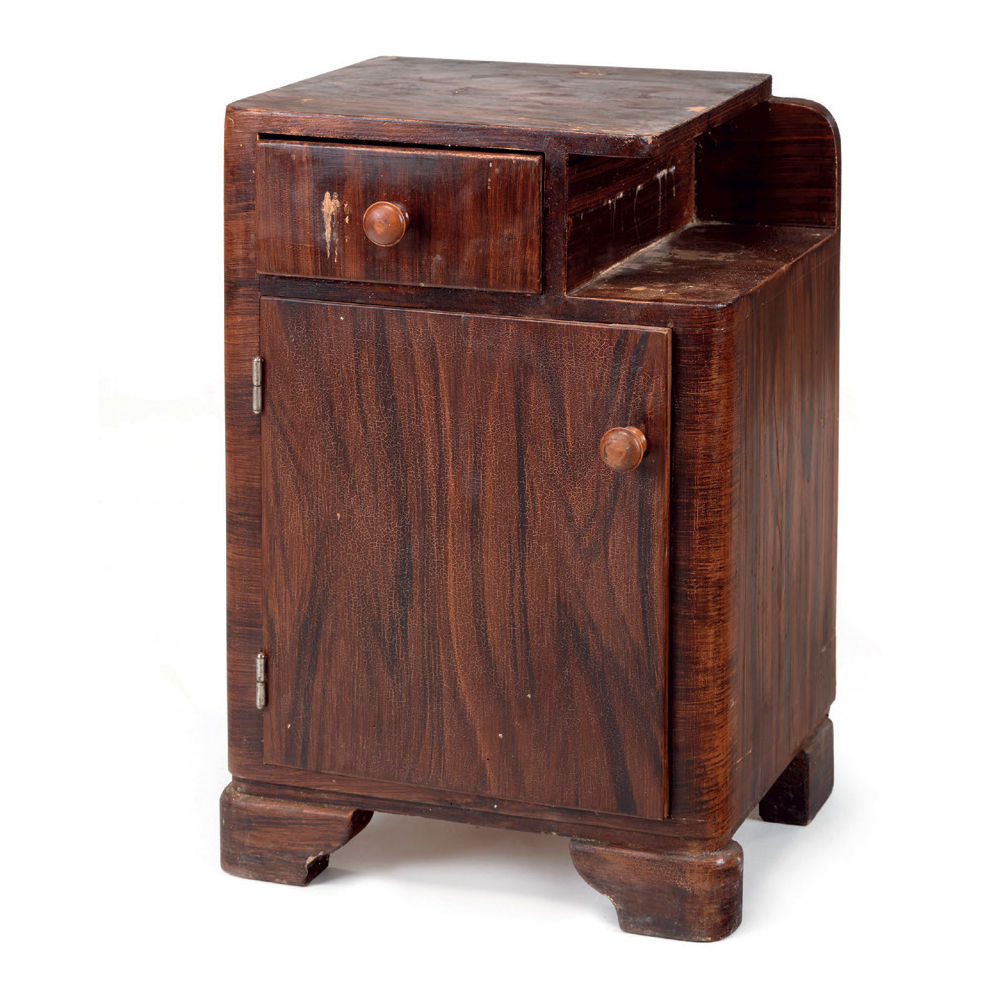
Ormarić_EMZ_46262

EMZ 46262
Name: Night stand
Place: Čabar, Gorski kotar
Dimensions: 70 x 36 x 44 cm
Time: 1926.

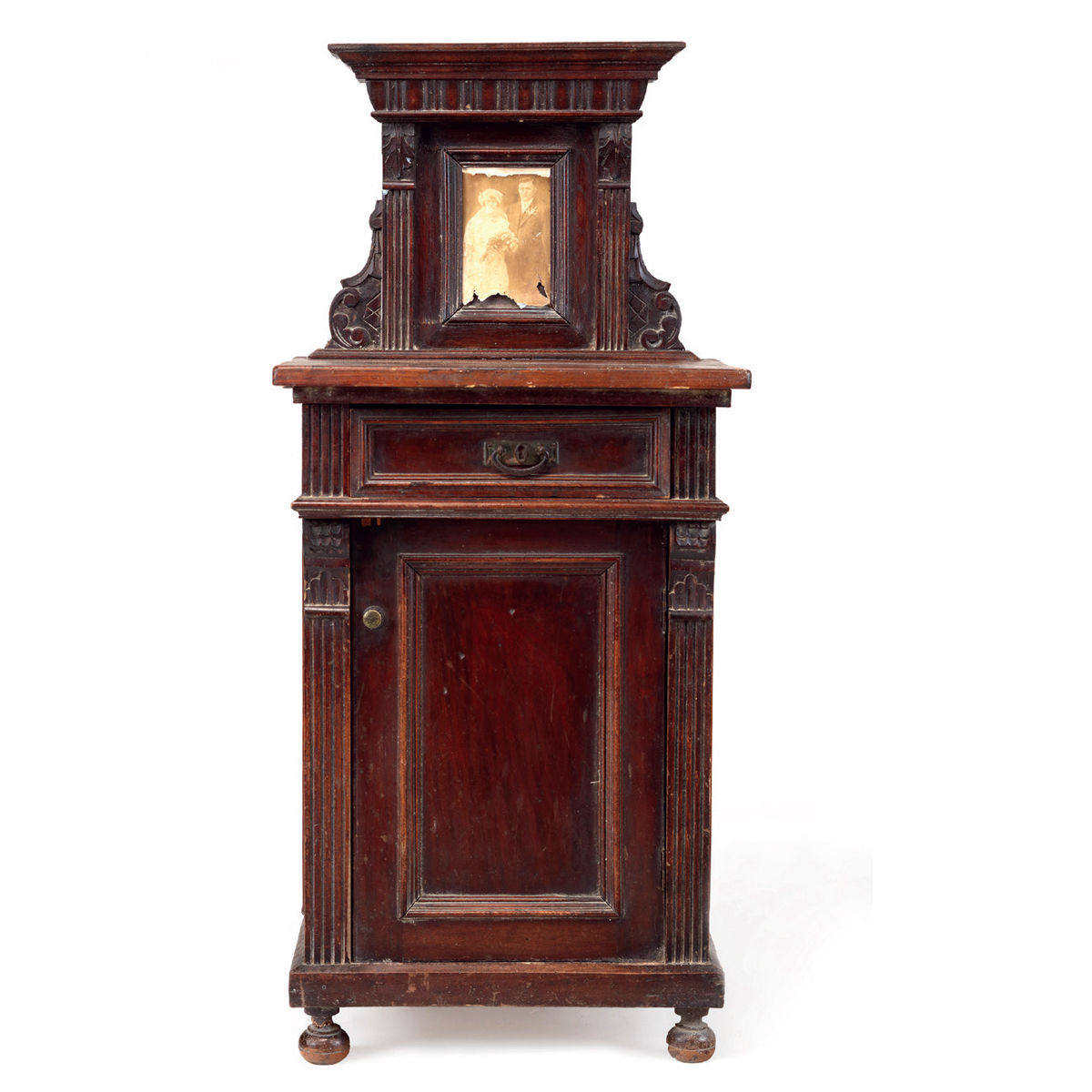
Ormaric_EMZ_30079

EMZ 30079
Name: Night stand
Place: Zadar, Dalmacija
Dimensions: 70 x 36 x 44 cm
Time: first half of 20th ct.


Ormaric_EMZ_47133

EMZ 47233
Name: Night stand
Place: Zadar, Dalmacija
Dimensions: 115 x 55 x 44 cm
Time: first half of 20th ct.


Ormaric_EMZ_62287

EMZ 62287
Name: Night stand
Place: Haganj, Moslavina
Dimensions: 114 x 36 x 44 cm
Time: first half of 20th ct.

EXPLORE STORIES ABOUT FURNITURE ...

DISCOVER STORIES ...

Zbirka pitanje 2
Zbirka pitanje 3
Zbirka pitanje 4
Zbirka pitanje 5

Ethnographic Museum
Trg Mažuranića 14 
Zagreb, 10000 HR 
+385 (01)4826 220 
emz@emz.hr

  • Text and catalogue entries by: Zvjezdana Antoš, PhD, museum adviser
  • Photographs: Goran Vranić, Nina Koydl, Petar Strmečki, Ethnographic Museum's Photo Archive
  • Web design and development: Viola Šebalj
  • Subediting and proofing: Andrea Rožić
  • English translation: Graham McMaster, PhD
  • For the publisher: Goranka Horjan, PhD, museum adviser

  • © Copyright Etnographic Museum, Zagreb, 2022.
  • The exhibition was financed by the Ministry of Culture and Media, Republic of Croatia, City of Zagreb - City Office for Culture, International Relations and Civil Society