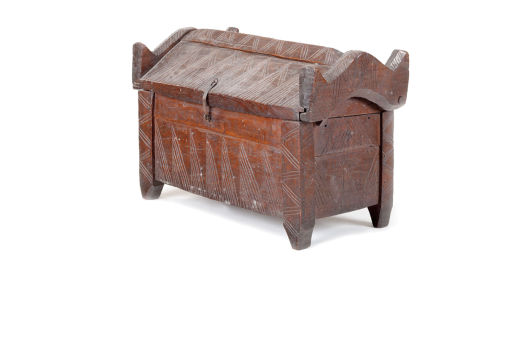
In the interiors of rural homes, particularly of the better-off, new objects came in together with those handed down: beloved memories that that with the patina of age tell of the longevity of the family, and from that at least in part it derived its value, showing the care for the family inheritance. Such family values are possessed by furniture, among which particular attention must go to the chests that have been passed down the generations since the 19th century and are often put on display in visible spots in weekend cottages or in rooms. Their solid materiality embodies the family continuity and at the same time they take care of the carefully folded textiles, garments, jewellery and memories.
The chest was universally used in Europe from the middle ages until the beginning of the 20th century. Throughout time, chests had different applications, from storage of belongings, valuables and documents, to storing grain or flour.
In the 19th century, chests were the most widely used piece of furniture in rural homes, containing linens, such as sheets and clothing items, for the entire family. The chest regularly changed location, sometimes even over several generations, being passed down on the mother’s side or used during travels. The chest as an object holds particular meaning in people’s social and private lives, as a material testament created in a particular time and cultural environment. The chest
can be viewed as an object of a young girl’s private life, the place where she kept her things and personal items. In the trousseau chest there would be a prayer book, headscarves and caps, shawls, jewellery, various decorative tapes and ribbon, aprons, particularly nicely decorated shirts, slippers, sometimes shoes or boots, everyday and holyday wear, a belt, a mirror, sheets for birthing, yarn and a spindle. In the chests there is also a drawer that, like a miniature chest, is used for putting away jewellery and valuables. Little chests or škrinjice were specially made, meant for putting away
jewellery, decorative buttons and ribbons.
An endeavour was always made for the trousseau chest to be nicely decorated and richly furnished, for it was a sign of the wealth of the family. When the spread of chests is studied, it is not always possible precisely to determine the turning points and so it is hard to state the precise chronology of the use of individual items in the decoration of the homes. Times when there were transformations, and the phases of them, differ according to the milieus. According to currently available data from archives and museum collection, from the 19th century there was an increase in the distribution of chests in various area of Croatia.
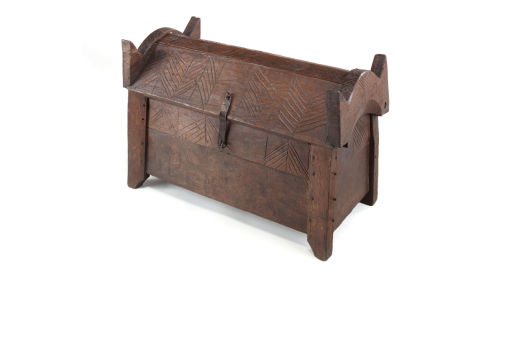
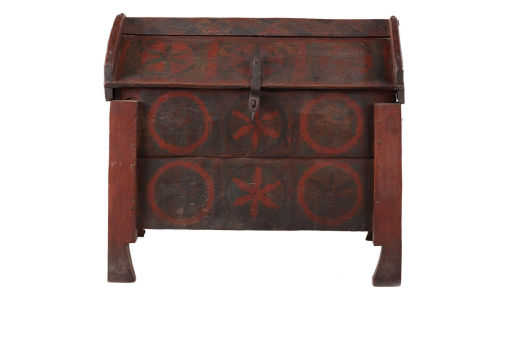
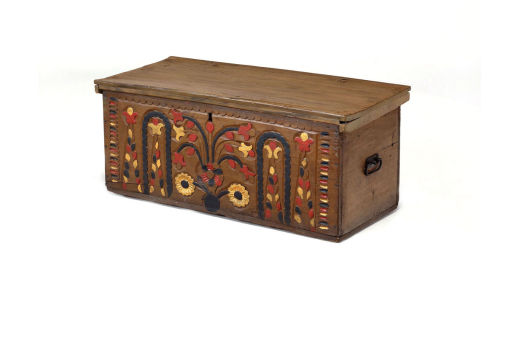
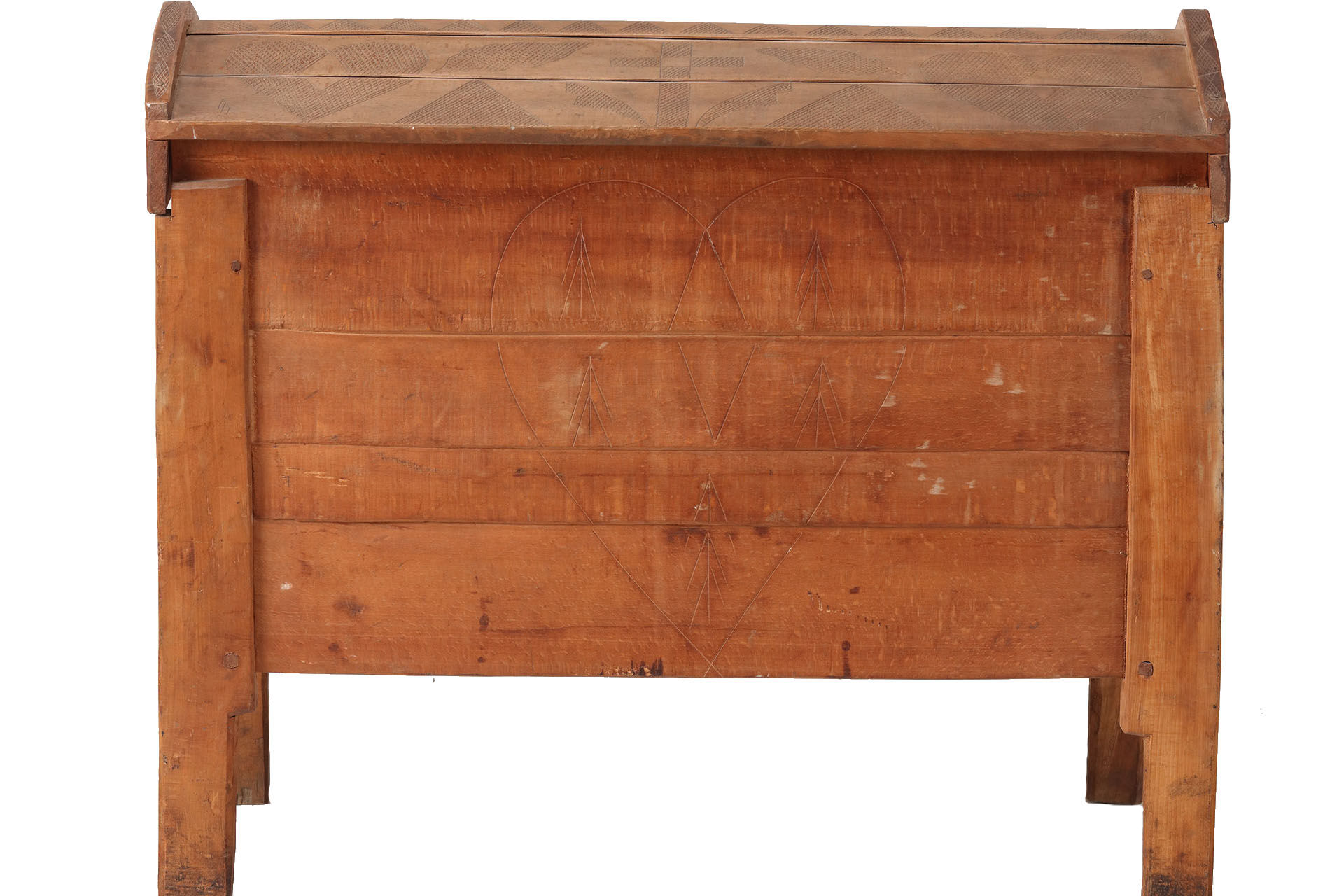
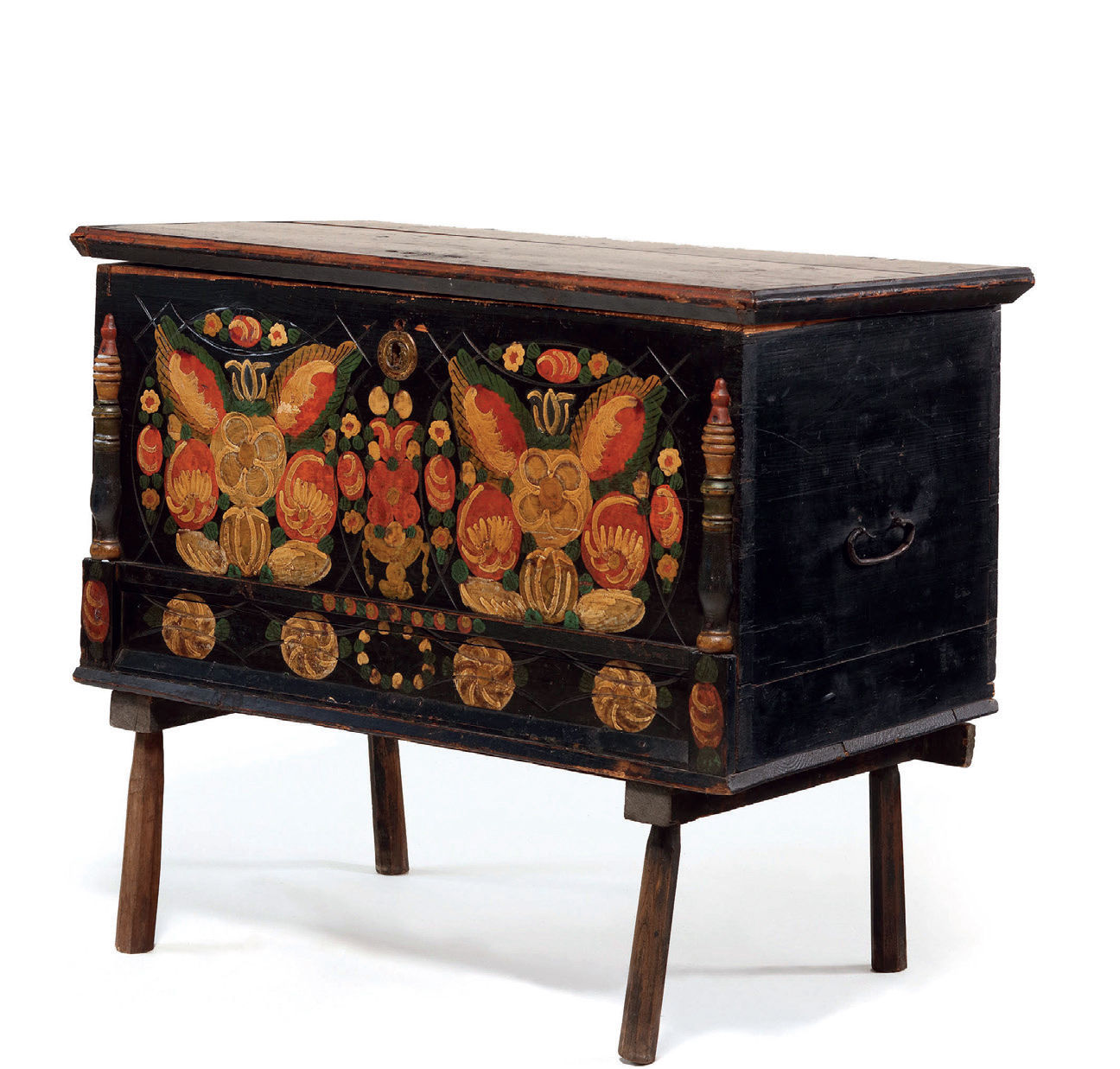
EMZ 19942b Chest, Branjin Vrh, Baranja
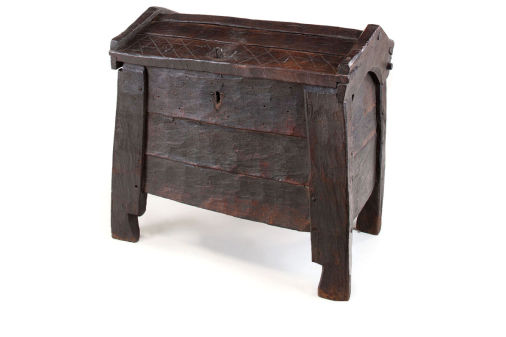
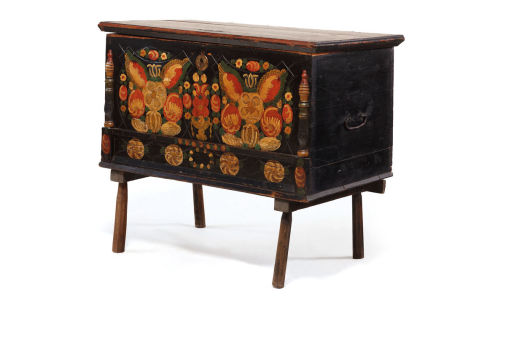
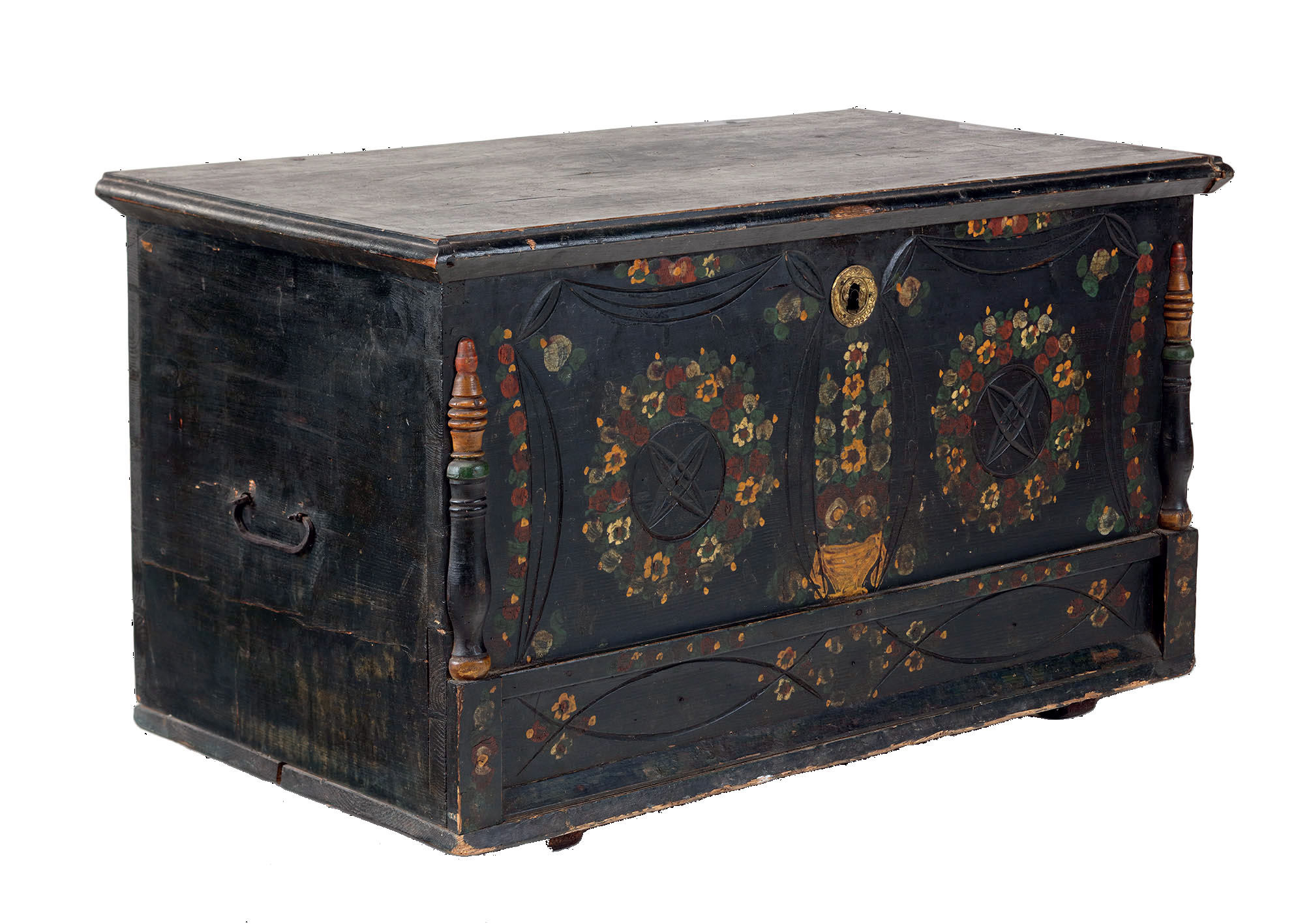
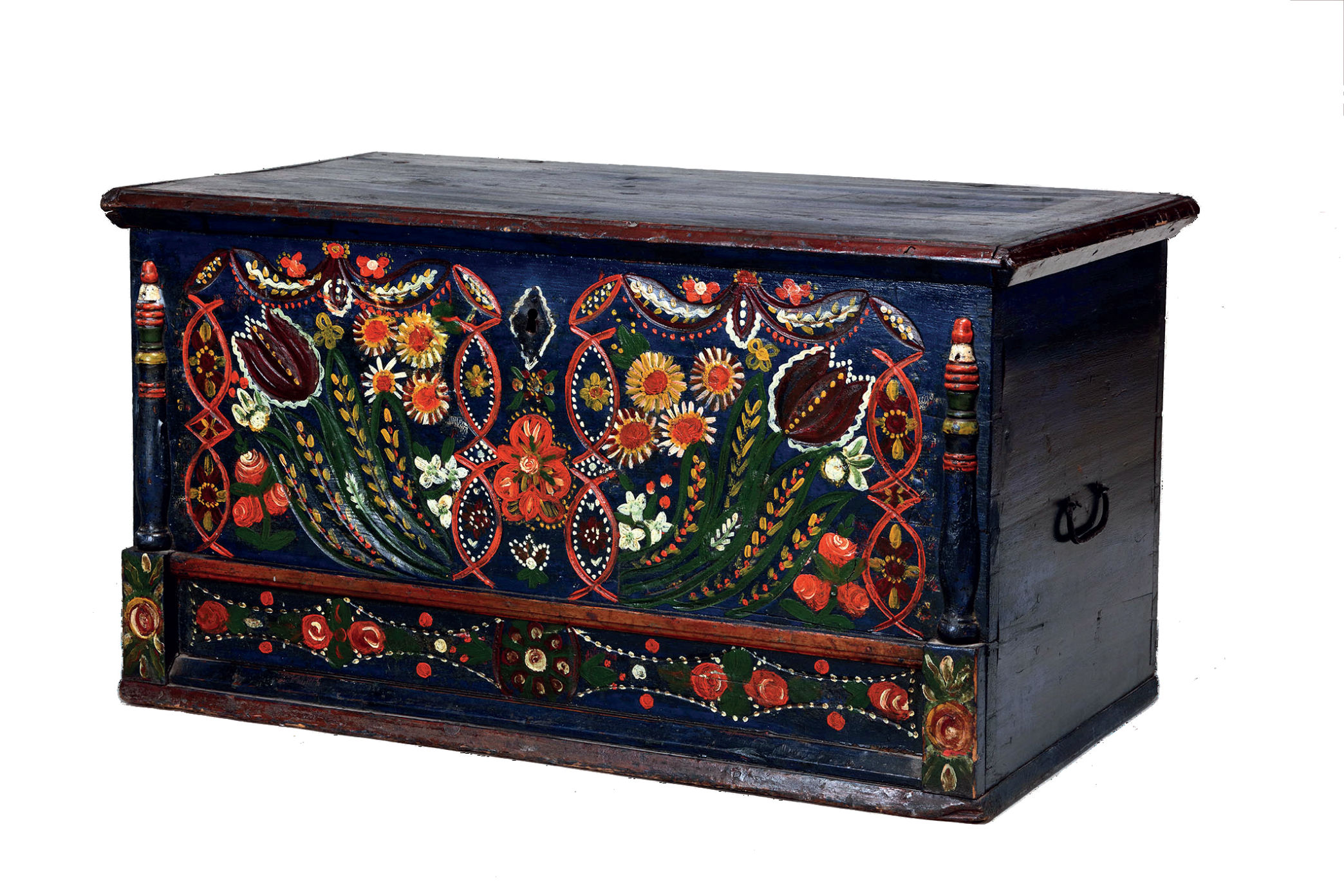
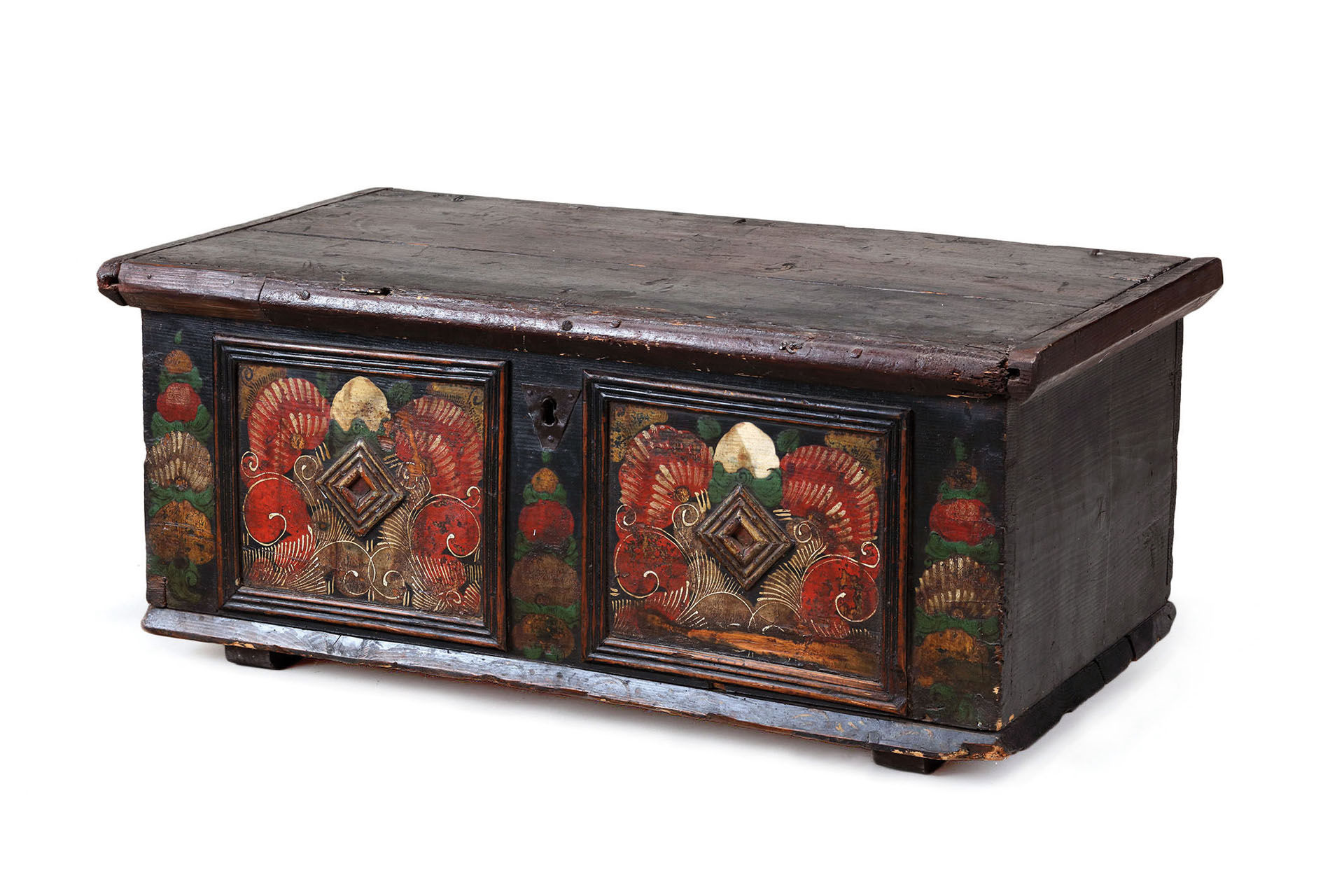
The external appearance of a chest would often give away the importance of the contents inside, and they appear in various forms and materials, with diverse decorations. The ornaments in particular were subject to influences and permeations. In Croatia we can distinguish three basic types of chest, occurring in countless variants, which existed almost in parallel in the individual milieus. They are chests of hewn planks, then the Adriatic type and the Dinaric casket from the Dalmatian hinterland (Domačinović 1977: 9).
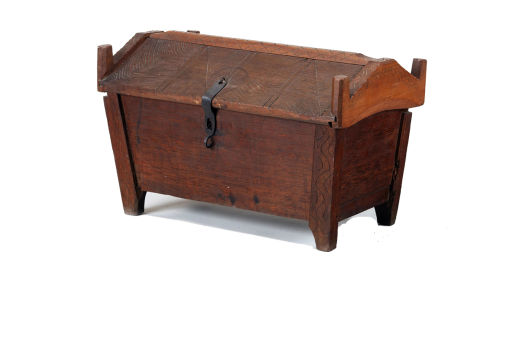
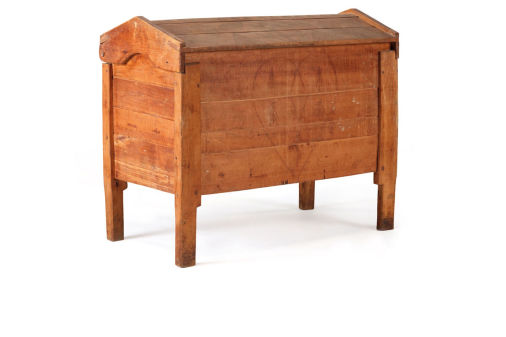
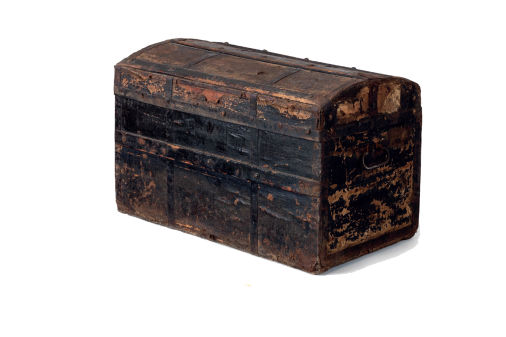
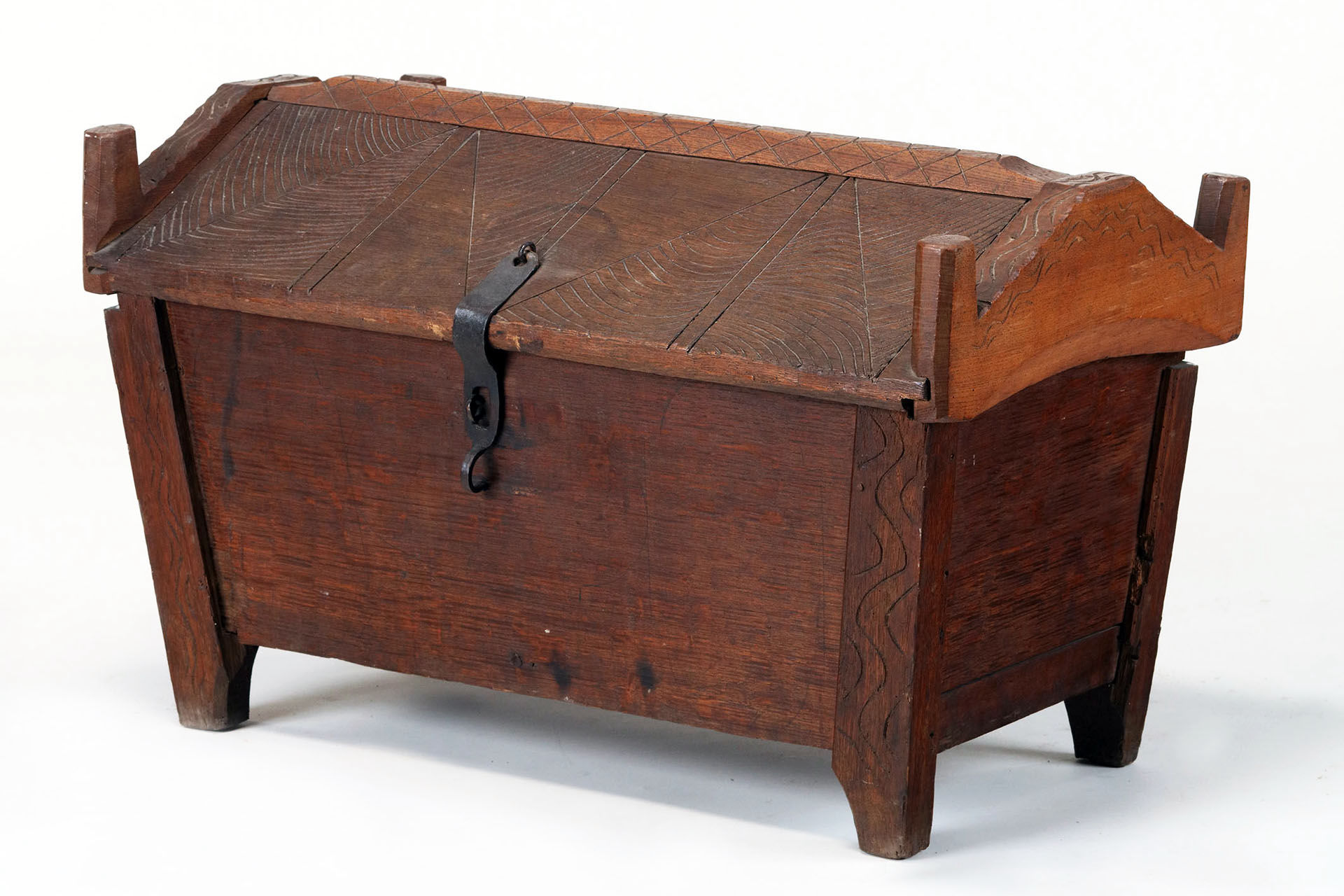
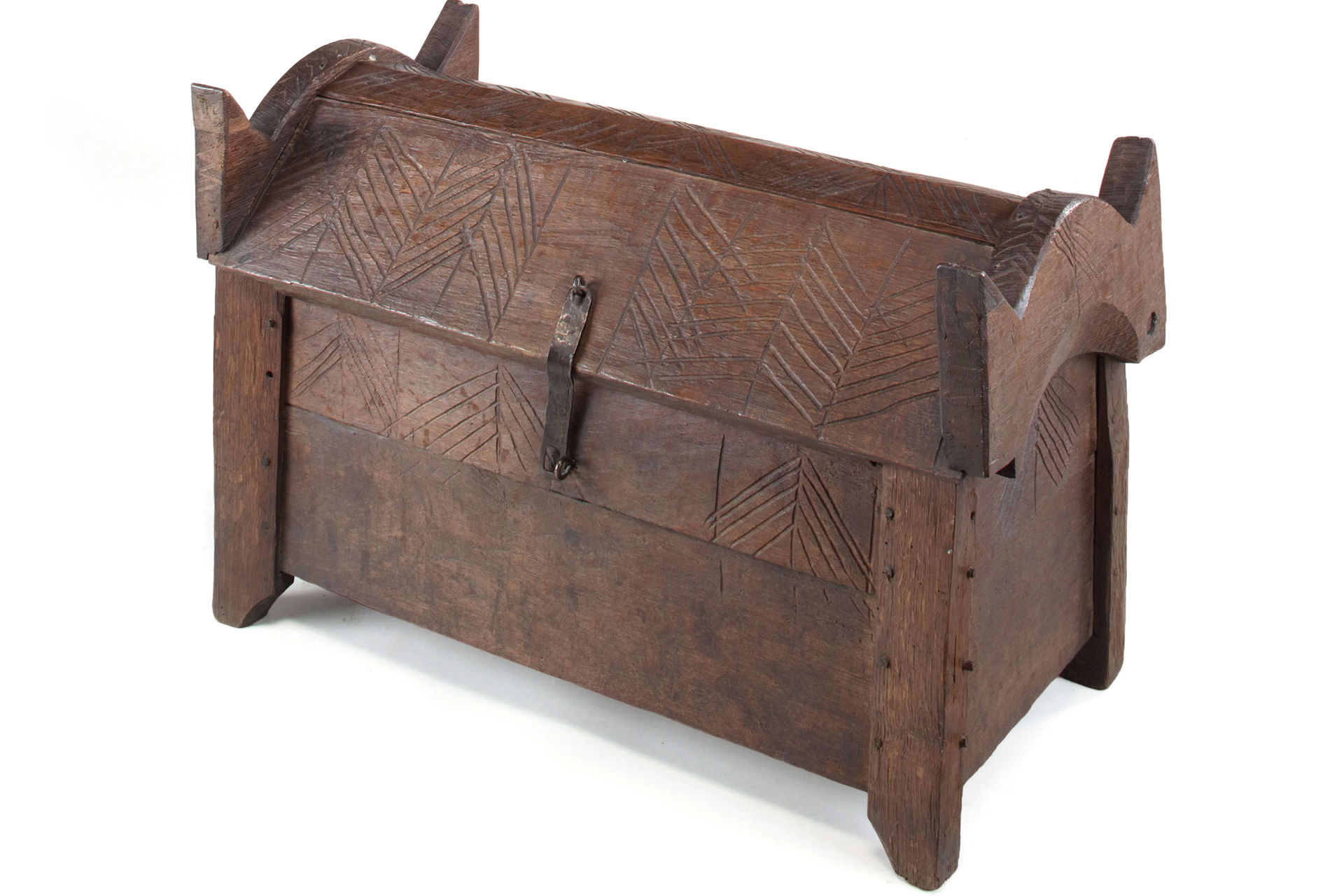
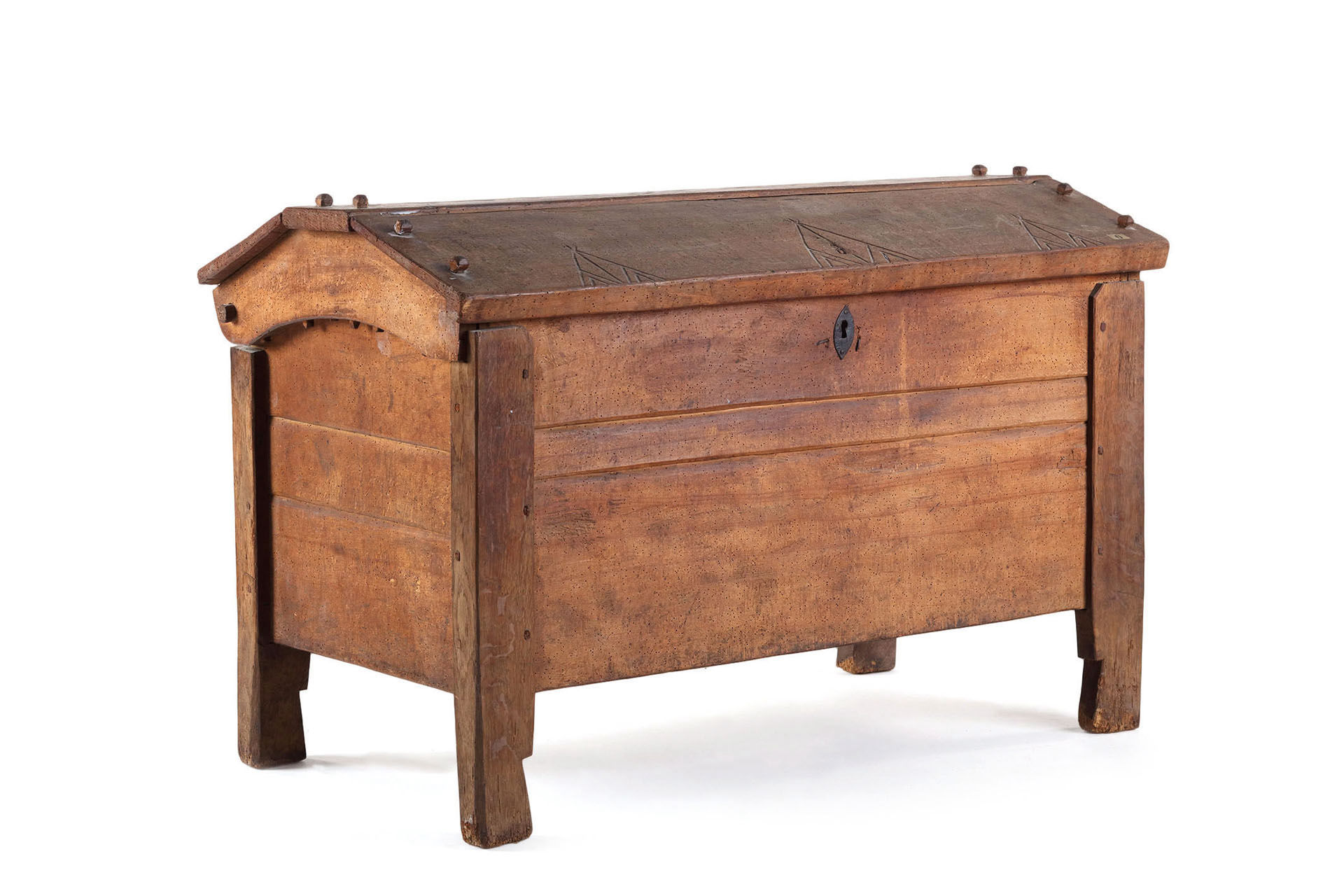
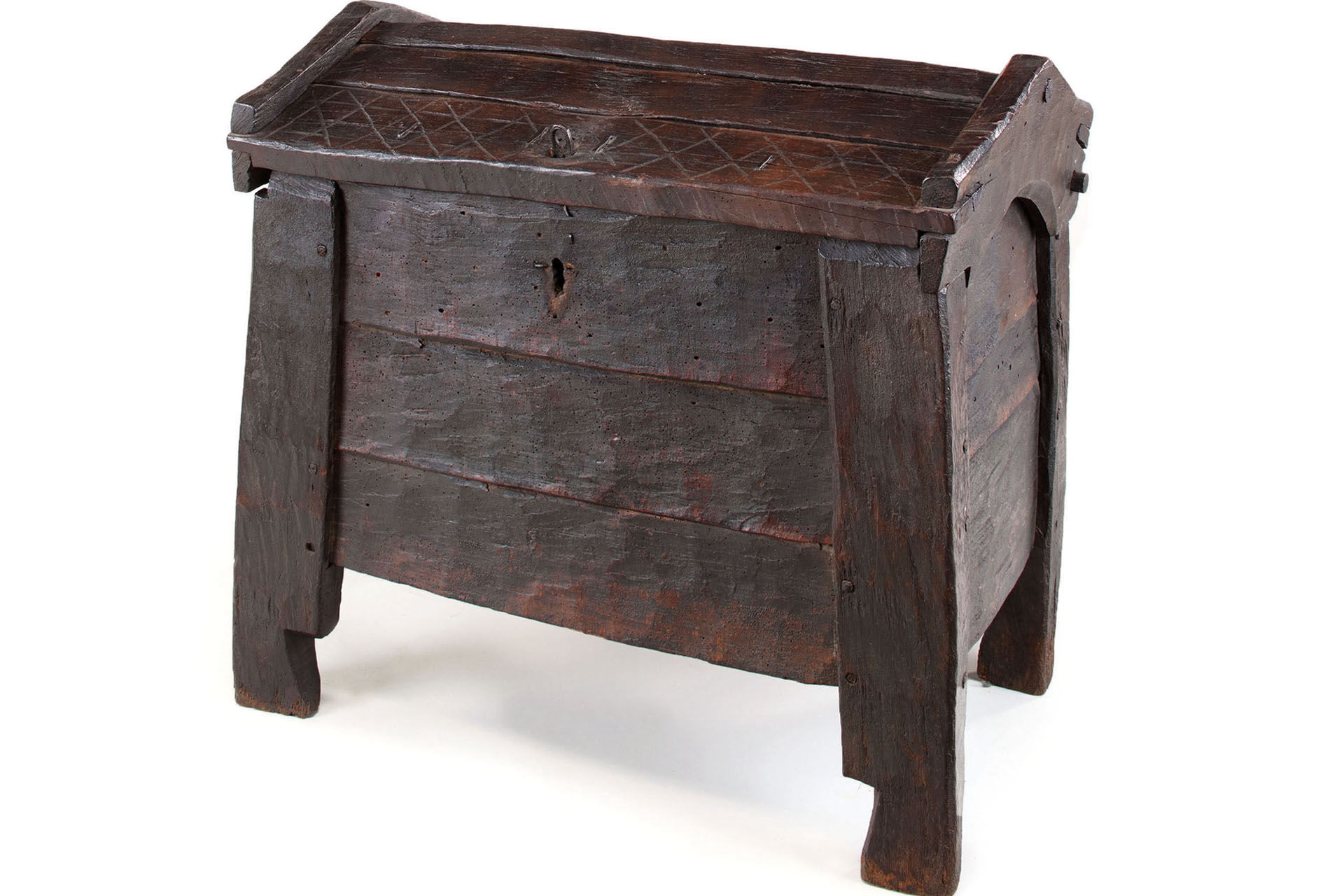
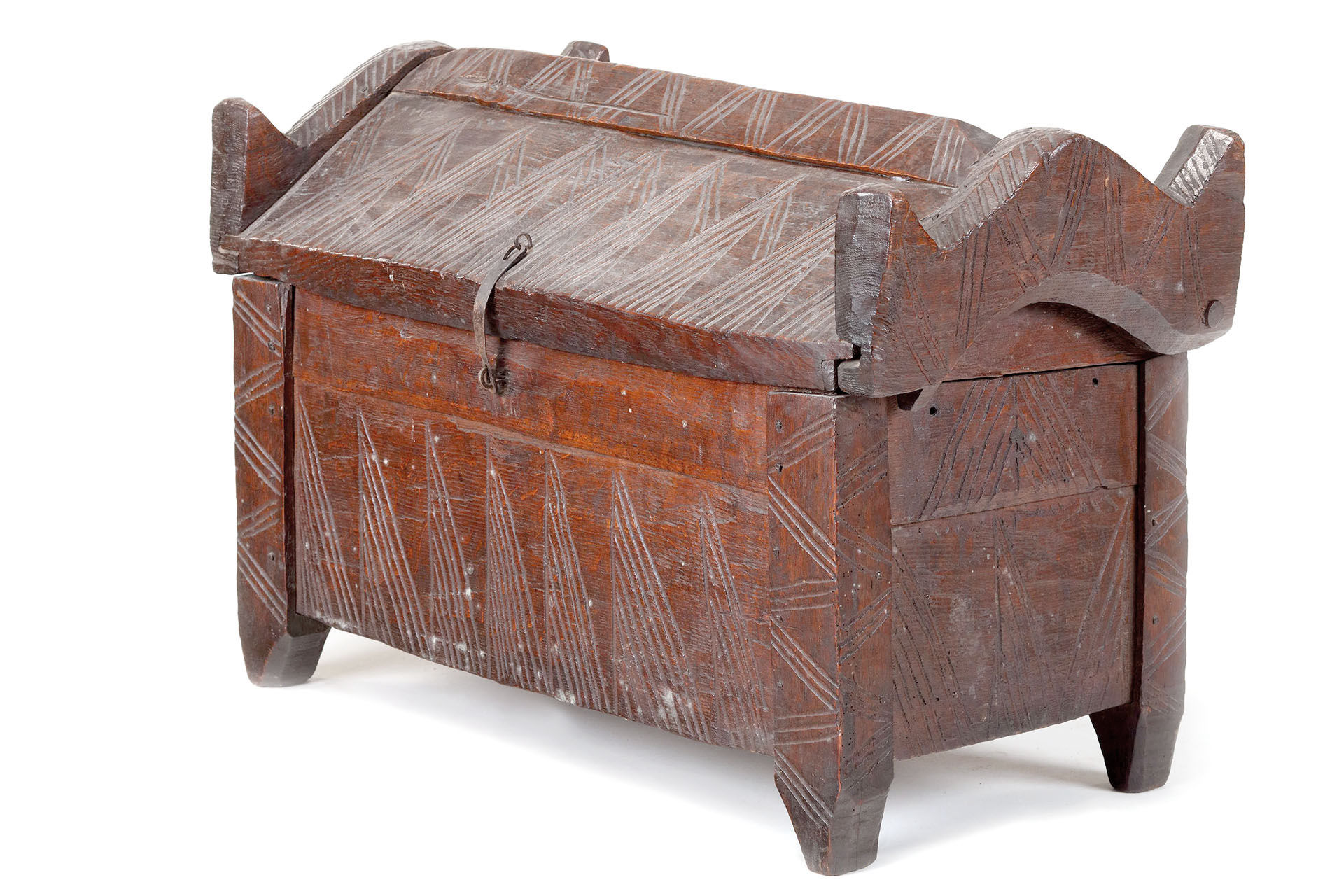
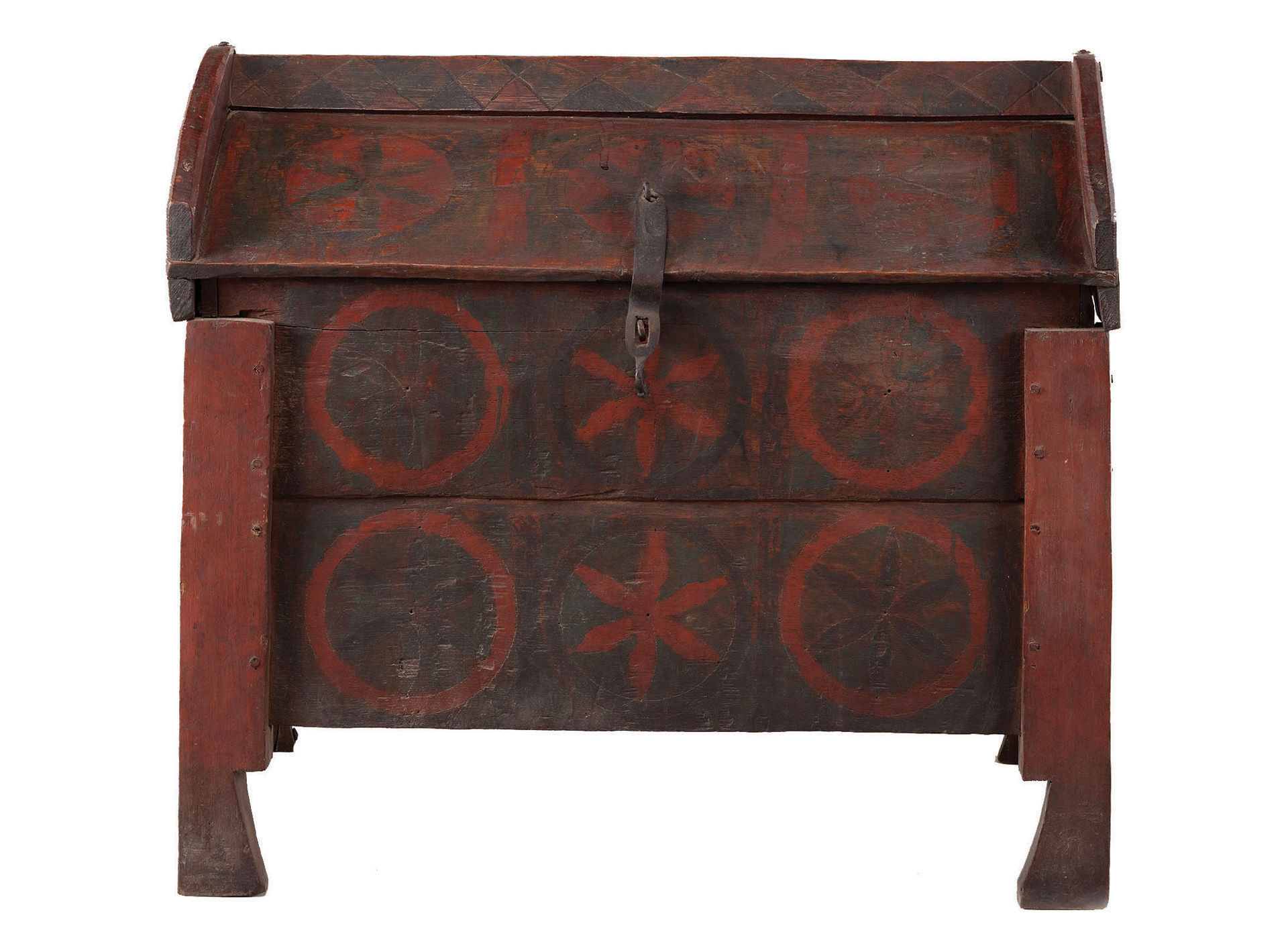
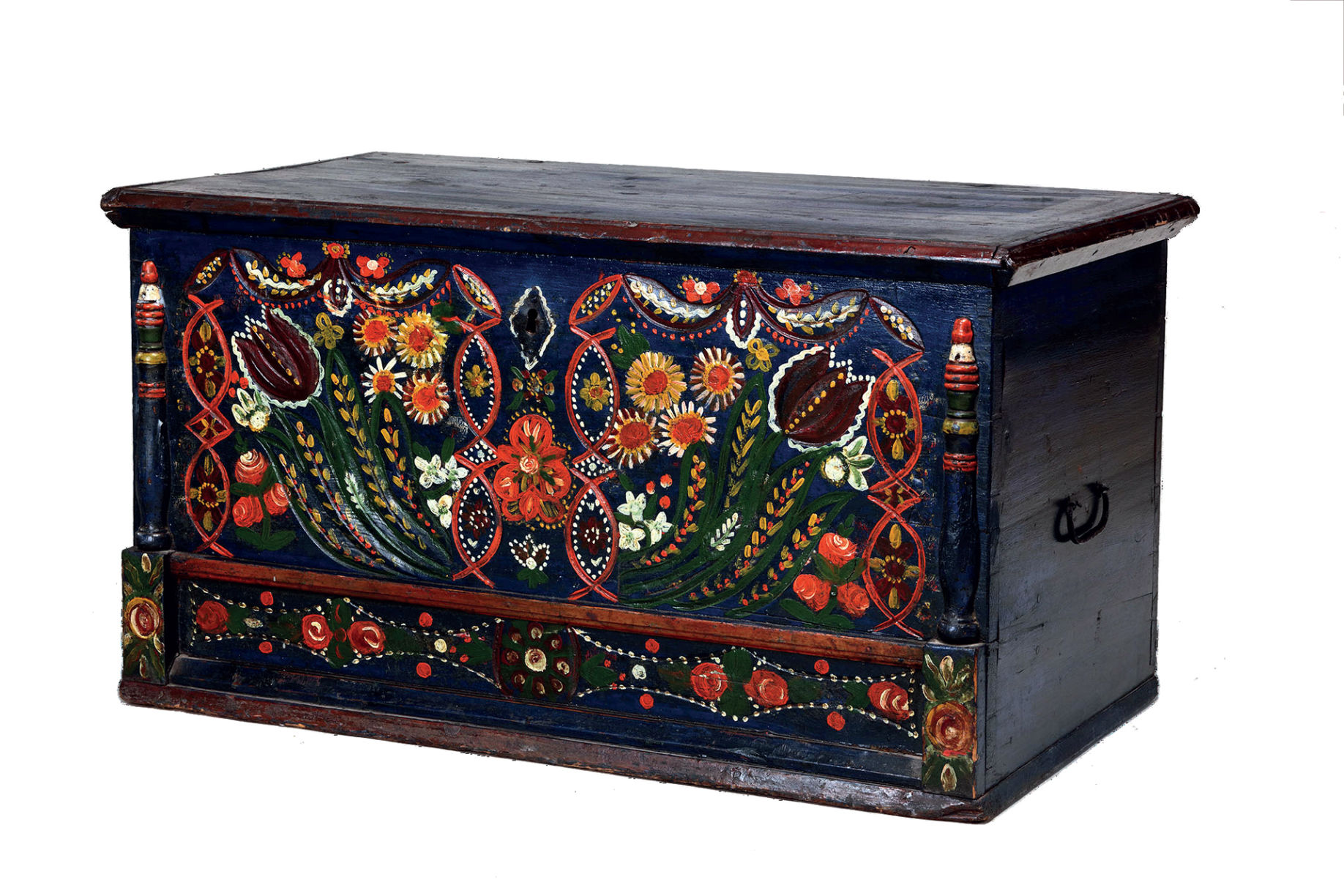
Chests of hewn planks, which are greatly represented in terms of numbers in the collection, derive from eastern Croatia. Hewn plans were slotted into vertical corners, so that the parts were joined by the fitting of the planks into the legs and were fastened with wooden nails. Chests with a roof-like lid, double-pitched, as it were, with horns at the corners (the shape of a Roman sarcophagus) are characteristic of the area of Slavonia. Chests with a slightly sloping lid, however, are to be found in Posavina, Moslavina, Hrvatsko zagorje and Podravina.
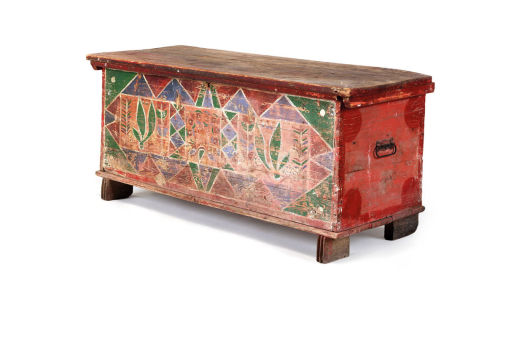
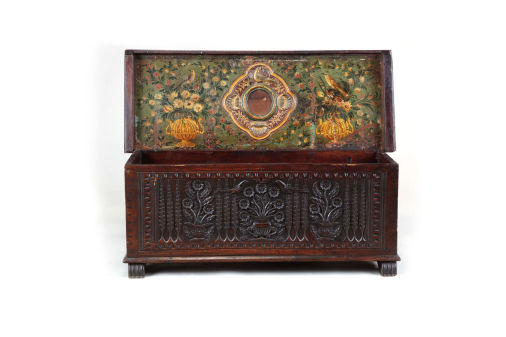
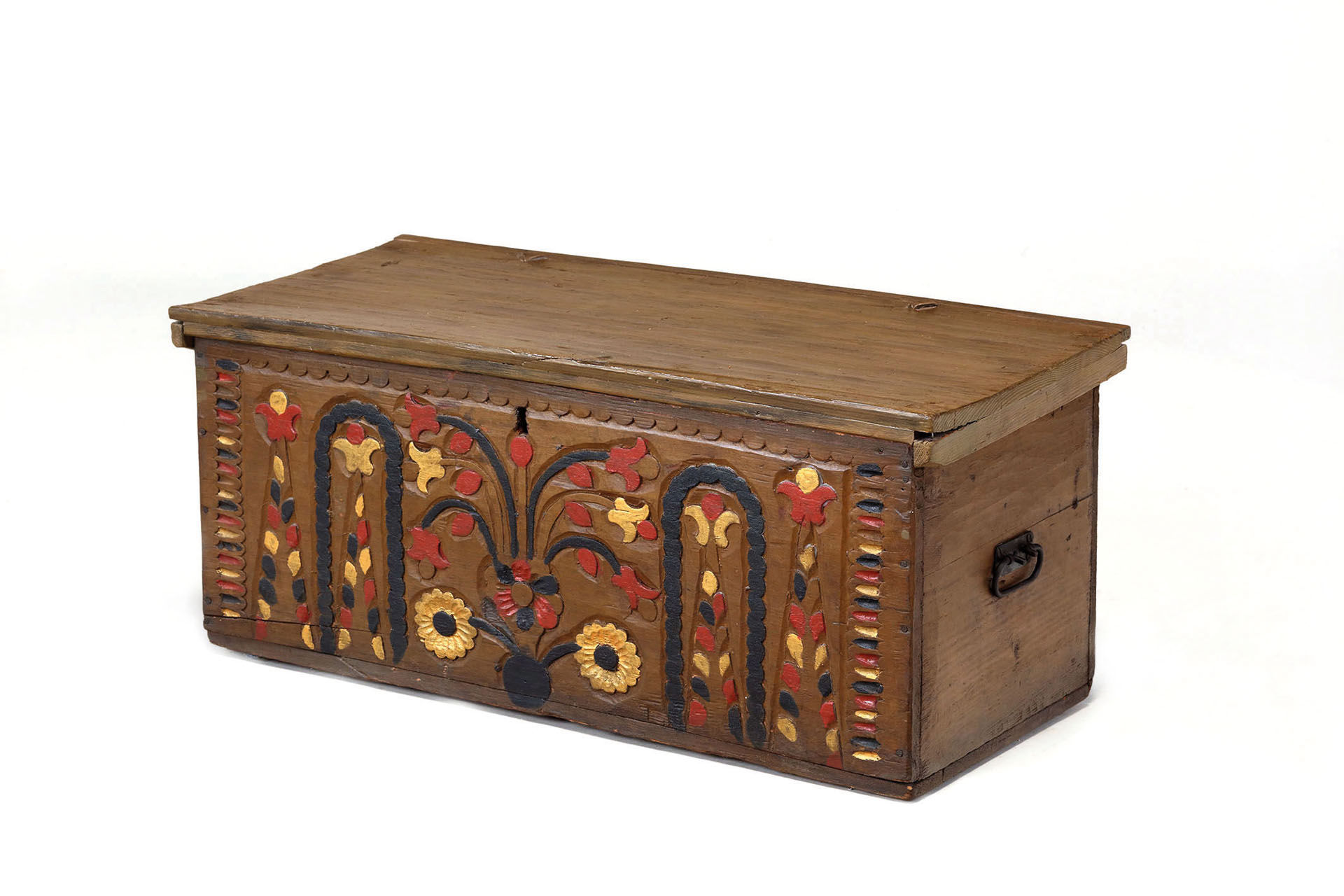
The Adriatic type has a flat lid, low legs in the form of stylised lion’s paws, and a carved front. The four panels that make up the box are joined together in the mortise and tenon form. In the Dalmatian hinterland, Bosnia and Herzegovina and Montenegro, there is a widespread chest of smallish dimensions that enables the more rapid transport of things and greater mobility of the population. It has the shape of a square with a lid the sides of which are joined with metal nails, the fronts and backs extending over the side edges.
EMZ 26684, Chest, Turopolje
EMZ 15175, Chest, Lošinj, Island of Lošinj
As object the chest had many roles; a flat lid was used for sitting or (uncommonly)
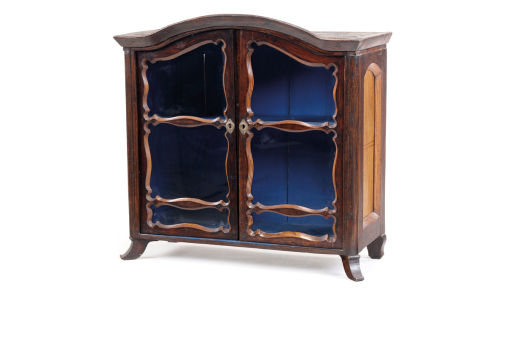
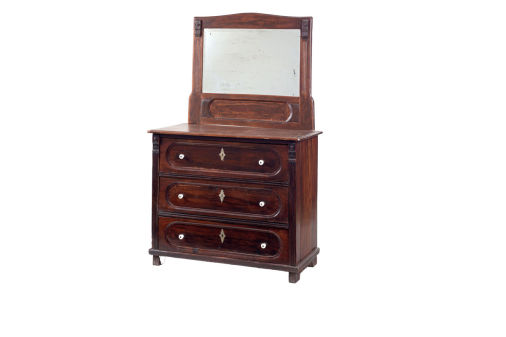
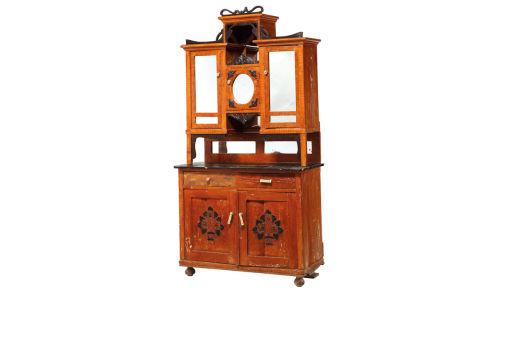
for sleeping on, and would be covered with a special cloth. In the mid-19th century in Istria and Dalmatia the chest with back and lock appeared, used for both storage and seating purposes. For the sake of better visibility and the ability to arrange things, at the beginning of the 20th century cabinets with drawers and wardrobes appeared. And so alongside the chest, the cabinet or chest of drawers came into use. The
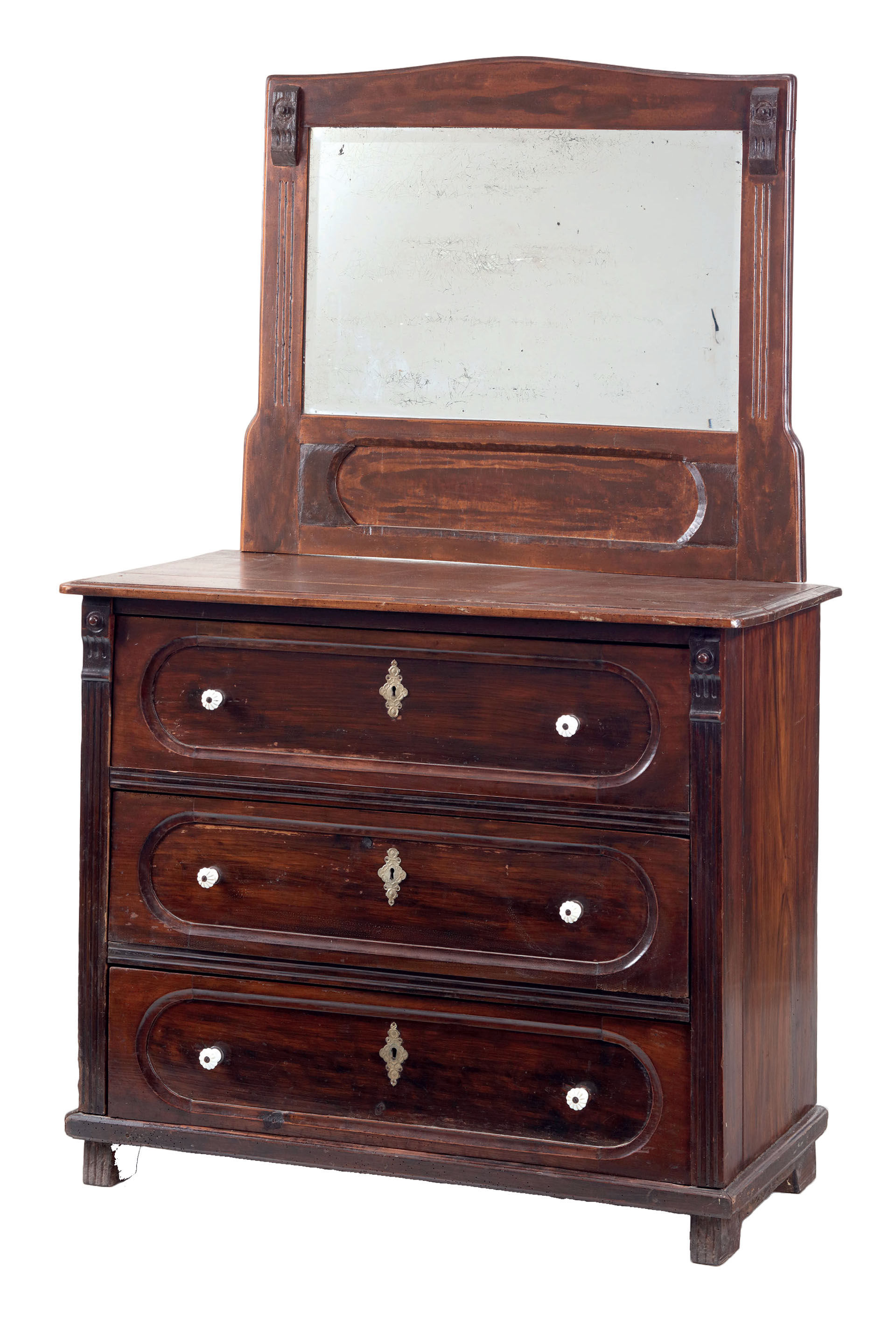
chest was raised on four tall feet, the front got a door and the bottom was fastened and linked with the cupboard with the wall panel. This was also the first luxury object, for it was meant to display crockery or nicely folded textiles. Cabinets have three or four drawers in the front and are often called ladičar, after the word for drawer. In some regions the drawers of a chest of drawers would be painted and the name of the owner and year of making would be written on it. Drawers could be secured with lock and key, and above the chest they placed a mirror. This chest of drawers has been retained as part of the furnishing of the bedroom to this day.
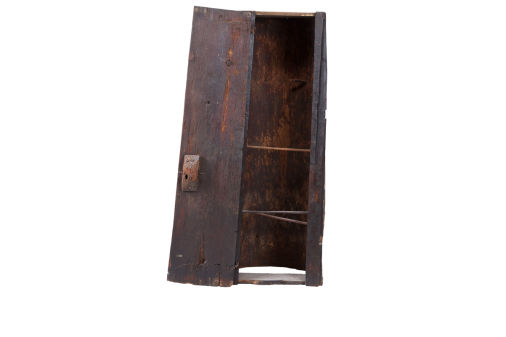
From chests still in existence in the museum holdings we can follow their use and workmanship and record the migrations of the population or the master craftsmen who made them. Naturally, changes sketch
out the new borders among social groups; from the 1930s many families followed tradition and went on using chests, while others brought novelties into the organisation of their space and wanted to show off
their wealth, buying whole bedroom suites. At the beginning of the 21st century old rural chests starred being used again, as detail in contemporary interior decoration, and so some chests, because of their value and importance as family treasure came into use once again.
EMZ 17247
Name: Chest
Place: Rečica, Posavina
Dimensions: 57,5 x 38,5 x 54 cm
Time: second half of 19th ct.
EMZ 20095
Name: Kobilaš
Place: Prkovci, Slavonija
Dimensions: 78 x 40 x 47 cm
Time: first half of 19th ct.
EMZ 20095
Name: Kobilaš
Place: Prkovci, Slavonija
Dimensions: 87 x 47 x 51 cm
Time: second half of 19th ct.
EMZ 1085
Name: Chest
Place: Slavonski Šamac, Slavonija
Dimensions: 98 x 48 x 81 cm
Time: first half of 19th ct.
EMZ 16506
Name: Chest
Place: Erdovec, Slavonija
Dimensions: 80 x 87 x 55 cm
Tie: second half of 19th ct.
EMZ 17247
Name: Škrinja
Place: Rečica, Posavina
Dimensions: 57 x 38 x 55 cm
Time: second half of 19th ct.
EMZ 21404
Name: Kobilaš
Place: Retkovci, Slavonija
Dimensions: 82 x 58 x 41,5 cm
Time: second half of 19th ct.
EMZ 634
Name: Chest
Place: Donje Viljevo, Slavonija
Dimensions: 80 x 87 x 57 cm
Time: second half of 19th ct.
EMZ 19853c
Name: Chest
Place: Branjin Vrh, Baranja
Dimensions: 102 x 57 x 56 cm
Time: second half of 19th ct.
EMZ 19942b
Name: Kobilan, šarani sanduk
Place: Branjin Vrh, Baranja
Dimensions: 96 x 52 x 53 cm
Time: second half of 19th ct.
EMZ 11315
Name: Chest, Sanduk
Place: Ašikovci, Slavonija
Dimensions: 88,5 x 37,5 x 47,5 cm
Time: 1865.
EMZ 209
Name: Chest, kobilan, šarani sanduk
Place: Branjin Vrh, Baranja
Dimensions: 96 x 52 x 53 cm
Time: beginning of 20th ct.
EMZ 16568
Name: Chest, sanduk
Place: Dalmatinska zagora
Dimensions: 45 x 41 x 99 cm
Time: first half of 19th ct.
EMZ 29271
Name: Chest, sanduk
Place: Fojnica, Bosna
Dimensions: 31 x 75,5 x 32,5 cm
Time: second half of 19th ct.
EMZ 28919
Name: Chest, sanduk
Place: Benkovac, Dalmatinska zagora
Dimensions: 124 x 50 x 51 cm
Time: first half of 19th ct.
EMZ 52804
Name: Cabinet, ladica, komoda
Place: Haganj, Vrbovec
Dimensions: 33 x 74 x 160 cm
Time: first half of 19th ct.
EMZ 45904
Name: Cabinet, Ladica
Place: Tršće, Gorski Kotar
Dimensions: 46,5 x 44,5 x 115 cm
Time: 1894.
EMZ 28820
Name: Cabinet, kredenc, kredenac
Place: Trpinja, Vukovar
Dimensions: 107 x 77 x 177 cm
Time: end of 19th ct.
EMZ 29430
Name: Cabinet, kredenc
Place: Draž, Baranja
Dimensions: 115 x 60 x 170 cm
Time: beginning of 20th ct.