HOW WAS THE NATIONAL STYLE MANIFESTED IN THE MAKING OF FURNITURE?

The practices of different Central European and indeed Western European nations have shown that the concept of vernacular or folk art was hard to define in a simple tale since in the 19th century there were various political objects and ideals of national revivals (Rogelj Škafar 2011: 49). Political leaders recognised certain elements of rural or peasant culture that later on became national symbols. Very much responsible for the design and implementation of the concept of national/vernacular culture were museums, art schools, various associations and journals that covered all cultural contents. This gave rise to a long-lasting process of the collection of the component parts of rural or peasant culture, with a process in which it was aestheticised and became an aesthetic quality (Köestiln, 1999). A rural culture presented in this way became idealised and simplified and cut off from its real social context of a living quotidian. In many European states the process of modernisation and the development of the urban middle class in the 19th century prompted the discovery of national/vernacular culture. “The middle class discovered peasant culture and then came the process by which rural culture was infiltrated into the urban, and some segments of peasant culture once again became elements of elite culture” (Rogelj Škafar 2011: 50).

Vernacular culture became an important element in the shaping of the national identity. The process of the nationalisation of peasant culture started in the middle of the 19th century, with the collection and aestheticisation of this culture, and at the end of the 19th century the nationalisation of these aestheticised elements got under way.

A confirmation of this process can be seen in the national and international and world exhibitions. The exhibitions were meant to show the economic progress of each nation who showed their historical roots and the diversities of the national culture. Displayed for this purpose were vernacular attire and various kinds of fabric, richly decorated and ornamented, as well as peasant furniture or other objects that represented national or folk art.

Crtež

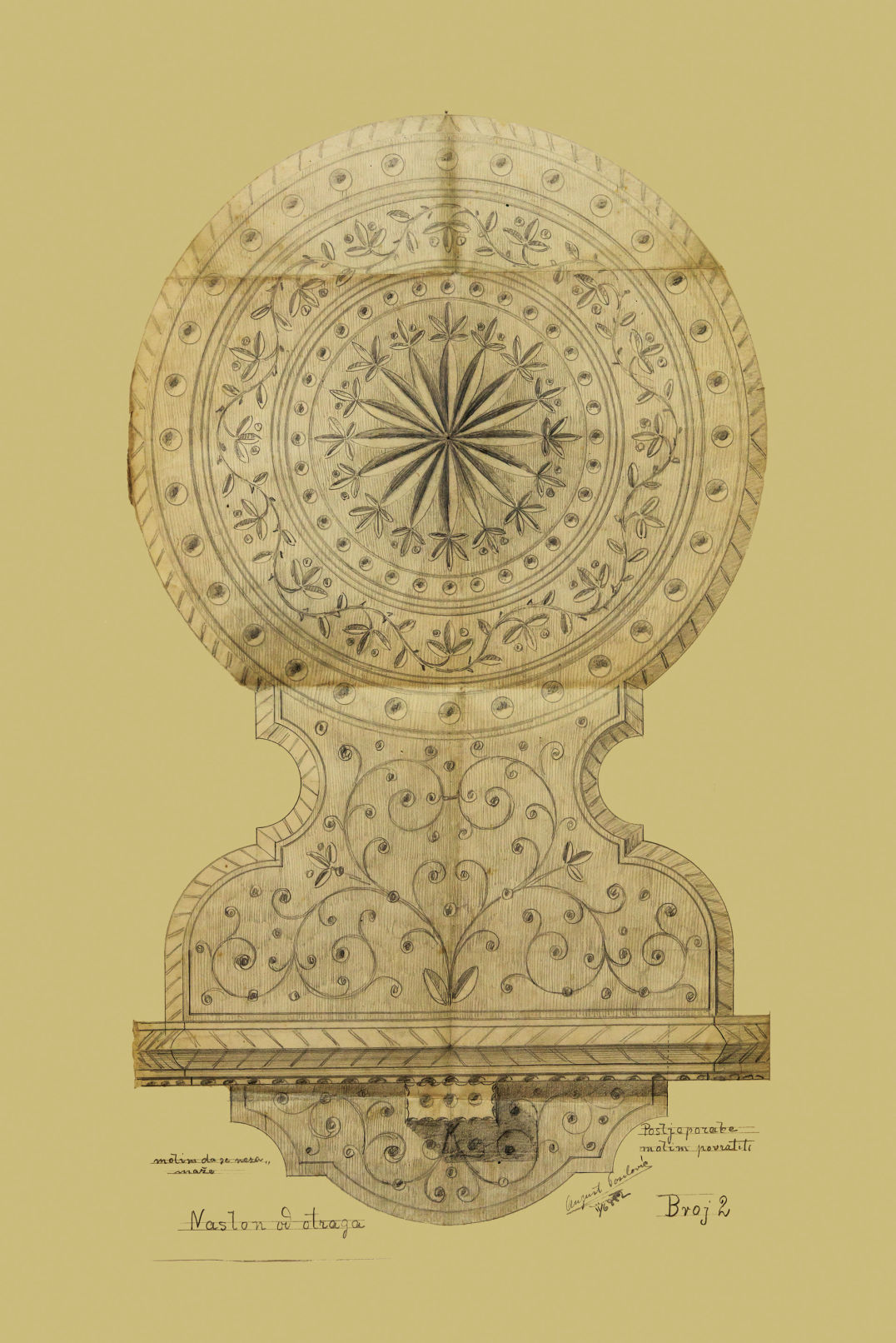
Chair - drawings of August Posilović, 1904. taken by Nina Koydl, EMZ 49975/2
The endeavours of the Croatian intelligentsia to collect and exhibit objects of the fine crafts and furnishing as examples of artistically designed ethnographic material appeared as far back as the Illyrian Revival period and at the Husbandry Exhibition in 1853, in Budapest in 1896 as well as Secession interiors in 1902 at a carpentry exhibition, and had a marked patriotic and nationalist role (Brdar Mustapić, 2020).

Stolić

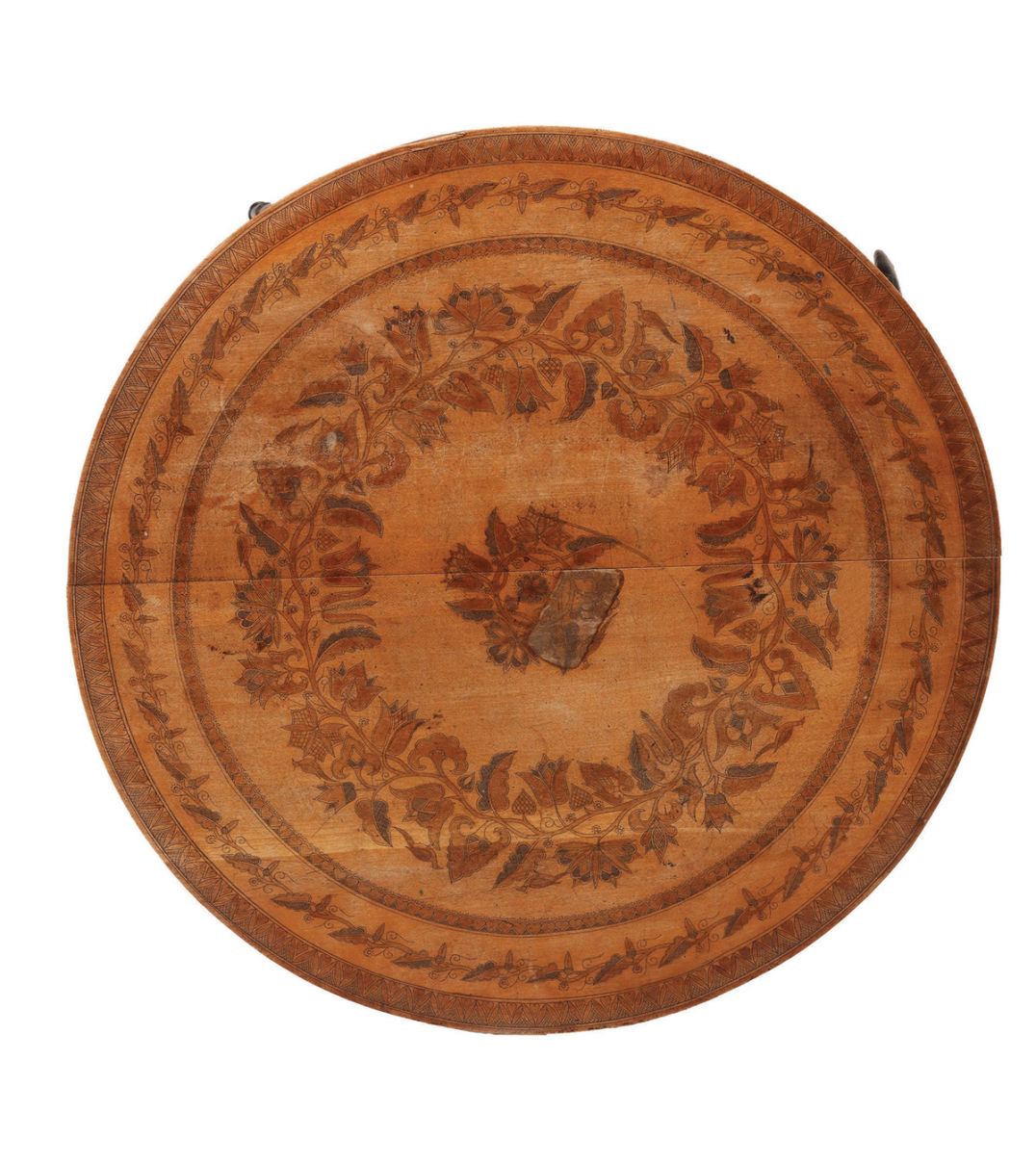
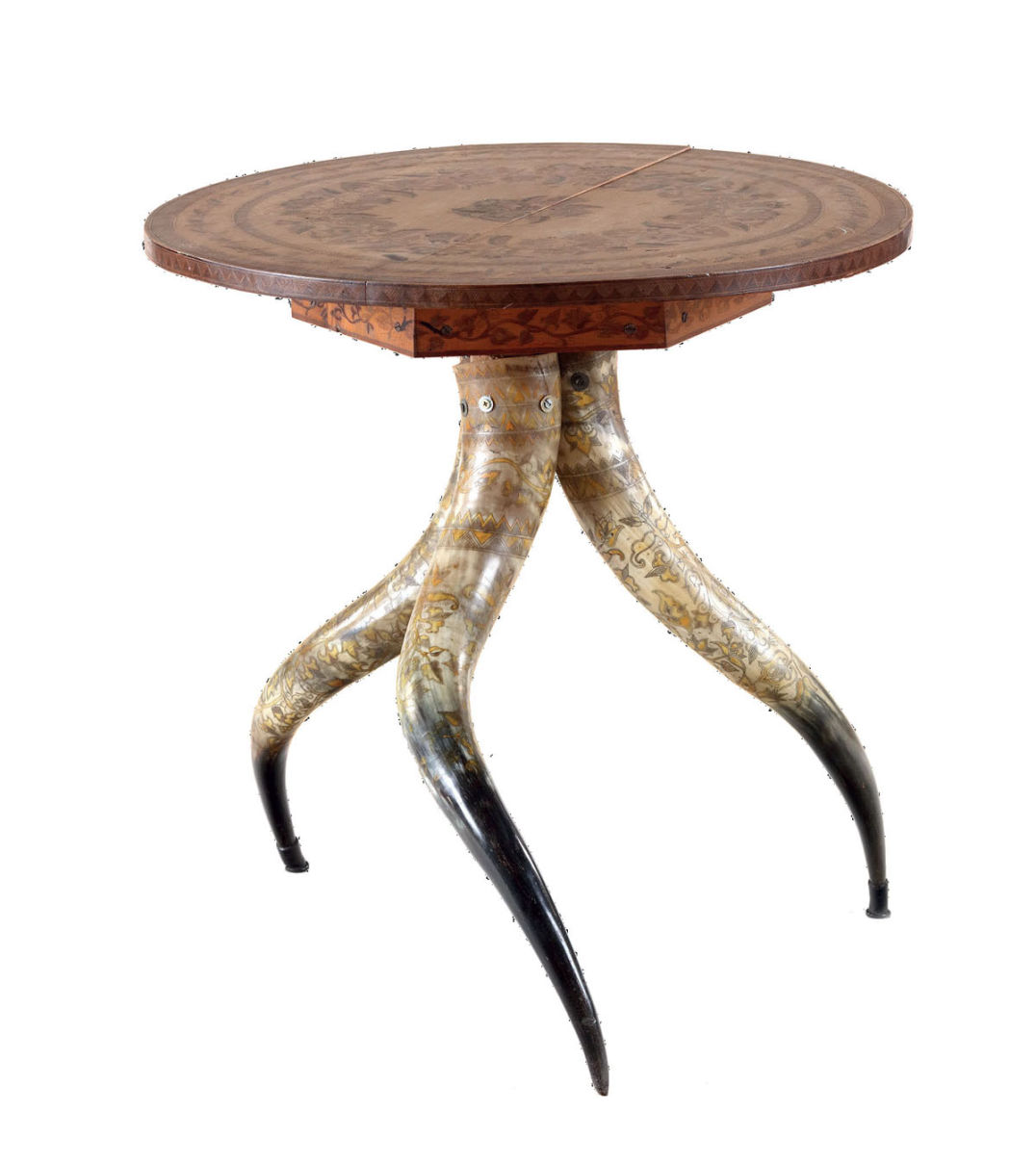
  Coffee table, 19th ct., EMZ 62207

Stolić

  Coffee table, 19th ct., EMZ 62207

The national style in the making of furniture was shown in two ways: decoration with ink and coloured drawing by pokerwork with ornamentation like colourful gourds, which was a favourite inspiration of the decoration of items of the fine crafts, from coffee tables to wardrobes, and carved motifs, often making use of oak, a high quality domestic raw material used in the making of traditional furniture (Brdar Mustapić, 2020).

Vanja Brdar Mustapić, from the research, says that it was recommended to use decorative motifs from the collection of Srećko Lay Ornaments of the Yugoslav Fine Crafts and that some of these ornaments were employed in the middle class urban room that was made in the national style by Antun Kontak after drawings of August Posilović, which is actually the standard style of the German neo-Renaissance, only it is decorated with motifs of variegated gourds. (Brdar Mustapić, 2020). The urban sitting room was shown at the Millennium Exhibition in Budapest, at the Zagreb Jubilee Husbandry and Forestry exhibition in 1891 as part of the exhibition space of the court purveyor Daniel Hermann with the products of his cotton mill and with vernacular textile and other handicrafts (Brdar Mustapić, 2020). Between the two wars vernacular art, i.e., motifs from folk handicrafts, had an important role in the design of objects of the fine crafts and applied arts. The idea behind taking over and interpreting vernacular motifs was to create a new style that would nevertheless be adjusted to the taste of the city public. This bourgeois interest left a trace in traditional wood carving, mostly in the making of churches while the relatively low chair called the katriga became increasingly adapted to a high table. Shown at the Paris Exposition of 1925 were, among other things, easy chairs inspired by vernacular forms and wood carving. Branka Vojnović Traživuk explains this from a photograph of 1933 in which three chairs are shown, part of a dining set made according to vernacular forms and motifs. They were produced by the carpentry section of the Vocational (Apprentice) School in Split (Vojnović Traživuk 2008: 7). On the other hand this fostered the development of a modern woodworking trade that drew on traditional prototypes, which was an indirect indicator of these cultural trends. “Most often they used the term folk art for a concept that was not precisely defined, and sometimes it was used at the same time for primary rural handicraft as well as for organised traditional handicraft, and sometimes for the new tradesman’s products meant for the city. The understanding of folk art as original visual expression enabled its economic potential to be spotted” (Vojnović-Traživuk 2016: 145).

Krevet u kući


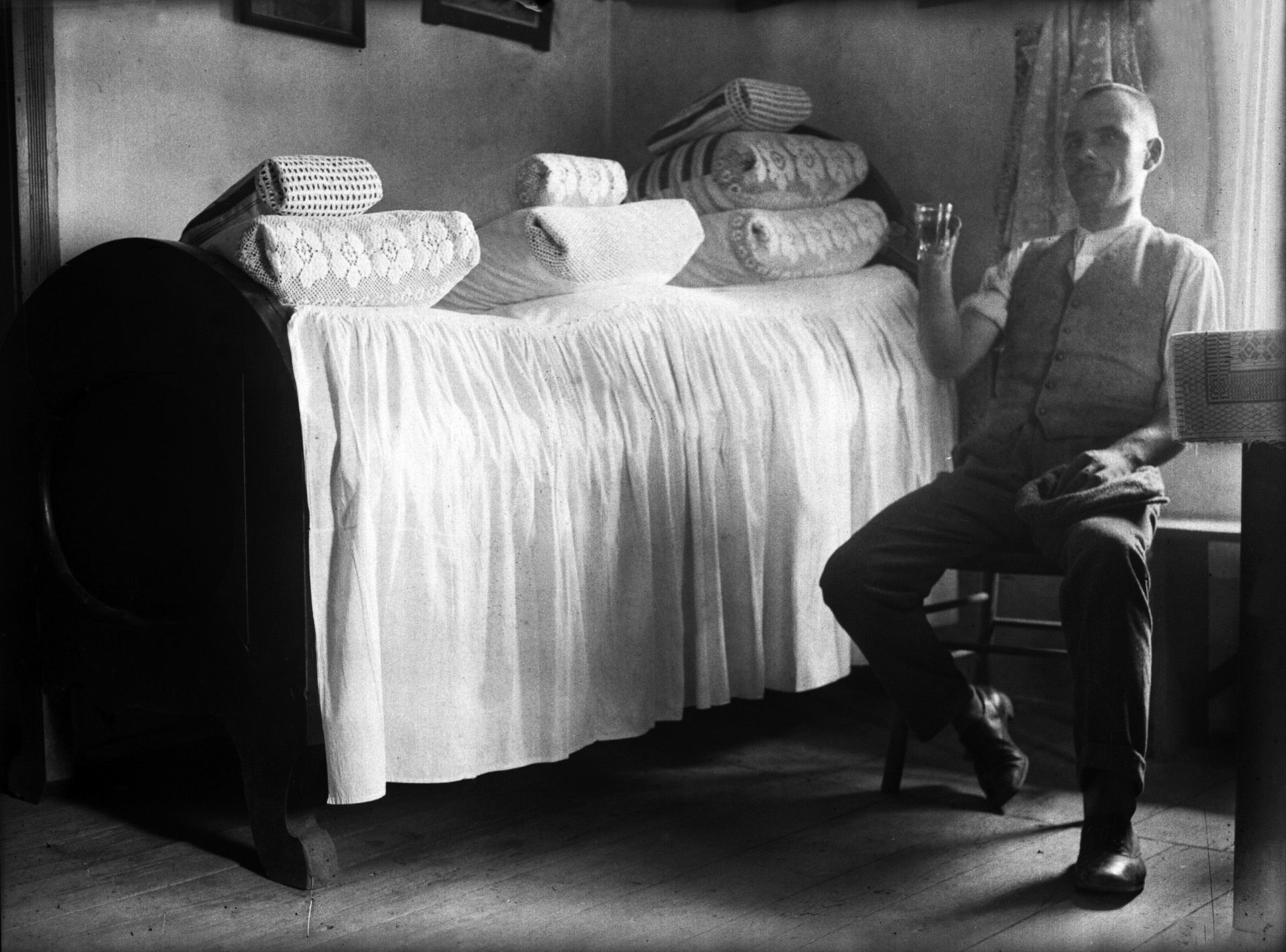
  Bed in house, Mirko Novosel Jarnija, Dugo Selo, taken by: Stjepan Dokuša 10.6.1935., EMZ N 3365

Ethnographic Museum
Trg Mažuranića 14 
Zagreb, 10000 HR 
+385 (01)4826 220 
emz@emz.hr

  • Text and catalogue entries by: Zvjezdana Antoš, PhD, museum adviser
  • Photographs: Goran Vranić, Nina Koydl, Petar Strmečki, Ethnographic Museum's Photo Archive
  • Web design and development: Viola Šebalj
  • Subediting and proofing: Andrea Rožić
  • English translation: Graham McMaster, PhD
  • For the publisher: Goranka Horjan, PhD, museum adviser

  • © Copyright Etnographic Museum, Zagreb, 2022.
  • The exhibition was financed by the Ministry of Culture and Media, Republic of Croatia, City of Zagreb - City Office for Culture, International Relations and Civil Society