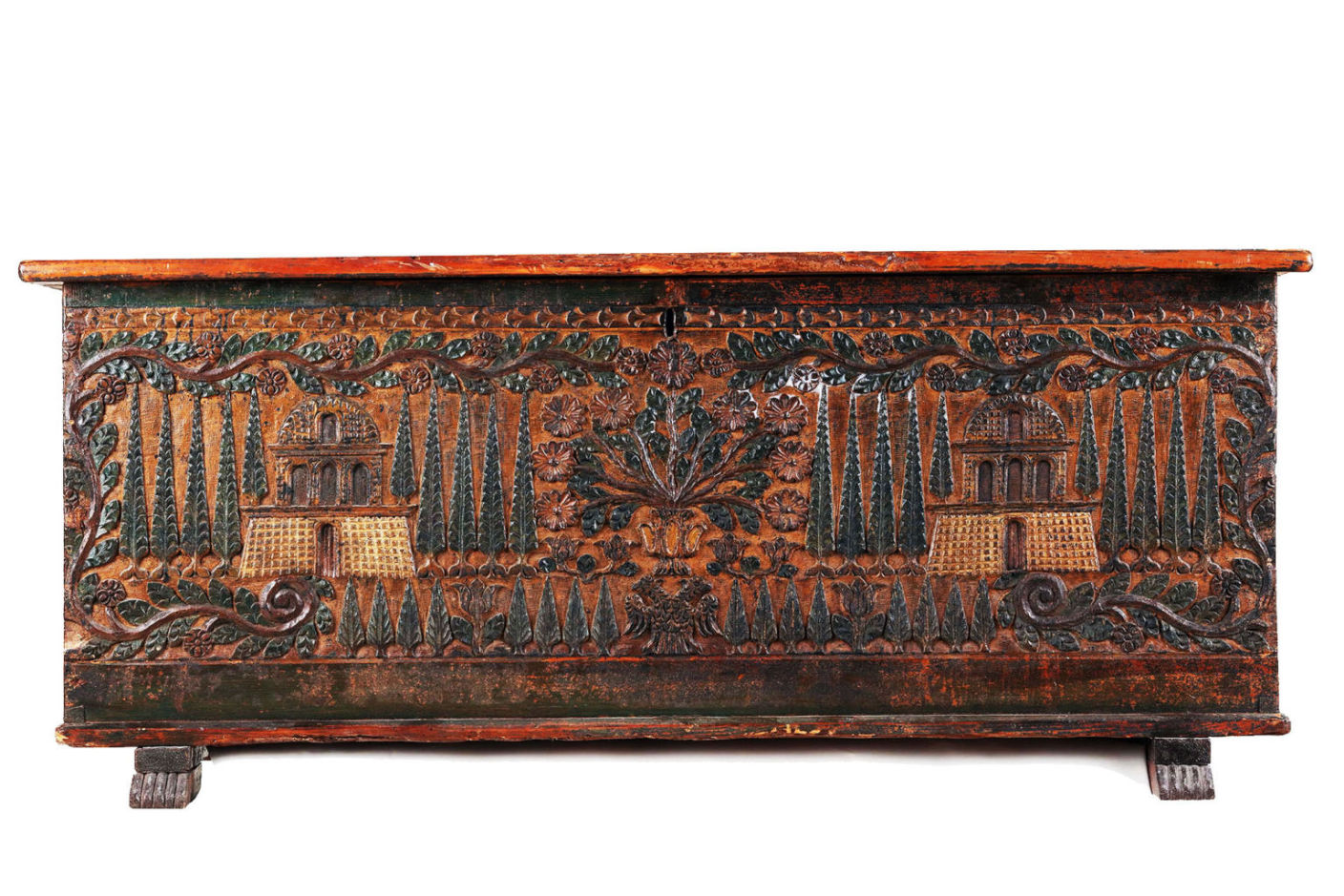
Ethnographic Museum, The Furniture Collection, Chest, EMZ 28272
In Dalmatia and southern Herzegovina, the tradition included buying off the chest, which consisted of tossing money on the bride’s dress, followed by special gestures, singing and then dancing. It was important for the wedding chest to be beautifully adorned and richly equipped, because it was also an indication of the family’s economic status. The chest can also be perceived as an object belonging to the girl’s intimate sphere, that is, the place where the girl kept her belongings and personal objects. The wedding chest contained a prayer book, headscarves and caps, shoulder shawls, jewellery, different decorative ribbons and bands, aprons, particularly finely adorned shirts, slippers, sometimes even shoes or boots, formal and everyday clothes, a belt, mirror, childbirth linen, tow and spindle. Since the chest was also considered as a decorative object in the home, special attention was paid to its placement in the room, so that the adorned side was facing the entrance to the room and the decoration visible on entering. It was believed that these adornments had special magical powers to protect the young couple and their family. Thus, the wedding chest was closely linked to the notion of marital bliss and numerous progeny.
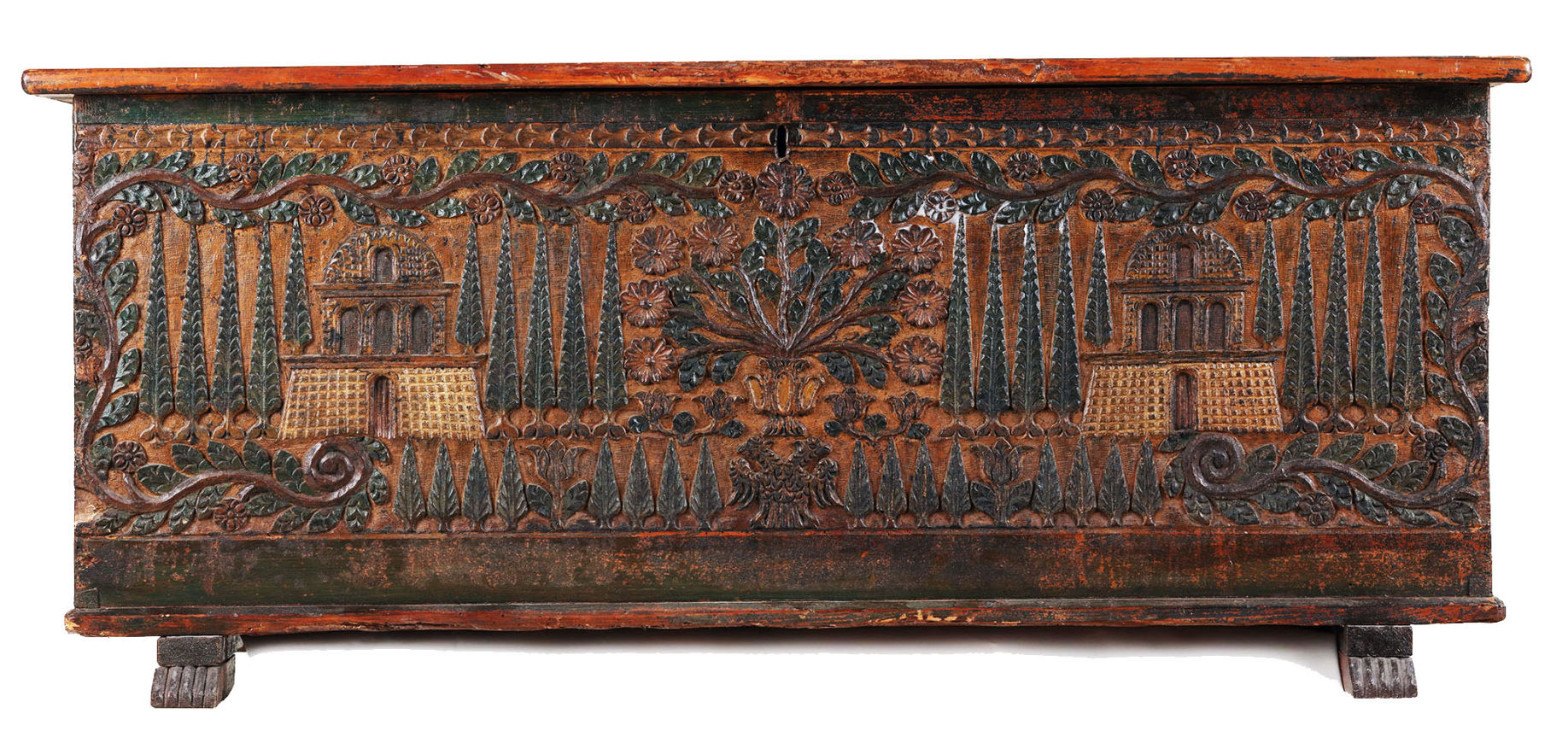
Ethnographic Museum, The Furniture Collection, Chest, EMZ 28272
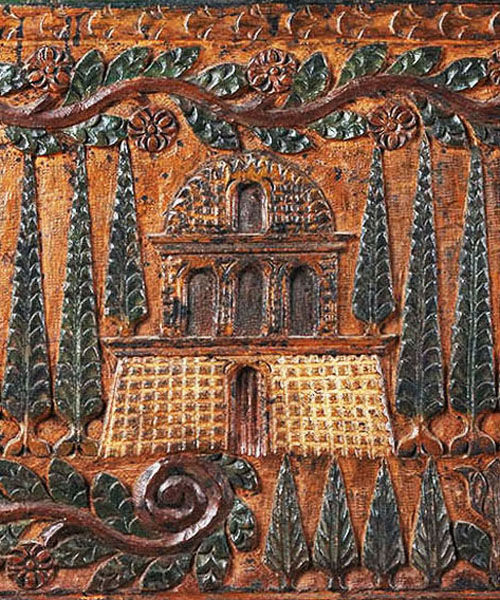
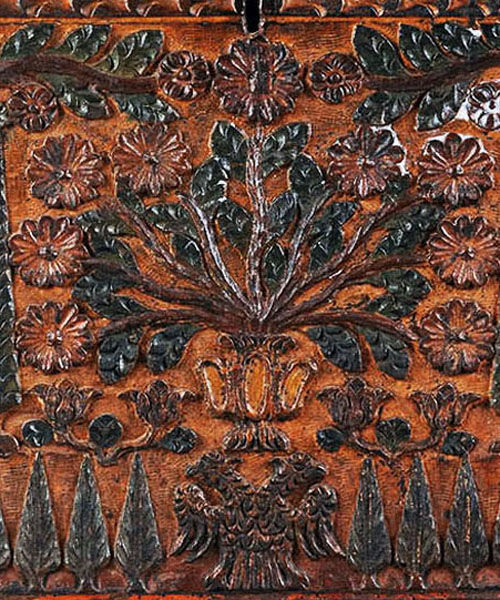
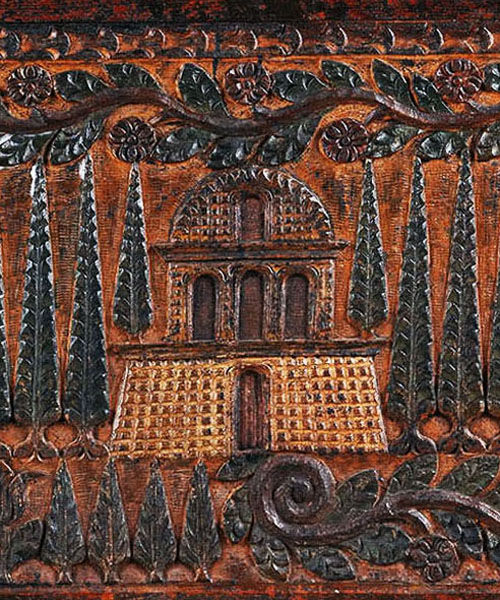
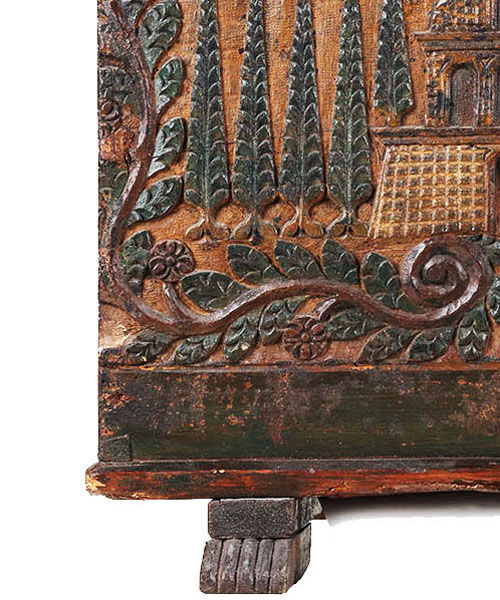
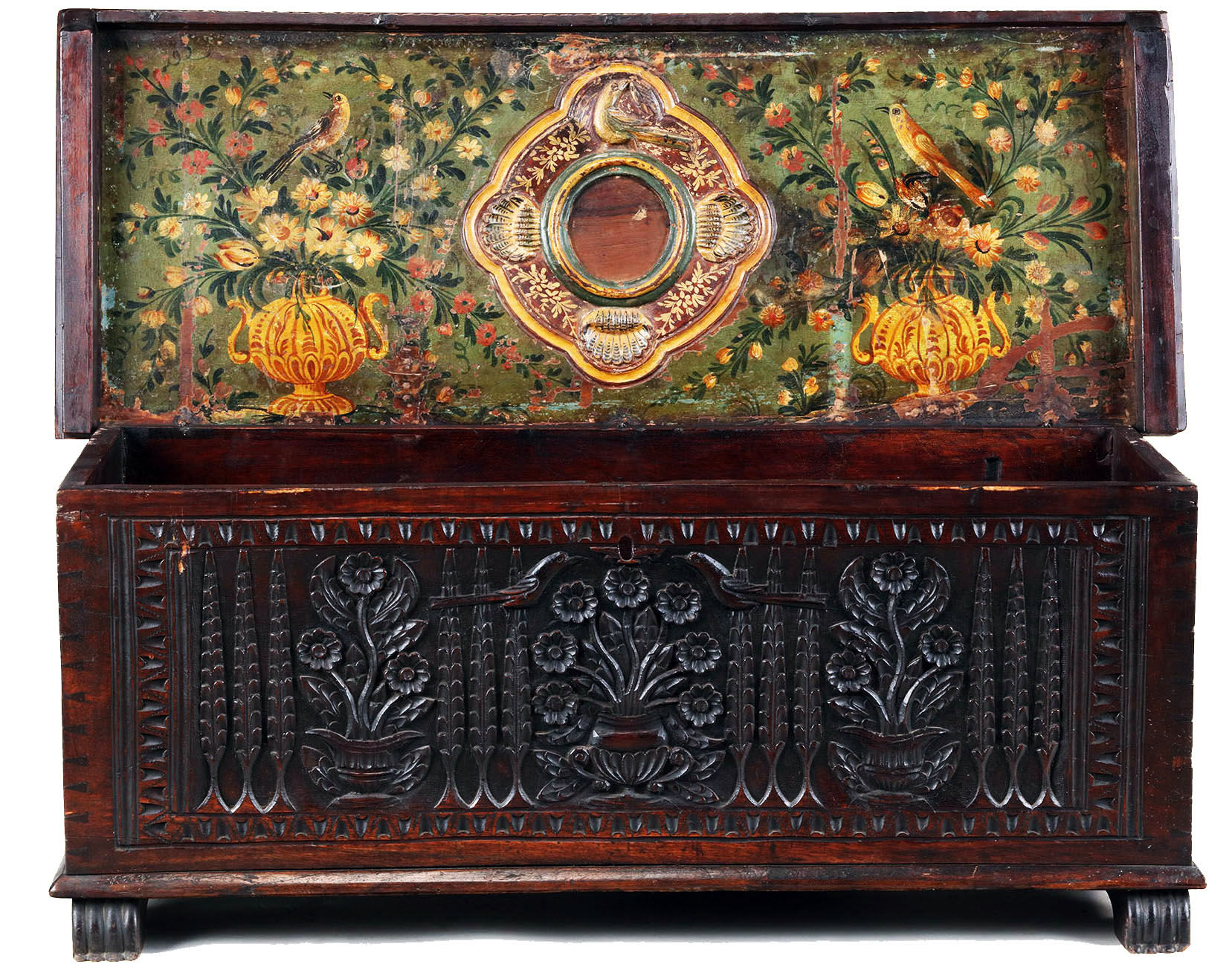
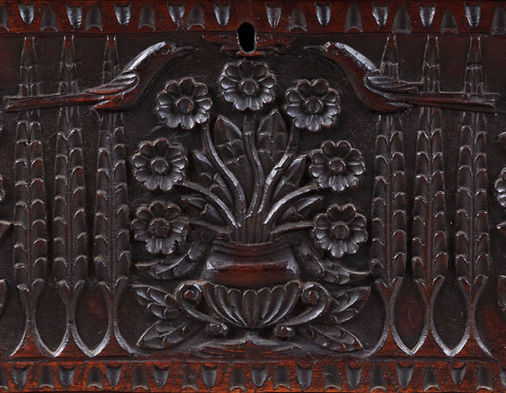
Based on the analyses (Chevalier and Gheerbrant, Belaj, Bruch Auffenberg, Vojnović Traživuk) of the symbolism of carved motifs that appear on the front of the Adriatic chest, we are able to learn about the different interpretations of certain motifs and their possible influences. For instance, the motif of a house or temple may be a depiction of the universe, or the city or temple of the centre of the world. It is also a symbol of feminine sanctuary, or motherly protection and mother’s bosom. In many cultures, the motif of a cypress tree was regarded as a holy tree, and given its long life and verdant leaves, it was perceived as the tree of life. A receptacle or vase with flowers was often interpreted as the tree of life. The particularly richly painted lid interior of the Dalmatian chest also features the motif of a bird, in folk legends of European peoples believed to be the soul of the deceased. Some of these symbols exist in the Christian symbolic system. The motifs of a vase with flowers signified the wellspring or the tree of life, while cypresses were a symbol of death and immortality of the soul, which, in a broader sense, points to the idea of the circle of life and death. This interpretation is complemented with an architectural motif that is directly linked to the meaning of the house of heaven.
Ethnographic Museum, The Furniture Collection, Chest, EMZ 18559
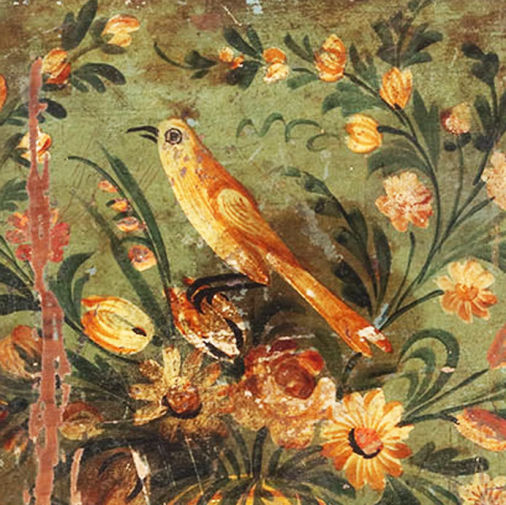
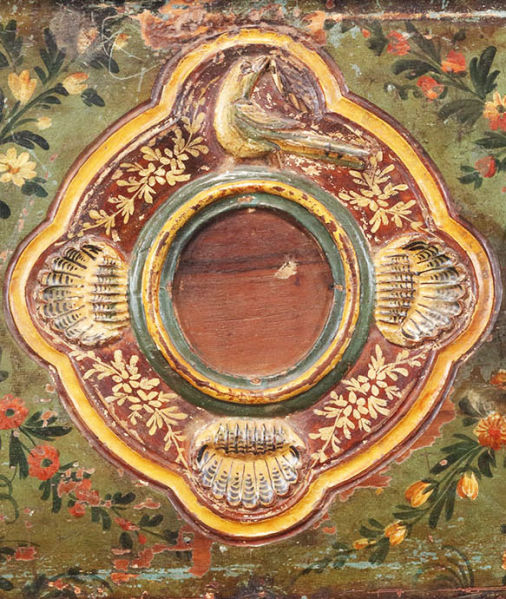
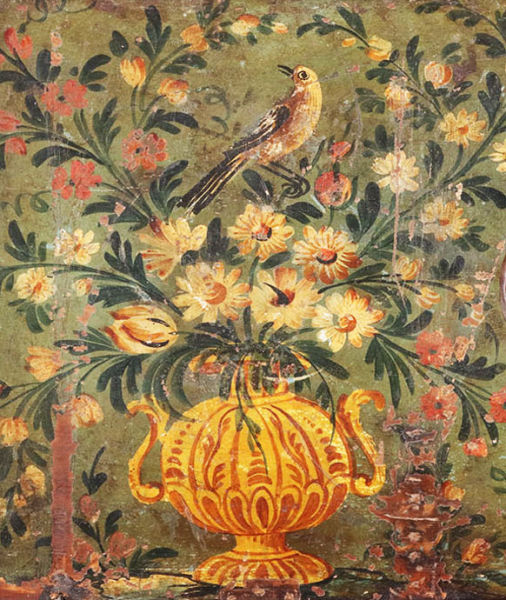
On the interior side of the lid of the Dalmatian chest in the collection, there is an indentation that contains a mirror. It is connected to the notion of female beauty and consequently linked to the woman’s private sphere. The frame is in the shape of a rather large square widening at the centre of the sides, with a shell in three of the widenings and a bird in the one at the top. The shell motif is a typical female symbol with erotic implications, indirectly pointing to the fruit (pearl). Motifs on the chests symbolized the role of a future mother who will actively participate in the cyclic renewal of life by giving birth to numerous offspring.
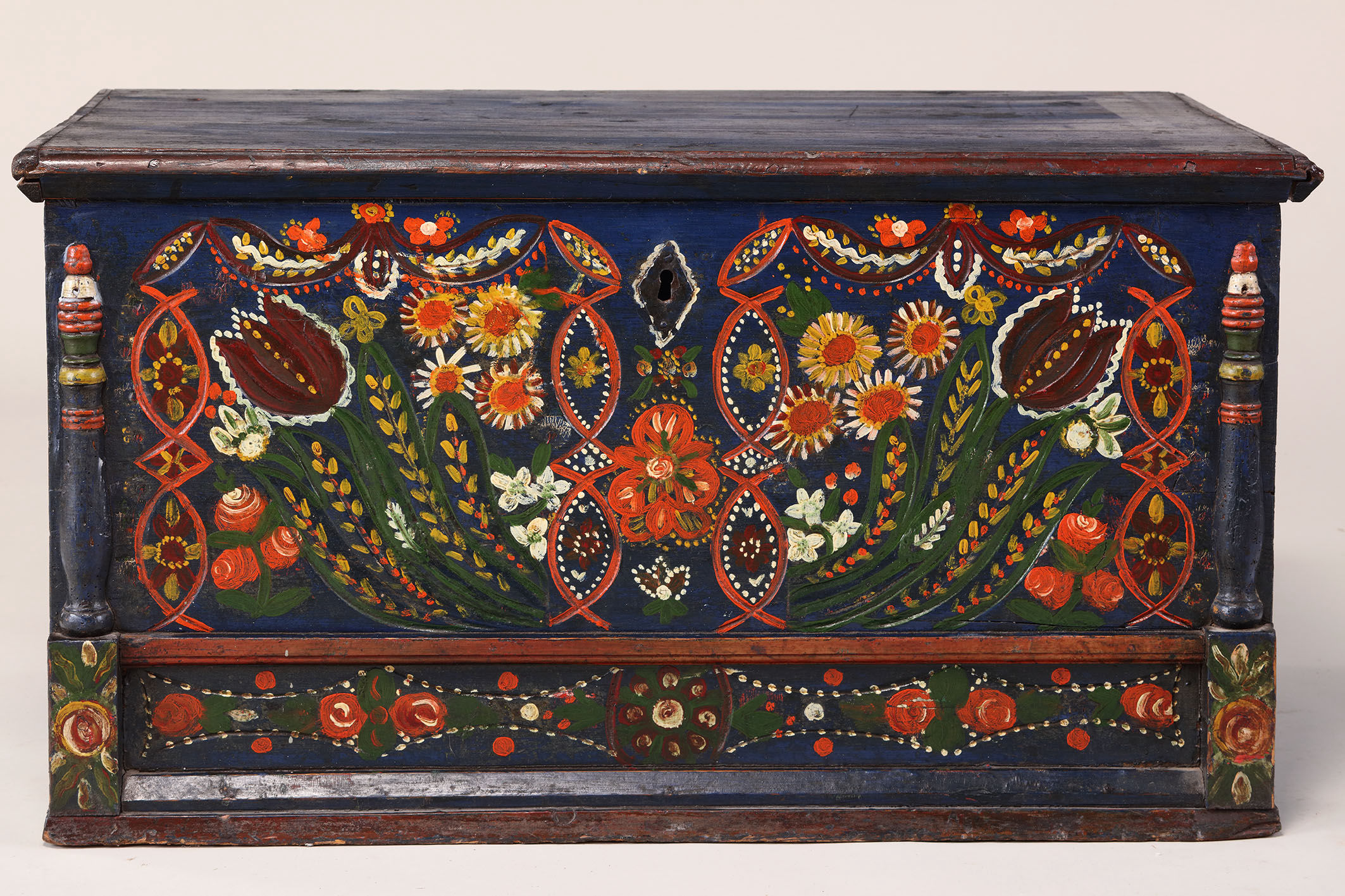
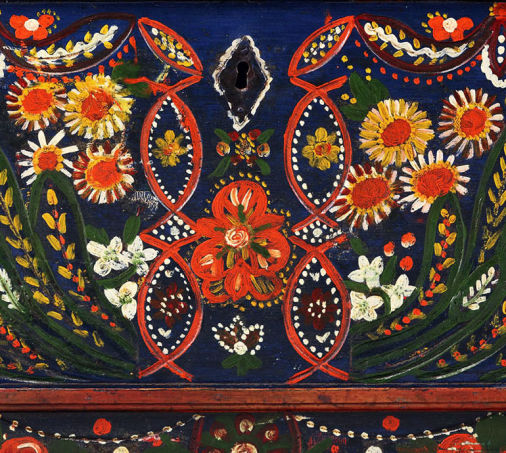
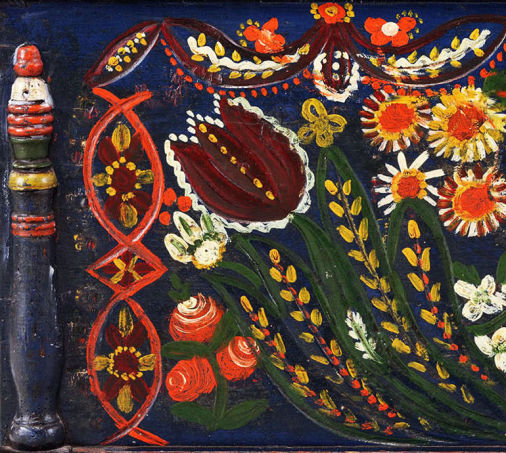
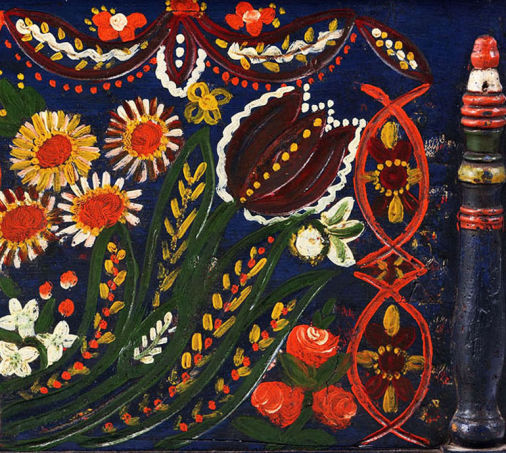
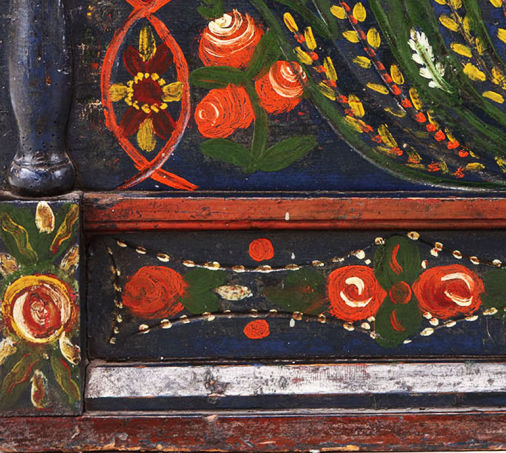
Apart from these examples, the Furniture Collection contains chests painted with diverse flowers, from the ones with a single row of petals to roses in bloom with layers of lavish petals, from flower buds to flowers resembling tulips. They are painted in composition together with wavy branches with elongated green leaves. This motif is believed to originate in the Renaissance, while in the 19th century it was typically applied to furniture throughout Europe. In the 19th century, the motif of a flower bouquet frequently appears on folk furniture in Međimurje and Baranja and its numerous variants can be observed on the chests in the Museum’s Collection.
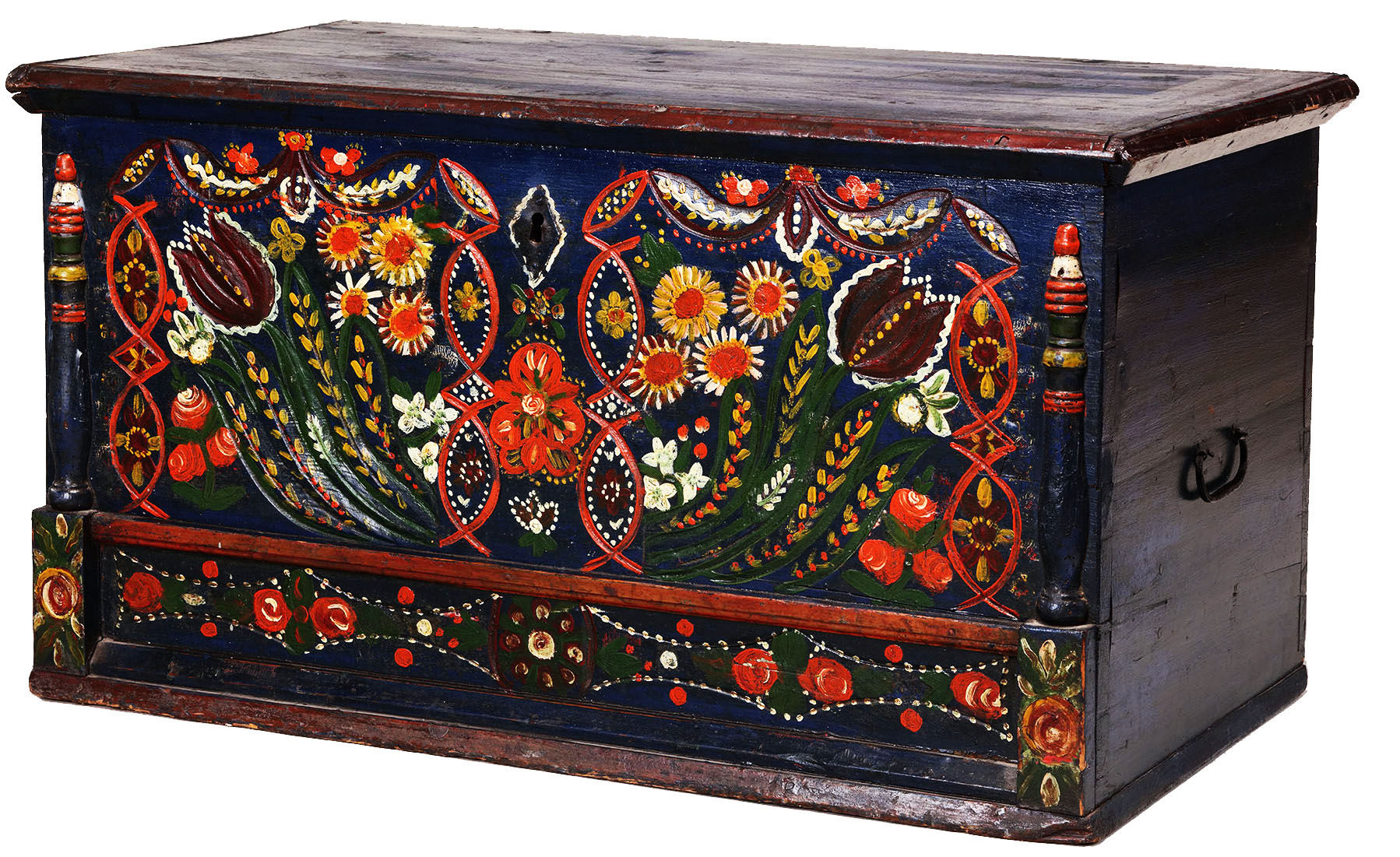
Ethnographic Museum, The Furniture Collection, Chest, EMZ 19942

Ethographic Museum
Trg Mažuranića 14
Zagreb, 10000 HR
+385 (01)4826 220
emz@emz.hr