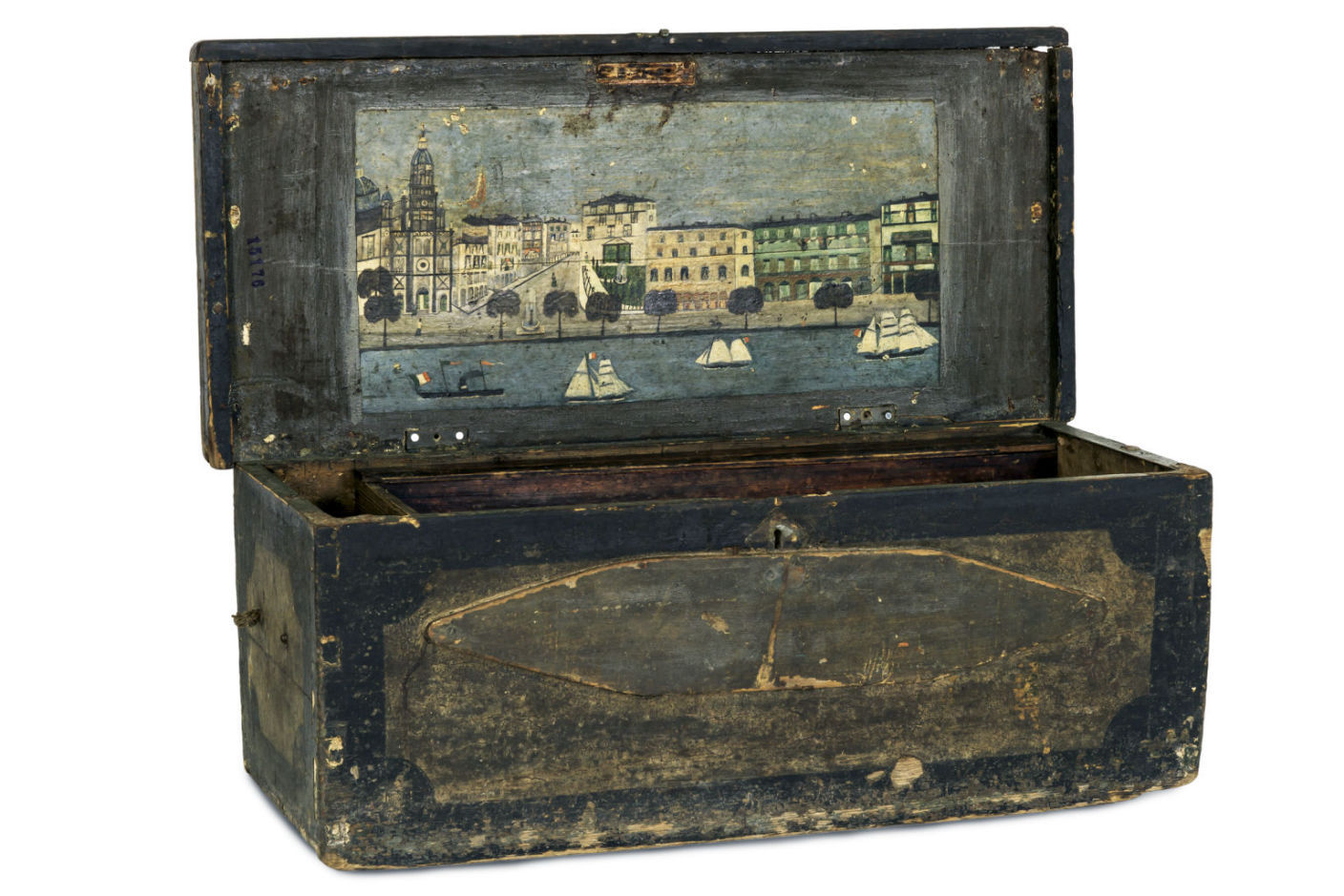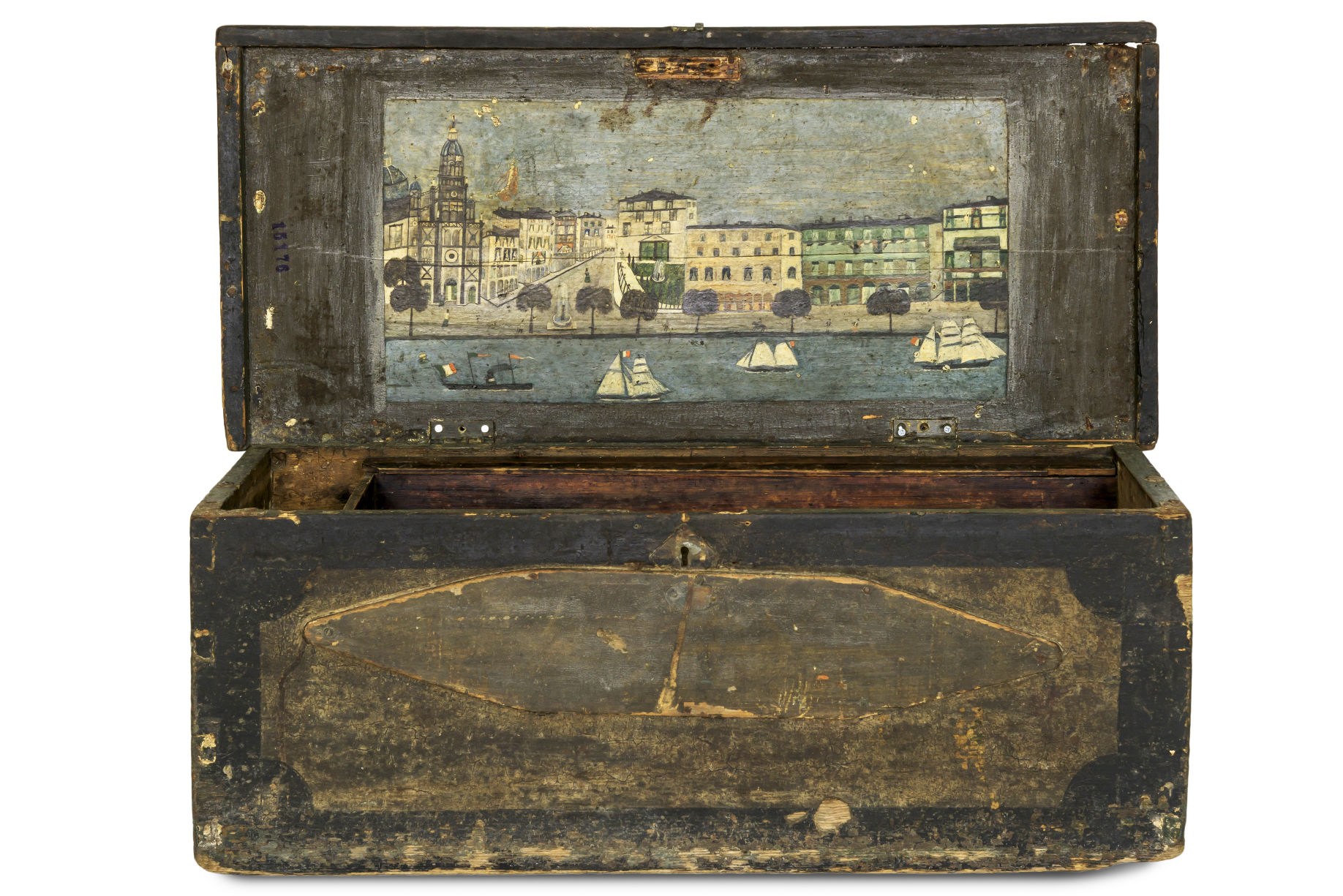
Ethnographic Museum, The Furniture Collection, EMZ 15176
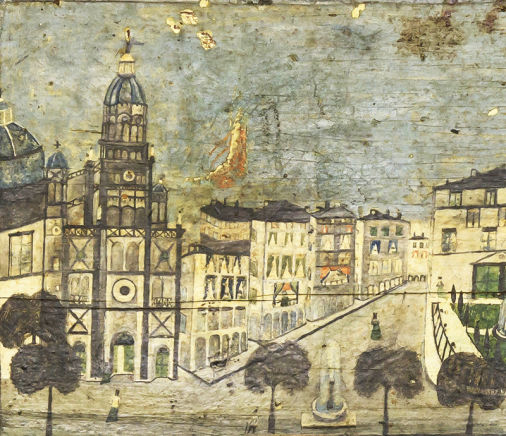
The Collection contains a very interesting Adriatic chest with a flat top and painted front depicting a panorama of a city and a series of ships sailing in the foreground, with the city with the French flag in the background. The picture most likely depicts the city of Cherbourg in Normandy from which ships bound for New York set sail. Croatians used the nautical route between Trieste and Cherbourg and from there continued their journey to North America.
Ethnographic Museum, The Furniture Collection, EMZ 15176
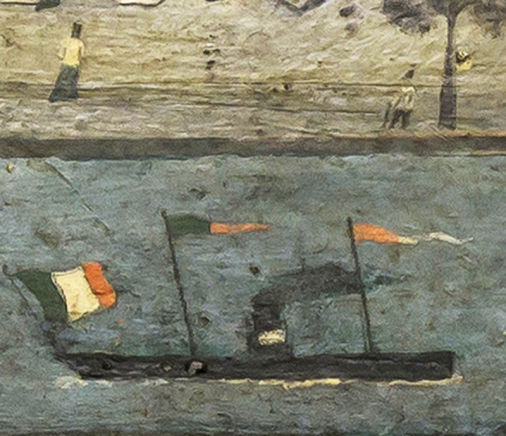
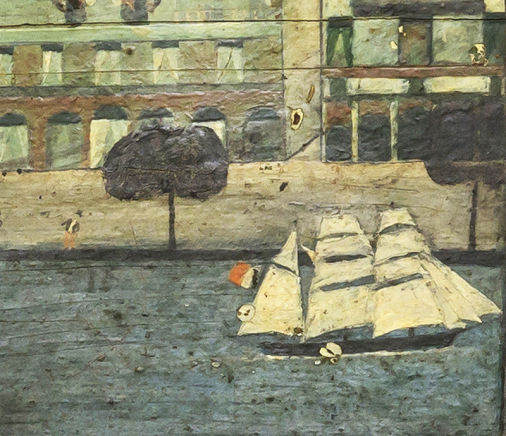
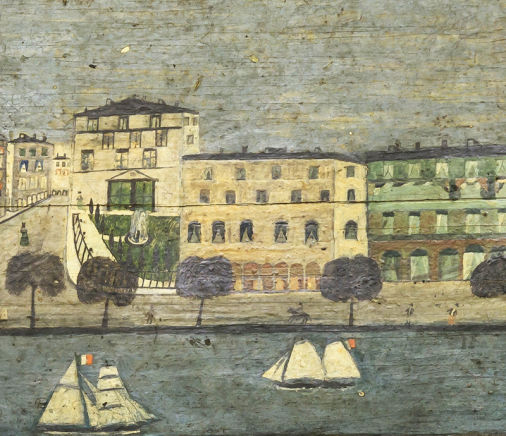
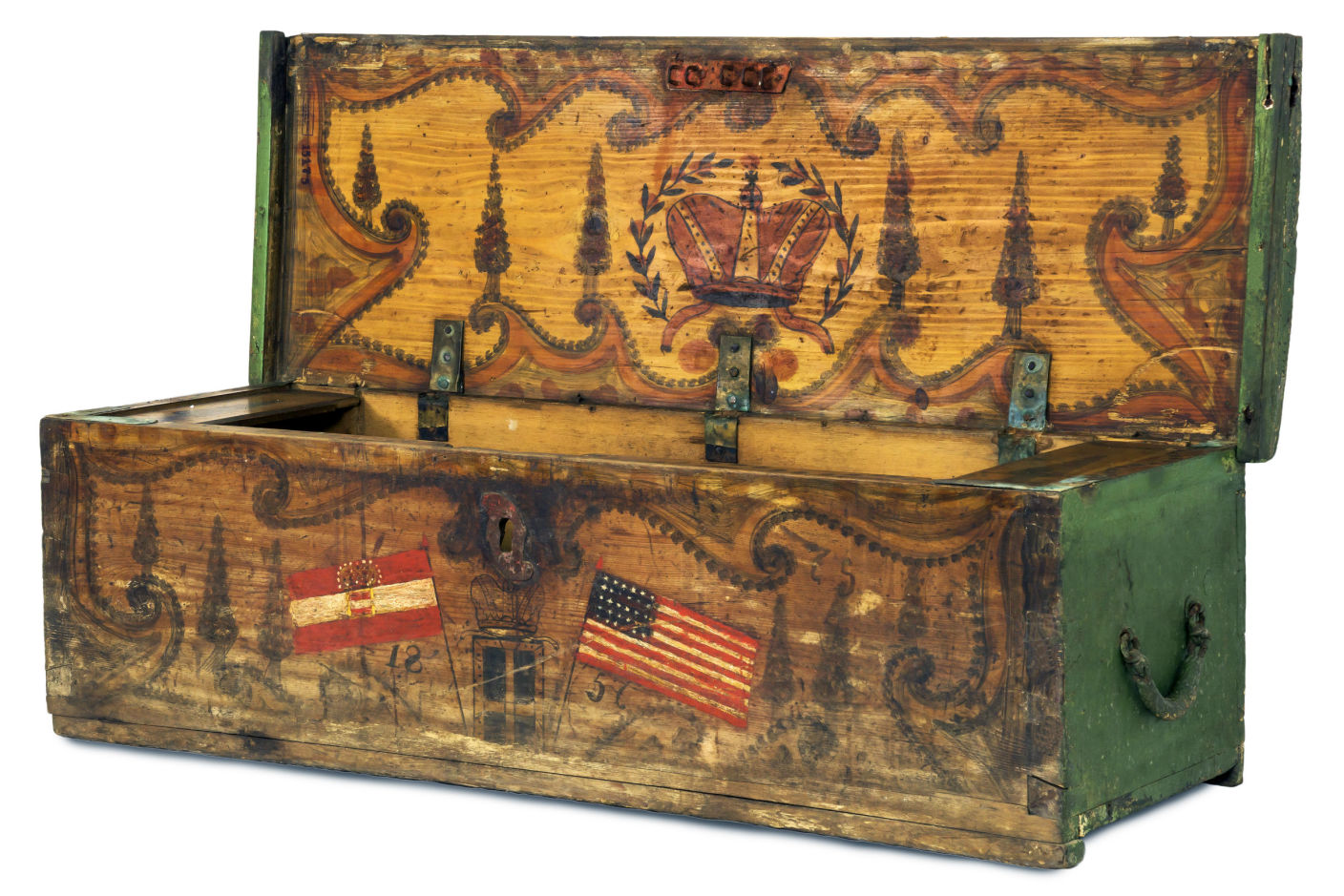
In the collection, this chest is catalogued together with another sailor’s sea chest, indicating it was purchased from Franjo Vidulić from the island of Lošinj in 1949. The second nautical chest belongs to the same type and is painted green, with motifs painted on the front and the inside of the lid. The front contains motifs of brown cypresses and flags – the US frag on the left and Austrian one on the right, with probably an Italian (Savoia) coat of arms in the centre, along with the inscribed year, 1857. The painted inside of the lid contains cypresses and the Italian naval crown. Such painted chests were very rare. These chests were probably bought during travels and brought back to Croatia on the homeward journey. The chests are made of silver fir wood.
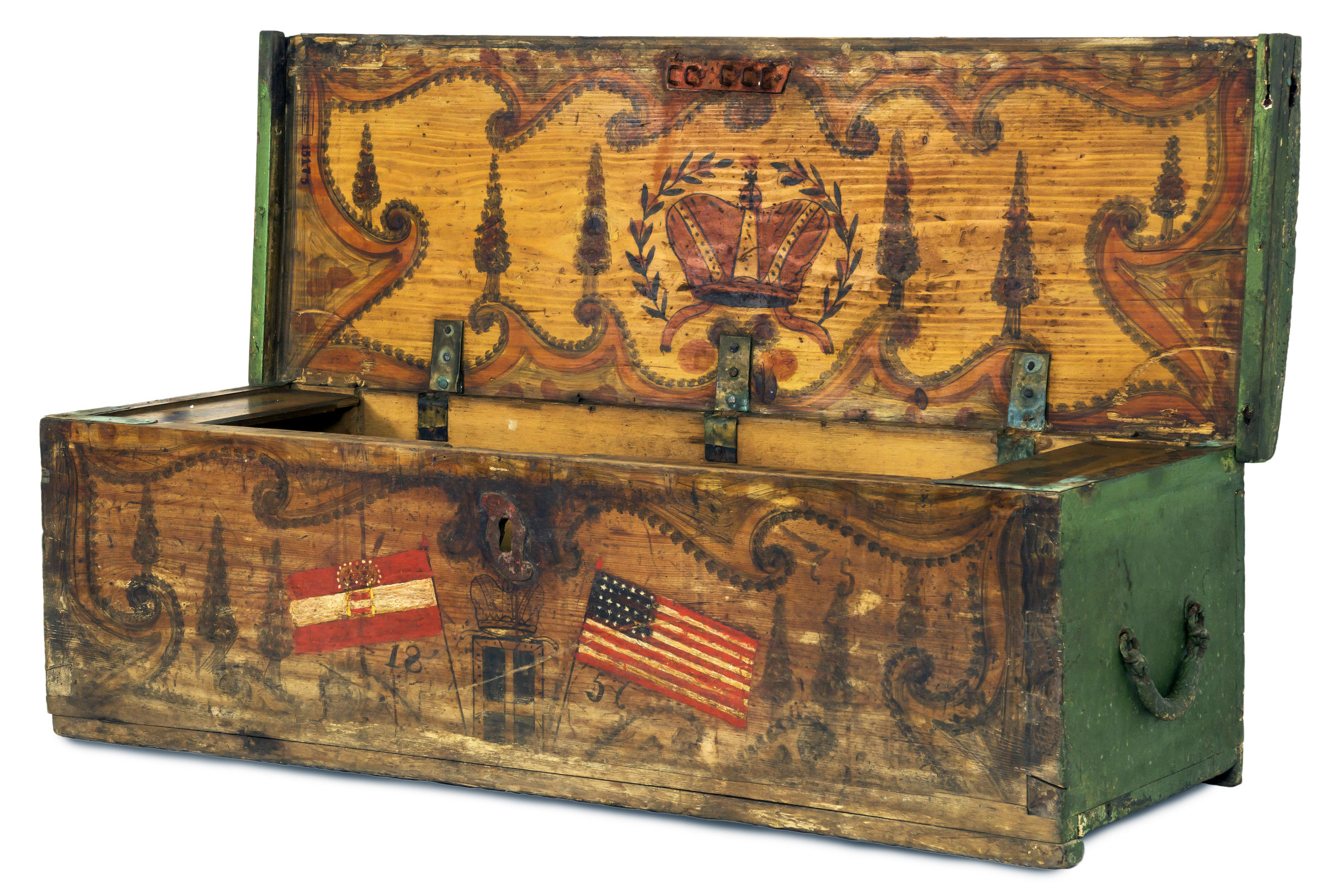
Ethnographic Museum, The Furniture Collection, EMZ 15175
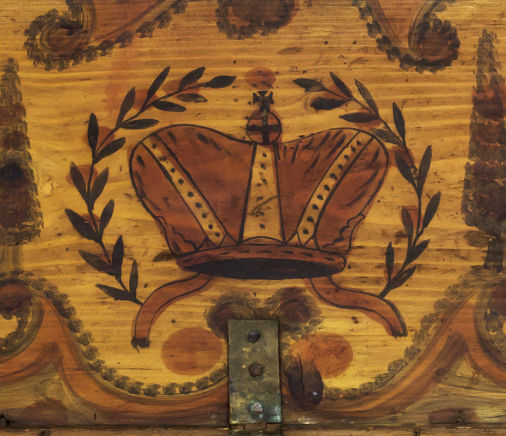
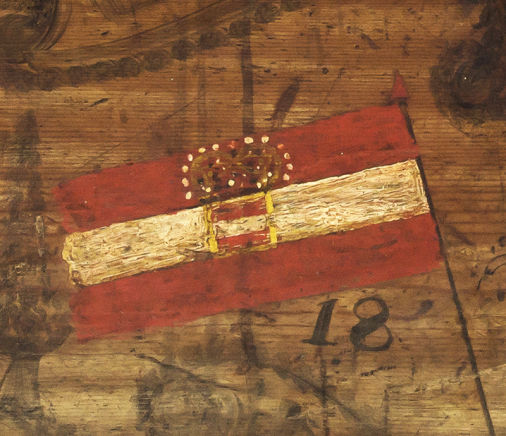

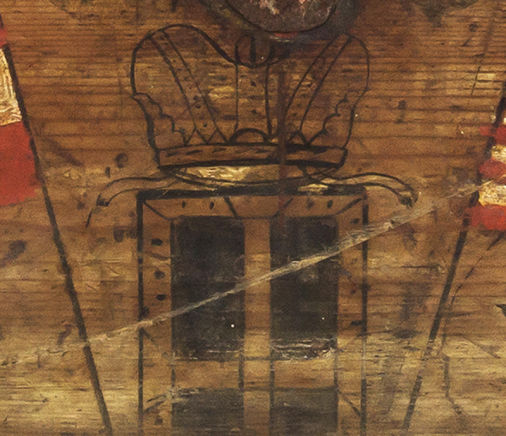
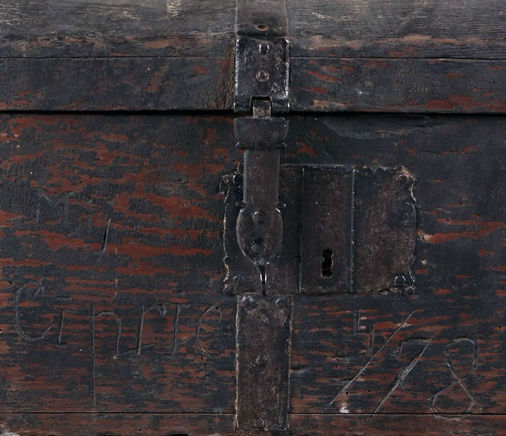
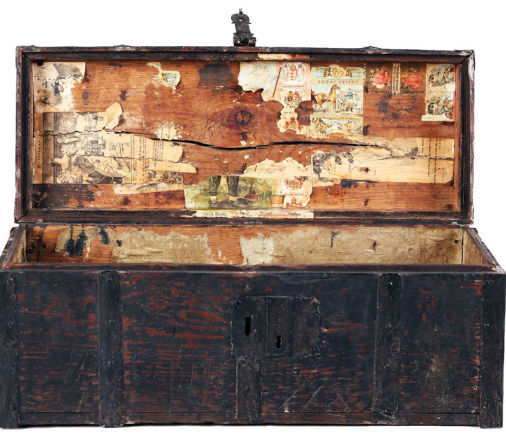
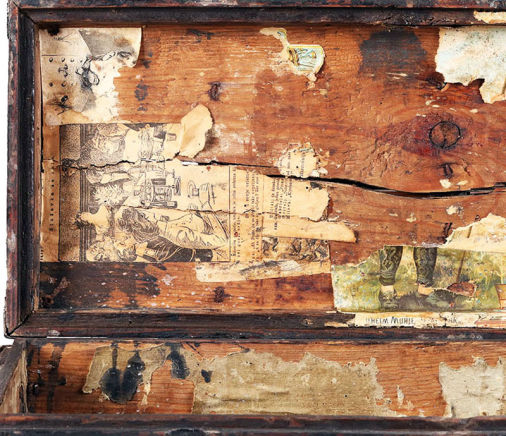
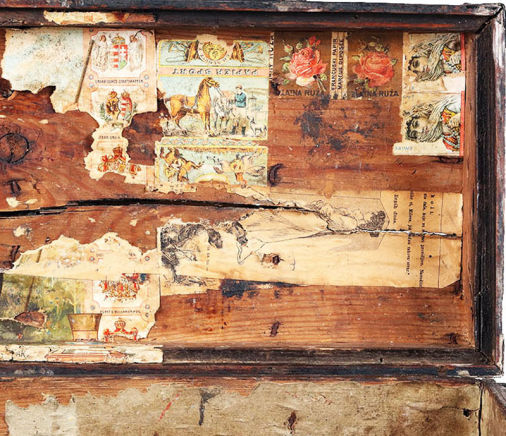
The chests with figural motifs belonged to members of higher social groups, probably a ship’s captain or officers, while plainer ones, i.e., without adornments, were used by sailors and sold at fairs. The Collection also contains a separate group of chests that were in fact suitcases, usually termed baul or bavun, bought during travels and brought back from the trip. The suitcases are usually in the shape of a rectangular wooden crate with a round-edged top. They are decorated with metal plates and a lock in the centre. The Museum holds a piece from the Šantek family cooperative from Rudeš, dating from 1850. The surface of the lid and bottom section of the front are upholstered in rough canvas, painted over with black paint.

Ethnographic Museum, The Furniture Collection, EMZ 30081

Ethographic Museum
Trg Mažuranića 14
Zagreb, 10000 HR
+385 (01)4826 220
emz@emz.hr