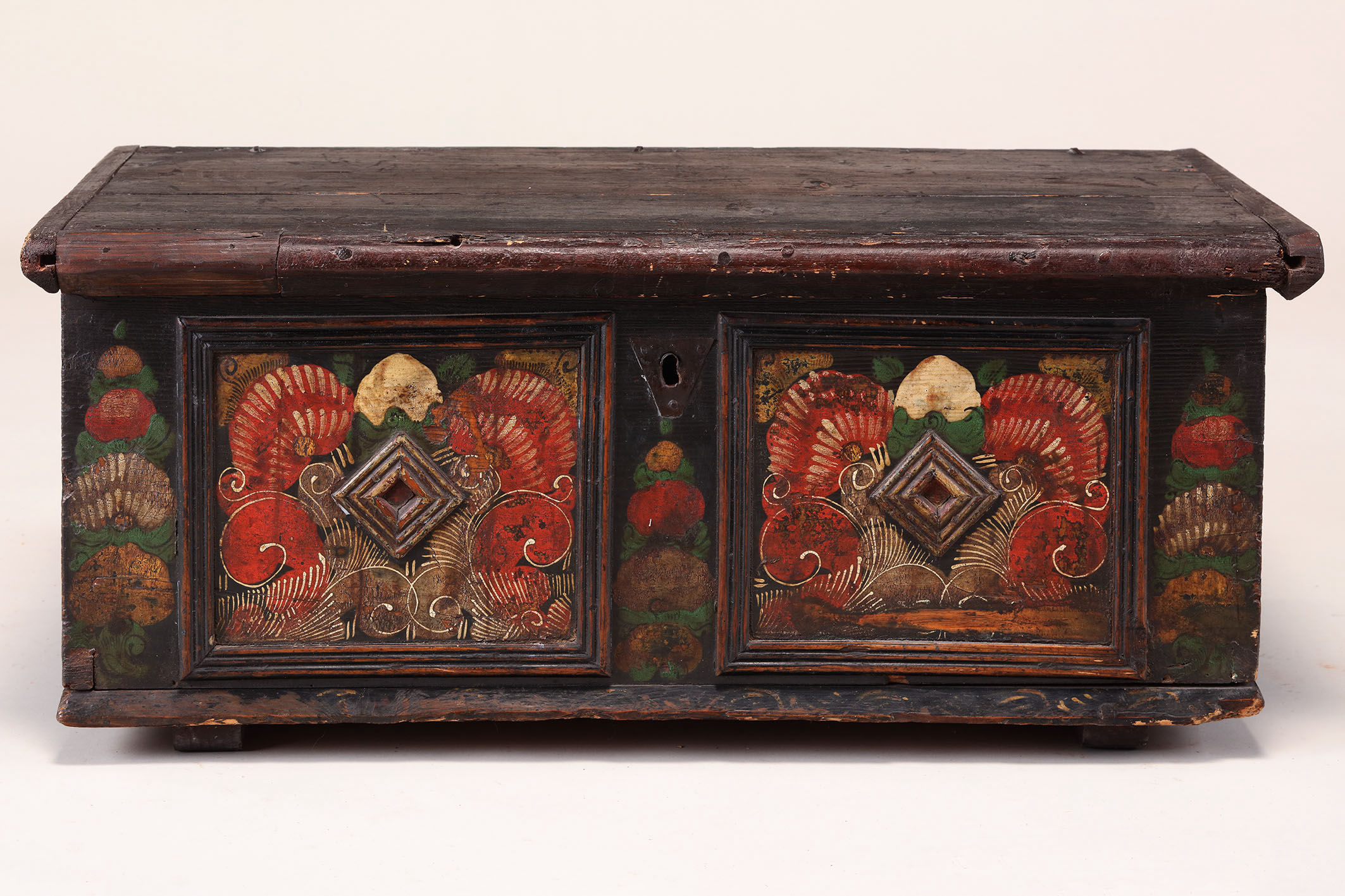
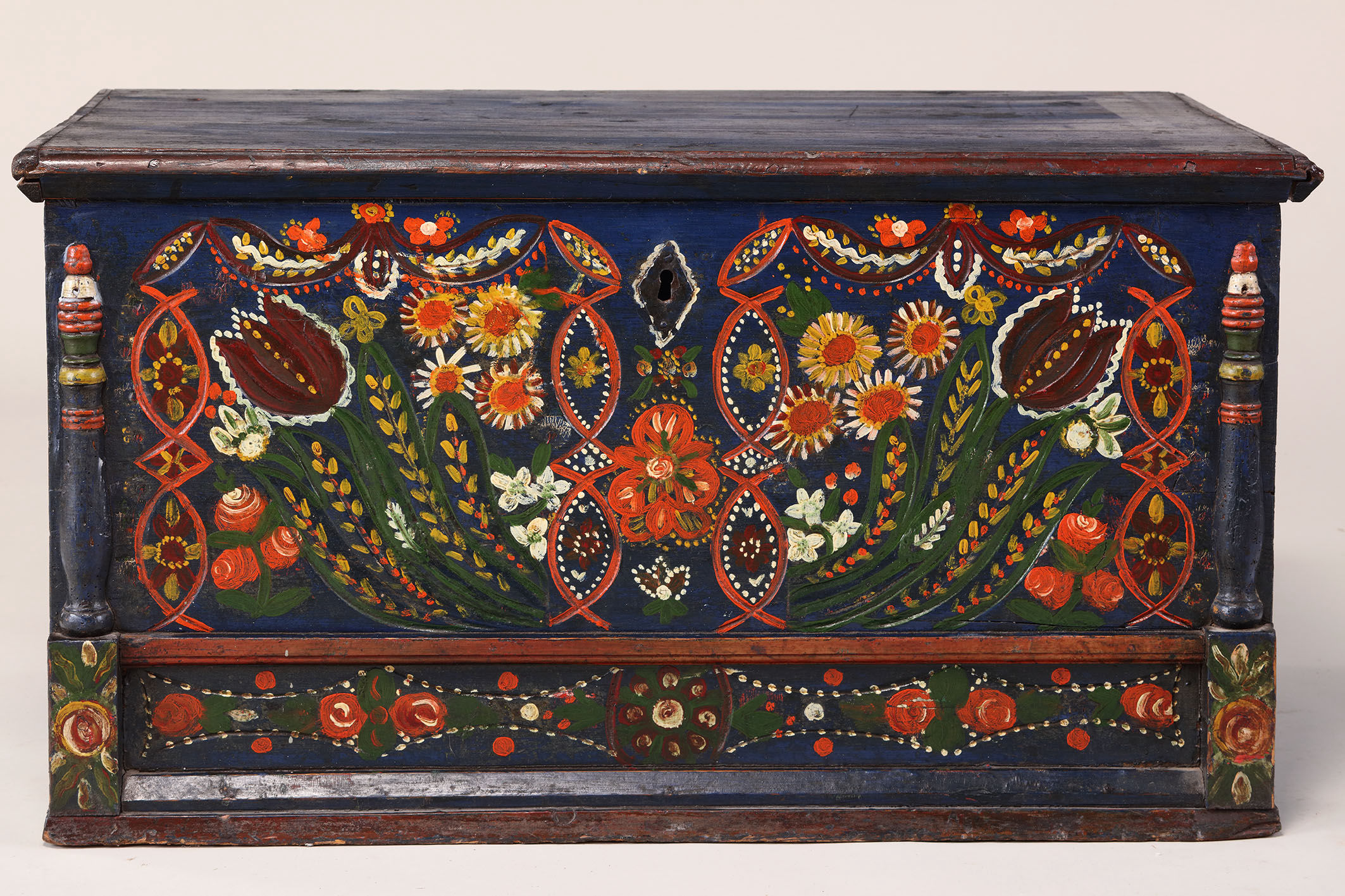
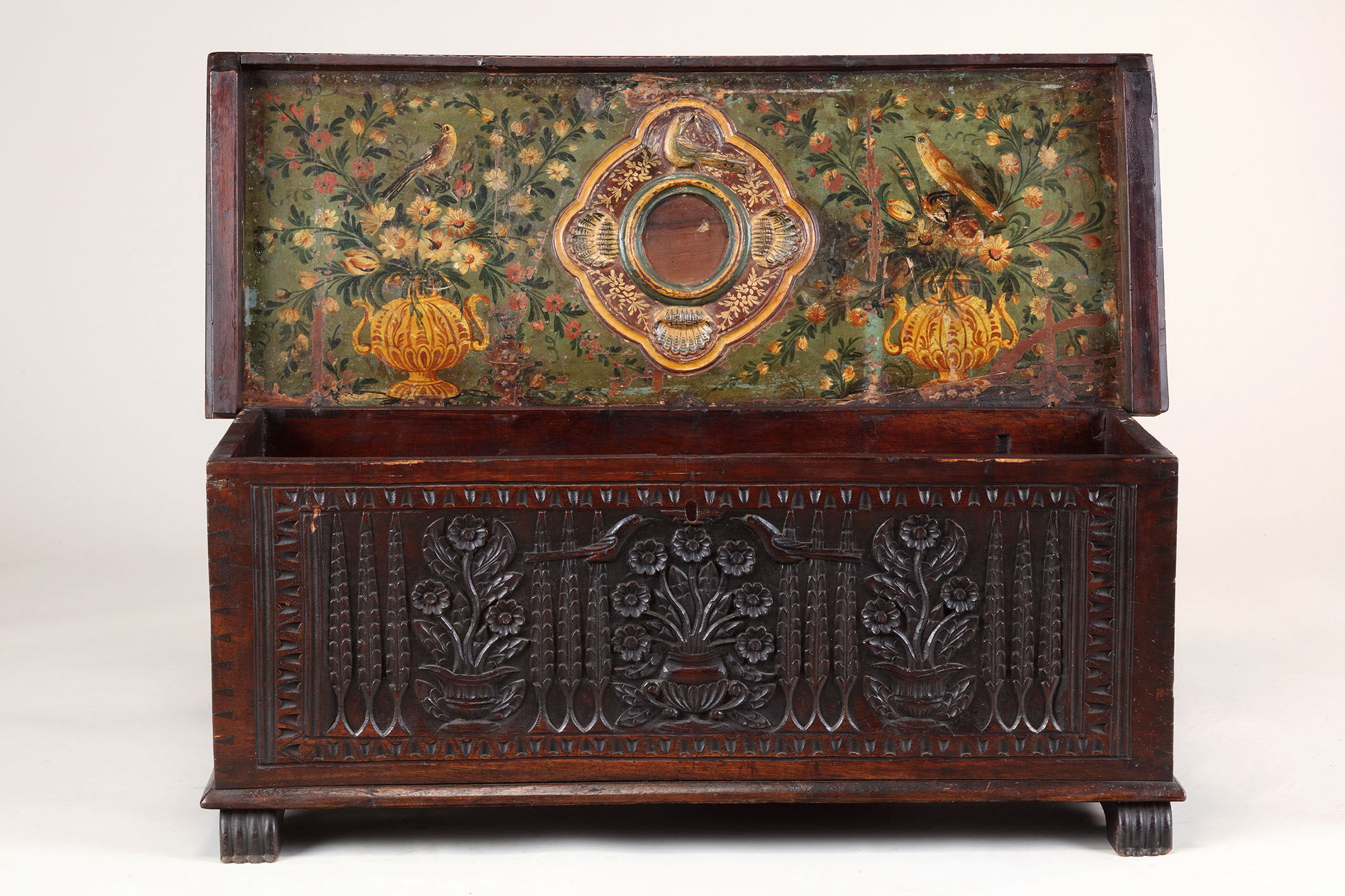
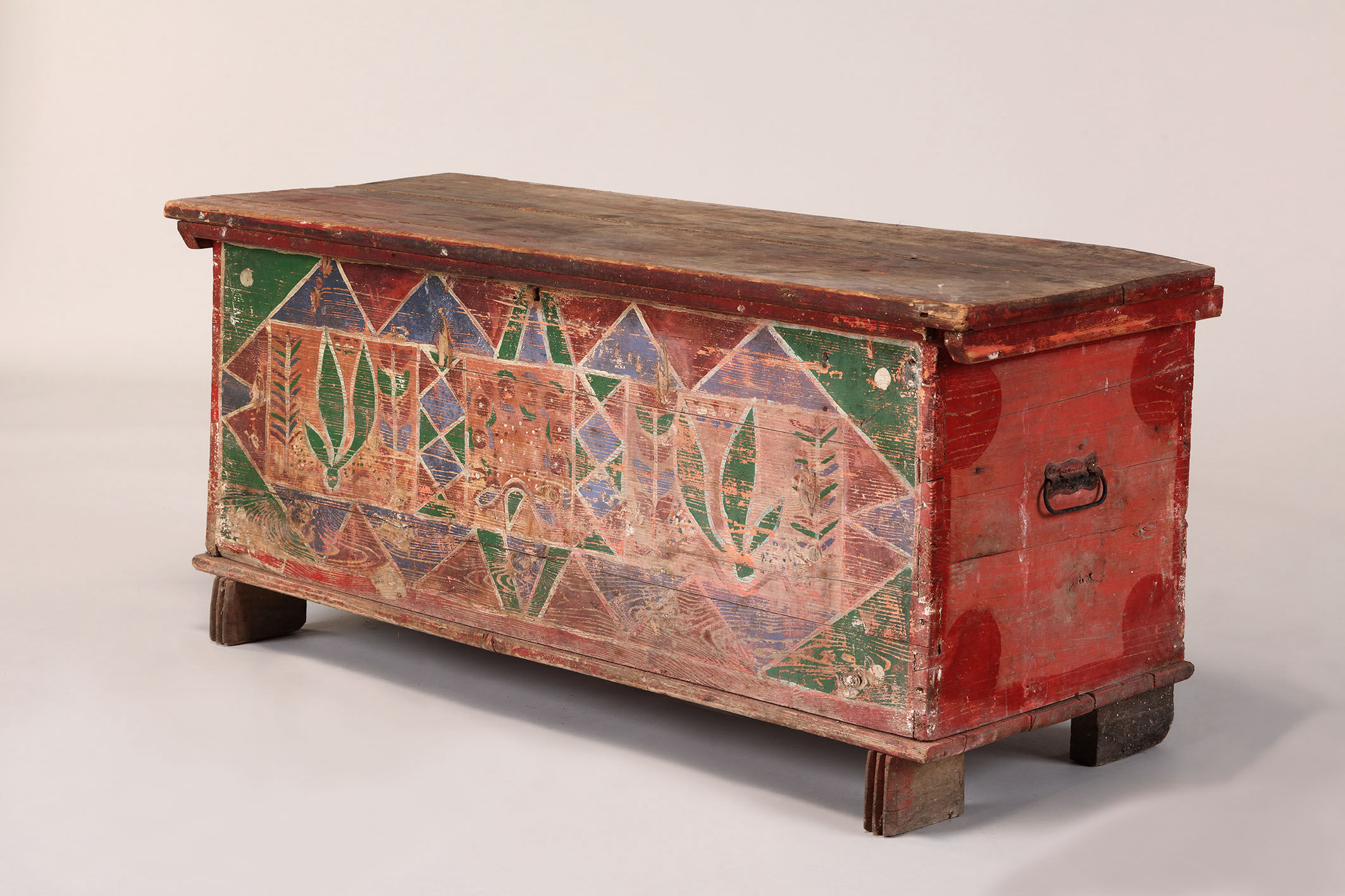
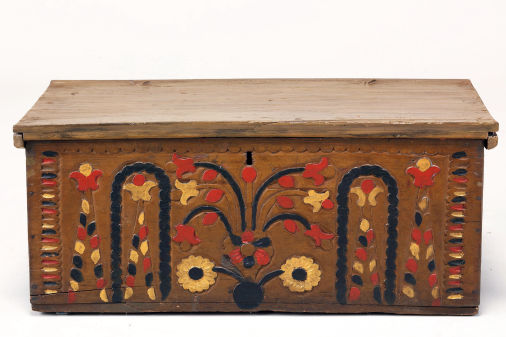
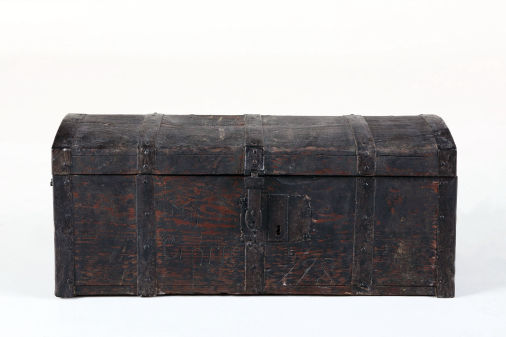
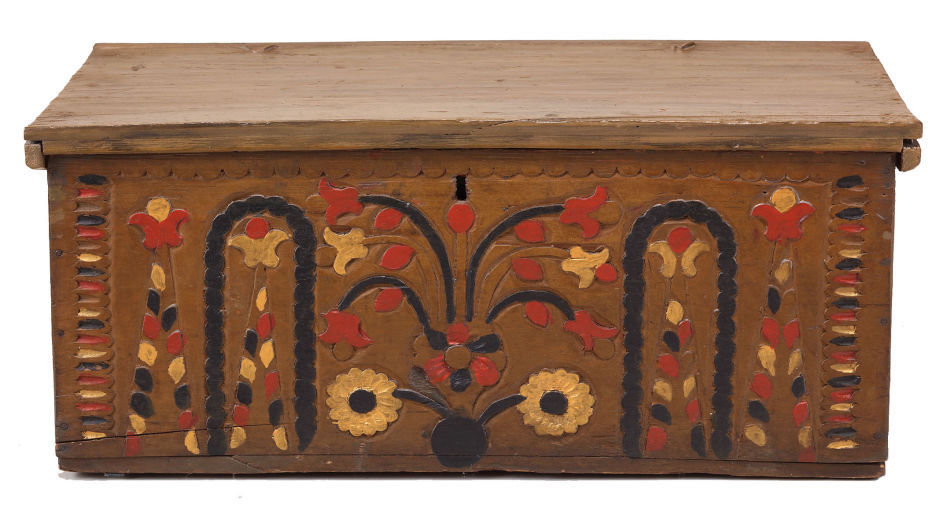
The chest was universally used in Europe from the middle ages until the beginning of the 20th century. Throughout time, chests had different applications, from storage of belongings, valuables and documents, to storing grain or flour. In the 19th century, chests were the most widely used piece of furniture in rural homes, containing linens, such as sheets and clothing items, for the entire family. The chest regularly changed location, sometimes even over several generations, being passed down on the mother’s side or used during travels. The chest as an object holds particular meaning in people’s social and private lives, as a material testament created in a particular time and cultural environment.
Thanks to the dedicated work of various collectors who strived to record the life of people in rural areas in the 19th century, the Ethnographic Museum holdings contain numerous examples of chests that aid us comparing and noticing changes over time, as well as compiling information from different sources into a mosaic. The Ethnographic Museum Furniture Collection contains 141 chests from the territory of the entire Croatia, as well as several pieces from Bosnia and Herzegovina and Montenegro, which were created, fashioned and evolved through the process of intertwining of diverse cultural influences. The aim of this exhibition is to offer the public a chance to see a portion of Museum’s holdings that have thus far not been exhibited as a whole. The goal of this virtual exhibition was to demonstrate how certain objects “tell” their stories and how they were used by people, by analyzing certain aspects of daily life, from application and usage, to the manufacturing process and decoration, to the object’s symbolism.
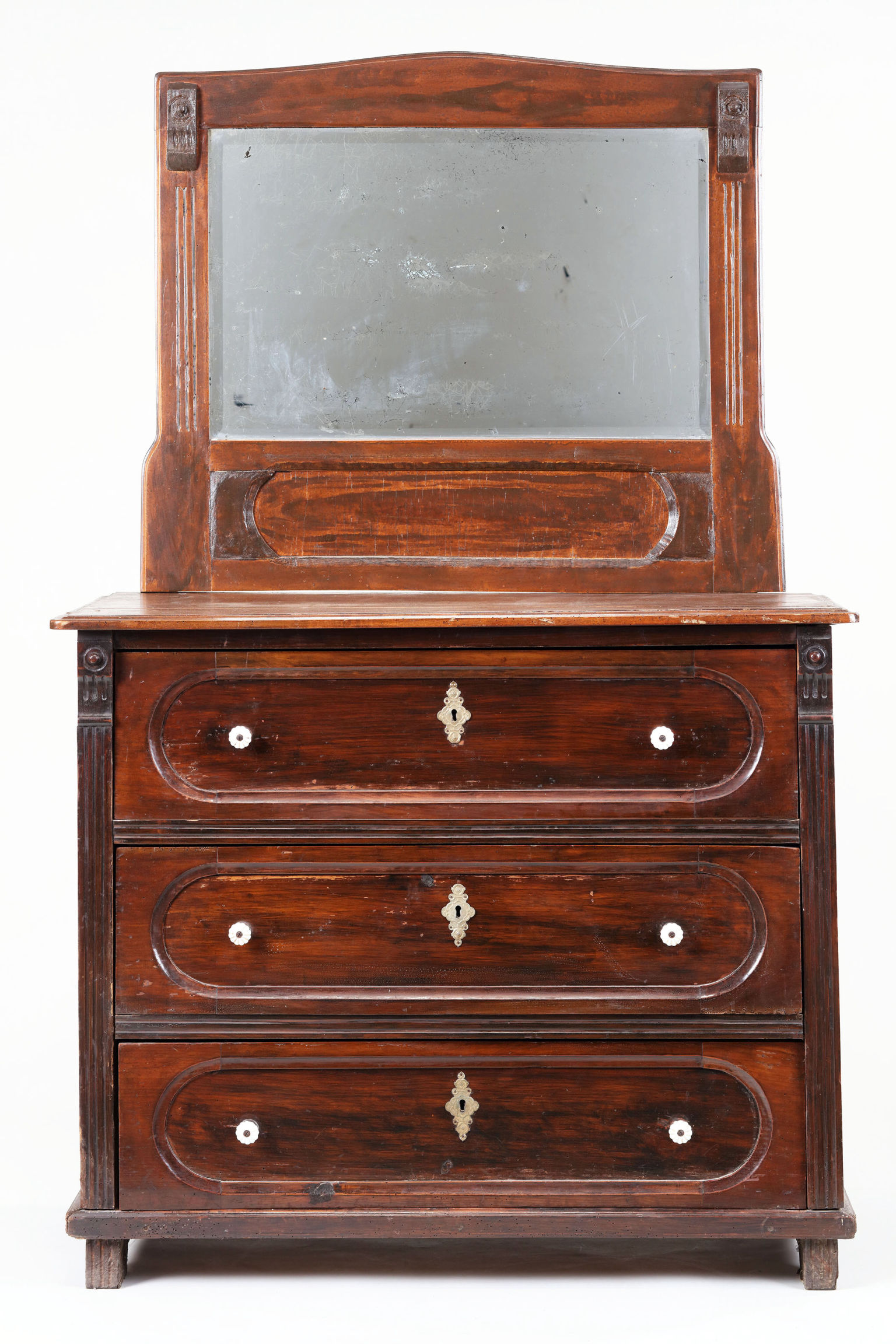
Some chests were valuable not because of their economic worth, but in their significance in being part of the daily life of an individual or family. A chest functioned as a multi-purpose object – its flat top was used for sitting, or less frequently for sleeping, while they would often be covered with a special quilt. Chests with a backrest and lock appear in Istria and Dalmatia in mid-19th century, which served as a bench for sitting and for storage. For more orderly storage and a better overview of stored items, commodes and wardrobes appear in the beginning of the 20th century. Based on the chests preserved in Museum’s holdings, it is possible to trace their usage and production and track the migration movements of residents or woodworkers who manufactured them. Of course, the changes reflect new divisions between social groups: starting in the 1930s, many families will continue with the tradition of using chests, while others will introduce a novelty in the organization of their space and will want to demonstrate their wealth by buying an entire bedroom furniture set. In early 21st century, old rustic chests again enter usage, as details within a contemporary interior design, so some chests, given their value and importance as family treasures start to be used again.